Russia Travel Routes: Which Itinerary Suits You Best?
Many of the itineraries that cross our desk suffer from the same quiet miscalculation: travelers plan Russia as if it were a circuit, when it is in fact a continent scaled to one. The Sapsan high-speed train covers the 650 kilometers between Moscow and St.
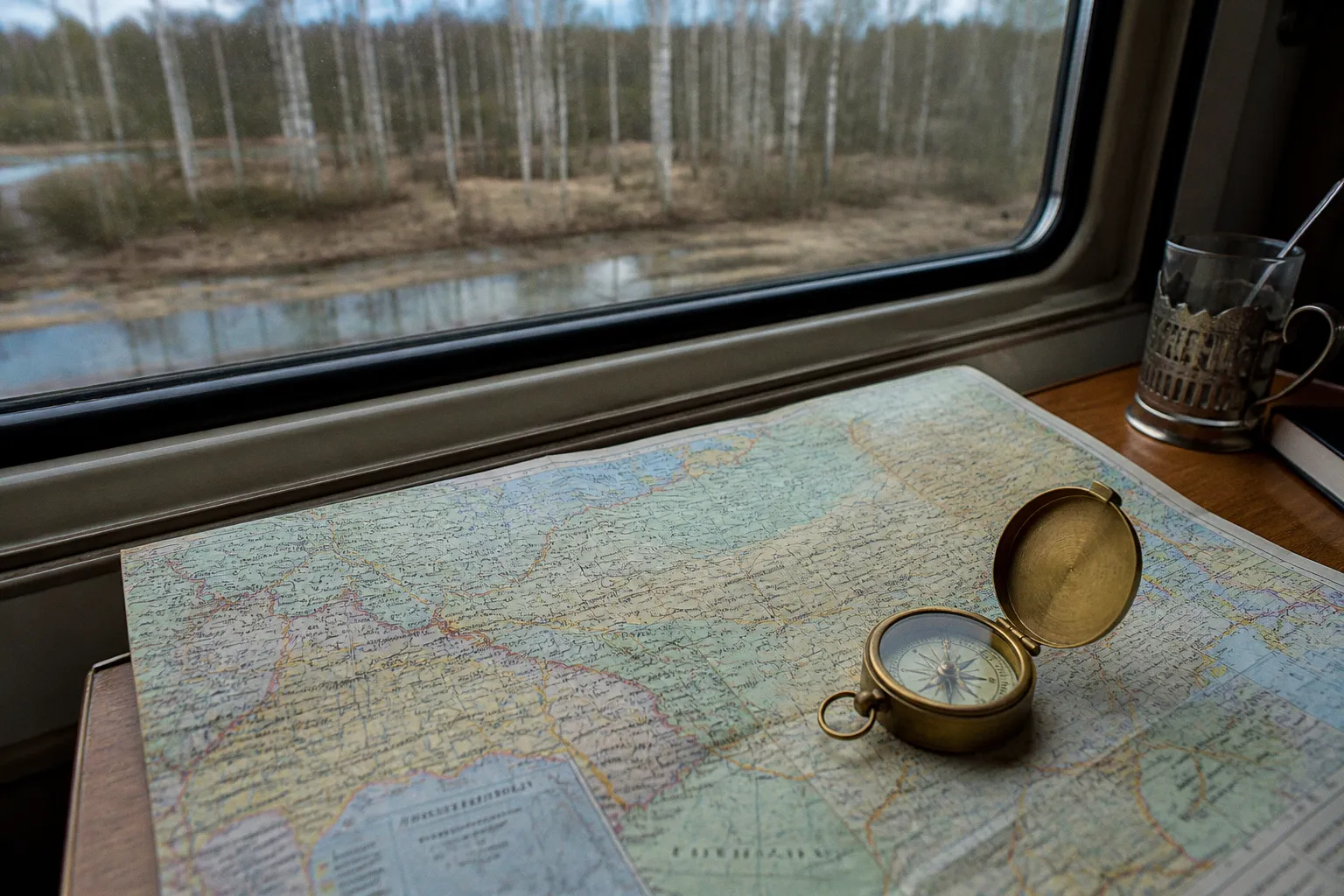
Petersburg in around four hours, which sets a deceptive mental baseline — a baseline that cracks wide open the moment you point east toward Kazan, let alone Vladivostok. Before you fall in love with a particular route, the most useful thing we can do is line those routes up against your actual calendar, your appetite for motion, and the spatial reality of the country you are about to cross.
Compare car rental deals in United Kingdom
See available offersPartner link — DiscoverCars comparisonFor most first-time visitors, the best Russia travel itineraries are not the ones that collect the greatest number of pins on a map. They are the ones that leave enough room for the country to change character between stops. Moscow and St. Petersburg can fill ten days without repetition. A Golden Ring circuit needs more time than its apparently modest distance suggests. The Trans-Siberian is not a scenic transfer between two cities but a trip whose main subject is distance itself.
The right route also depends on what you want the trip to feel like. A capital-city itinerary is comparatively controlled: hotels, museums, restaurants, and transfers can be arranged with little friction. The Golden Ring introduces slower roads and smaller towns. Kazan adds a genuinely different cultural geography without asking you to commit to a month on the railway. Baikal and Kamchatka are another category altogether, where weather, road conditions, internal flights, and seasonal access matter as much as the headline attractions.
The Classic Duo: Moscow and St. Petersburg in 10 Days
If this is your first time setting foot in Russia, the Moscow-and-Petersburg pairing remains the cleanest introduction we can offer, and the one we still recommend to travelers who want to anchor themselves in the country's two cultural poles without losing a week to logistics. The cadence that has worked best across our journeys is roughly four nights in Moscow and four nights in St. Petersburg, with the Sapsan handed a comfortable half-day between them and a final morning for the airport transfer.
That sounds simple, and it is — at least by Russian itinerary standards. The benefit is not merely convenience. The two cities make a useful argument with each other. Moscow is expansive, vertical, and relentlessly metropolitan; St. Petersburg is more legible on foot, more theatrical in its imperial architecture, and shaped by water, islands, and long straight prospects. Seeing both gives a first-time visitor a more accurate sense of the country than either capital can provide alone.
In Moscow, the geometry is vertical: the Kremlin, Red Square, and St. Basil's cluster within walking distance of each other, which means a single long day with a competent guide can cover more ground than first-time visitors expect. Here is the catch, though — Moscow is enormous, and the metro alone is a masterclass in vertical geography. You will descend deep into the earth to cross the river, surface near a cathedral you did not know existed, and re-emerge half a kilometer from where you started.
We build in one full day for the Kremlin territory, including the Armoury and cathedrals, with the Diamond Fund treated as a separate ticketed addition where available. A second day can hold the city's most recognizable ensemble — Red Square, GUM, St. Basil's, and the historic Gorky Park stretch along the Moskva. The third is best left to whichever theme hooks you. The Tretyakov is the obvious choice for Russian art; a Bunker-42 tour supplies a Cold War underlay; Novodevichy Cemetery and the surrounding monastery offer a quieter route through the city's political and cultural memory.
Do not try to make Moscow a series of landmarks joined by frantic taxi rides. Its scale is part of the experience, but only if the route has some breathing space. A morning around the Kremlin followed by an unstructured afternoon often produces a better day than four unrelated attractions on opposite sides of the city. The metro makes cross-city movement possible, but it does not make it short.
The city is also better divided by districts than by attractions. One day can stay around the Kremlin and Zaryadye Park; another can move through the Tretyakov area, the river, and the old lanes toward Ostozhenka. A third might combine the Moscow Metro with VDNH, depending on your interests and tolerance for long transfers. The point is not to make every day symmetrical. It is to avoid spending the best part of the morning crossing a city that could have been read more intelligently on a map the night before.
St. Petersburg rewards a slower pace. The State Hermitage is a multi-day affair even for museum devotees: a complex of buildings so vast that the honest recommendation is at least a half-day, and ideally two consecutive visits split across separate days. The first visit should be about orientation rather than conquest. Pick a collection or a wing, understand the building, and leave before the grand scale turns into visual fatigue. A second visit is when the museum begins to feel navigable rather than merely enormous.
The Peterhof Palace complex sits roughly 30 kilometers outside the city and consumes the better part of a day once you add the hydrofoil transfer and the fountain gardens, which only run between late May and early October. Tsarskoye Selo, with Catherine Palace and the reconstructed Amber Room, is closer and offers a different kind of excursion: less about the waterfront spectacle, more about imperial interiors and the suburban scale of the former court.
Nevsky Prospect, the canals, the Church of the Savior on Spilled Blood, and the quieter streets around the New Holland area can be arranged into a walking sequence rather than treated as isolated stops. The city is at its most generous when you leave room for that kind of unplanned connection. It is also worth remembering that St. Petersburg's apparent compactness can be misleading once palace excursions and museum queues enter the picture.
A useful ten-day structure looks something like this:
1. Arrive in Moscow and keep the first evening deliberately light.
2. Spend a full day around the Kremlin, Red Square, and the historic center.
3. Choose one substantial museum or neighborhood rather than stacking four unrelated sights.
4. Use a fourth Moscow day for a contrasting district, a food-focused evening, or a guided excursion.
5. Travel to St. Petersburg by Sapsan and treat the journey as a transition, not a lost day.
6. Begin St. Petersburg with a central walking route and a manageable museum visit.
7. Give the Hermitage the time it deserves, preferably in a planned half-day session.
8. Choose either Peterhof or Tsarskoye Selo as the main palace excursion.
9. Keep one flexible day for canals, neighborhoods, a second museum visit, or weather-related changes.
10. Leave enough time for departure logistics rather than turning the final morning into a race.
We typically advise travelers to leave a buffer night in both capitals — one for jet lag, one for the inevitable “I want to revisit the Hermitage” morning — which is how an eight-day route realistically expands into the standard ten. That extra time is not decorative. It protects the itinerary from the first delayed flight, the first museum day that runs long, and the very common discovery that the traveler would rather spend an evening in one neighborhood than rush across town for a reservation.
The Golden Ring: A 700-Kilometer Journey Through Ancient History
Once you have absorbed the capitals, the Golden Ring steps in as the perfect counterweight: small, medieval, and threaded by the sort of onion domes and kremlin walls that Moscow and St. Petersburg hold only in diluted form. The route is officially nine cities — Sergiyev Posad, Pereslavl-Zalessky, Rostov Veliky, Yaroslavl, Uglich, Kostroma, Ivanovo, Suzdal, and Vladimir — and traces a closed loop of approximately 700 kilometers that generally begins and ends at Moscow's Yaroslavl Station.
A 700-kilometer loop through the medieval Golden Ring covers nine cities, but the distance is not your real constraint — pacing is. Most travelers try to do it in five days and feel every meter of it.
We budget six to seven days for the full circuit, and this is one of those routes where less is genuinely more. The Golden Ring works through accumulation: a monastery here, a river embankment there, a painted wooden house, a provincial market, a church interior that is suddenly more affecting than the grandest cathedral in the capital. If you reduce it to a checklist of cities, you lose the very quality that makes the route worthwhile.
Sergiyev Posad is the natural first stop from Moscow and the easiest introduction to the route's religious history. The Trinity Lavra of St. Sergius is not simply a collection of buildings to photograph; it remains a living spiritual center, and the atmosphere changes markedly depending on the time of day. Pereslavl-Zalessky is smaller and more dispersed, with a lakefront setting and a cluster of historic churches that rewards a driver or guide who understands the distances between them.
Rostov Veliky has the compact, almost theatrical Kremlin ensemble that many travelers imagine when they hear the phrase “Golden Ring.” Yaroslavl, with its 17th-century Spassky Monastery ensemble on the Volga, is a UNESCO-listed urban anchor roughly halfway around the loop and a comfortable overnight stop. It is also one of the places where the itinerary can pause without feeling as though you have run out of things to do: the riverfront, historic center, churches, and restaurants give the city a fuller evening rhythm than some of the smaller stops.
Uglich is the sort of small Volga town where time operates at a different tempo. Kostroma carries the Ipatiev Monastery, closely associated with the beginning of the Romanov dynasty. Suzdal rewards anyone who arrives before the tour buses and walks the unplastered timber lanes behind the kremlin walls. Vladimir, meanwhile, is the most practical place to close the loop or reconnect with Moscow, but its historic importance deserves more than a quick lunch stop. The Assumption Cathedral and Golden Gate are not interchangeable with the smaller-town churches; they belong to a different chapter of medieval Russian architecture.
Ivanovo is often the city travelers are most tempted to treat as a transit point. That can be reasonable if the itinerary is tight, but it is also a reminder that the Golden Ring is not a perfectly curated museum route. It includes working cities, industrial edges, ordinary neighborhoods, and stretches where the historical interest is less immediately legible. The route is stronger when you accept that unevenness rather than expecting every stop to deliver the same kind of picturesque reward.
The transport question here is more important than travelers expect. Provincial transit between the smaller towns is infrequent, taxis need to be booked ahead, and the only reliable ways to hit all nine cities comfortably are either a small-group tour with a driver-guide or a rental car with someone capable of handling Russian road signage. We have walked more than one traveler through the math, and every time the verdict comes out the same:
- Give yourself the full seven days if you want the complete circuit rather than a drive-by version.
- Plan at least two substantial overnight stops, usually Yaroslavl and either Suzdal or Vladimir.
- Keep the smallest towns flexible, because their charm often depends on arriving without a strict sequence of timed visits.
- Treat the route as a cultural landscape, not a string of identical monuments.
Suzdal is usually where the difference between an escorted route and an improvised one becomes most visible. The town is compact enough to explore on foot, but the monuments are scattered across a landscape that does not behave like a conventional city center. A driver can save time, while a guide can explain why a modest-looking church or wooden house matters. Without either, visitors often spend too much of the day solving transport and too little noticing the place itself.
Yaroslavl is the strongest choice for travelers who want the Golden Ring to include an evening with some urban texture. Suzdal is the stronger choice for atmosphere and architectural concentration. Vladimir is useful for its railway connection and historical weight. Those are not interchangeable roles, and choosing overnight stops according to them is more sensible than trying to distribute nights evenly across the map.
The Golden Ring is among the best Russia tourist routes for travelers who want history without committing to a wilderness expedition. It is also the clearest answer to the question of what lies beyond the two capitals while keeping the logistics manageable.
Beyond the Capitals: Kazan and the Cultural Crossroads
For travelers with two or three extra days and an appetite for something less expected, Kazan functions beautifully either as a stand-alone add-on to a Moscow trip or as a destination for repeat visitors. Branded as Russia's “third capital,” the city sits roughly 800 kilometers east of Moscow at the confluence of the Volga and Kazanka rivers, and it carries a layered identity: Russian Orthodox and Tatar Muslim, Slavic and Turkic, imperial and modern.
The Kazan Kremlin itself is UNESCO-listed, and within its walls you will find both the Annunciation Cathedral and the Kul Sharif Mosque standing in plain sight of each other — a juxtaposition that surprises almost every first-time visitor. The point is not that the city resolves every historical tension into a neat display of harmony. It is that the cultural layers remain visible, active, and architecturally impossible to ignore.
A standard Kazan visit runs two to three days, which is enough for the Kremlin complex, the striking Temple of All Religions on the city's outskirts, and a long, slow wander down pedestrian Bauman Street. Add the Palace of Farmers and the embankment if you want to see the city's newer monumental face, but do not mistake more buildings for a better itinerary. Kazan is best understood through the relationship between its religious spaces, food traditions, river geography, and ordinary urban life.
Tatar cuisine is part of the route rather than an optional detour. Seek out dishes such as echpochmak and chak-chak, but allow time for a proper meal instead of reducing the food experience to a market snack between monuments. The same principle applies to the city's mosques and churches: the most interesting visit is not always the one with the longest description in a guidebook. A local guide can explain which spaces are active places of worship, how to dress, and when a visit will be least intrusive.
Here is where the geography starts to teach you what a “third capital” really means. Kazan and Moscow are in the same time zone, so adding Kazan does not create an hour of time-zone jet lag. Kazan's more easterly longitude can mean earlier-looking morning light than travelers are used to in Moscow, but the clock does not change. The real risk in bolting Kazan onto a capital itinerary is simpler and more familiar: a late arrival, an early walking tour, and too little sleep. For most of our clients, Kazan is best slotted as a final add-on before flying home, with one evening to settle in before the cultural walking starts.
That distinction matters when planning a trip to Russia by routes rather than by isolated destinations. A traveler who arrives in Kazan after an overnight train may feel exhausted, but the cause is the overnight train, not a nonexistent time-zone shift. Build recovery time because long-distance travel is tiring; do not build it around the wrong explanation.
Kazan also works as a bridge between different kinds of travel. It can be reached by air from Moscow in a way that keeps the itinerary relatively contained, or incorporated into a longer Volga-focused journey. It is not a substitute for the Golden Ring, because its historical layers and urban scale are different. Nor is it a miniature version of Siberia. It is a substantial regional capital where religious, linguistic, and culinary identities coexist in a form that is immediately visible to a visitor.
The city also works as a test of how much cultural contrast you want from your Russia travel itinerary options. It is more substantial than a weekend excursion but less demanding than the Trans-Siberian. Two nights provide an outline; three allow the city to stop feeling like an inserted chapter and start functioning as a destination in its own right.
Epic Rail and Wilderness: Trans-Siberian, Baikal, and Kamchatka
This is where the itineraries start requiring a category change, and where the four-hour Sapsan baseline simply stops being useful. Three distinct wilderness routes belong in any serious discussion of russia travel itineraries for first time visitors, but they answer very different questions about what you actually want the journey to be.
The Trans-Siberian Railway is the long way around, and that is precisely the point. The main route runs 9,289 kilometers from Moscow to Vladivostok, crosses eight time zones, and requires seven days of continuous travel if you never leave the train. We rarely recommend going end-to-end without stops, because the surface details — the Ural villages, the Buryat steppe, and the first sighting of Lake Baikal from the shore cliffs — are precisely what justify the rail fare.
A 14-to-20-day itinerary with planned layovers in Yekaterinburg, Irkutsk, and Ulan-Ude is the version we consider the entry-level Trans-Siberian. Anything shorter and the trip collapses into a sequence of train compartments rather than a sequence of places. The railway is not a luxury cruise with a view that changes outside the window. It is a working long-distance system. Train classes vary, station stops can be brief, and the rhythm of eating, sleeping, washing, and watching the landscape pass requires a tolerance for repetition.
Yekaterinburg is the useful western pause: a major city with its own history and a geographic position associated with the boundary between Europe and Asia. Irkutsk is the gateway to Baikal and a more natural base for exploration than trying to treat the lake as a quick stop from the train. Ulan-Ude introduces a different cultural landscape, with Buryat traditions and a visual shift that becomes more pronounced as the route moves east.
The Trans-Siberian also demands a decision about the train itself. A private compartment can make a long journey easier, but it does not remove the fundamental rhythm of the railway. A shared compartment offers more social contact and a lower barrier to spontaneous conversation, but less privacy. In either case, travelers should be prepared for station food, limited time on platforms, and the practical discipline of keeping luggage, documents, medicines, and chargers immediately accessible rather than buried in a large suitcase.
Lake Baikal tours typically begin in Irkutsk, run four to ten days depending on the inclusions, and concentrate around three anchors: Olkhon Island, a remote outcrop in the middle of the lake reached by ferry and unpaved road; the village of Listvyanka, the gentler introduction roughly an hour and a half from Irkutsk by road; and the Circum-Baikal Railway, an early-20th-century engineering line that hugs the southern shore.
Winter brings the famous transparent ice and road crossings on the lake surface itself. Summer brings the Olkhon trail network, boat crossings, and access to deeper coves. These are not interchangeable seasonal versions of the same trip. Baikal in winter is about ice, stark light, and a landscape that becomes temporarily traversable in ways it is not during the warmer months. Summer is more forgiving for walking and boat excursions but can also bring more demand for accommodation and transport.
Pacing matters enormously on Baikal. The four-day variants compress the geography to a point where travelers feel every kilometer of transit fatigue rather than the destinations themselves. Olkhon is not a quick postcard stop: reaching it takes time, and the island's appeal lies in its exposure, silence, and open landscape rather than a dense concentration of attractions. Listvyanka is easier to access and more suitable for a shorter visit, but it should not be sold as the complete Baikal experience.
Kamchatka belongs in a separate column from the Trans-Siberian and Baikal, even though all three appear in the same fantasy itinerary. The peninsula is reached primarily by air, and once there, movement is shaped by weather, unpaved roads, river crossings, and the availability of helicopters or specialist vehicles. The reward is volcanic terrain, Pacific coastline, hot springs, bear country, and a sense of remoteness that no city itinerary can reproduce.
A first Kamchatka route usually works best as a focused regional expedition rather than an add-on squeezed between Moscow and St. Petersburg. The exact balance depends on season and operator, but travelers should expect long days, early starts, uneven surfaces, and excursions that may be rescheduled when weather closes a route. The famous volcano views are not guaranteed on a particular morning, and an itinerary that treats them as guaranteed photo appointments is badly designed from the outset.
This is the practical comparison we use when someone asks whether the Trans-Siberian or the Golden Ring is the better choice:
| Route | Best for | Real commitment | Main source of difficulty |
|---|---|---|---|
| Moscow and St. Petersburg | First-time visitors who want cultural depth with manageable logistics | About 10 days | Urban scale, museum planning, and transfers |
| Golden Ring | Medieval history, monasteries, smaller towns, and road travel | Six to seven days | Uneven transport and the temptation to overpack the circuit |
| Kazan | Cultural contrast without a full Siberian expedition | Two to three days | Fitting it into the route without turning the trip into a sequence of transfers |
| Trans-Siberian and Baikal | Travelers who want distance, rail travel, and changing landscapes | Two to three weeks | Long train segments, seasonal conditions, and geographical scale |
| Kamchatka | Wilderness, volcanoes, and guided outdoor travel | At least a focused regional stay | Weather, remoteness, roads, and limited flexibility |
The Trans-Siberian versus Golden Ring question is therefore not really a contest between two sightseeing lists. The Golden Ring is a concentrated historical route with frequent changes of scenery and relatively short overland legs. The Trans-Siberian is a long-distance travel experience that uses cities and landscapes as punctuation marks. If you dislike sitting on trains, the railway's legendary status will not change that. If the movement itself is what attracts you, a rushed city-hopping holiday will feel strangely incomplete.
Navigating Entry: E-Visa Rules and Practical Requirements for 2026
Route planning is only useful once the entry plan is workable. For 2026, travelers should treat Russia's unified electronic visa as a practical possibility for eligible nationalities, not as a universal solution. Eligibility, permitted entry points, visa conditions, and border procedures can change, so the final check should be made against the official Russian government information for your passport and planned route before tickets are made non-refundable.
The unified e-visa is generally designed for a single entry and allows a limited stay within its validity period. In the current framework, the visa is issued with a validity window of up to 120 days and permits a stay of up to 30 days, subject to the conditions attached to the document. Applications are normally submitted online in advance, and the passport used for the application must match the passport presented at the border. The details that matter most are not complicated, but they are unforgiving when entered incorrectly.
Before applying, check:
- Whether your nationality is included in the e-visa program for the dates of travel.
- Whether your intended airport or land border is an authorized point of entry for the e-visa.
- That your passport remains valid for the required period after application and contains the necessary space for border formalities.
- That the name, passport number, nationality, and dates in the application match the travel document exactly.
- That you have medical insurance accepted for the Russian Federation for the full period of the stay.
- Whether your route includes a region, crossing, or excursion with additional access restrictions.
The last point is easy to overlook. A visa may permit entry into the country without automatically solving every regional access issue. Some border zones, protected territories, and specialist excursions can require separate permissions or advance registration. This is particularly relevant for routes involving Kamchatka, remote areas around Baikal, or travel close to international borders. A package operator or visa-support provider should be able to distinguish ordinary visa processing from those additional permissions rather than bundling everything under the vague phrase “visa assistance.”
A good visa-support service does more than fill in an online form. It should check the passport data, flag an unsuitable entry point, coordinate the visa dates with the actual itinerary, and explain what happens if the route changes after approval. That last question is worth asking before payment. A traveler who changes from a direct flight into Moscow to an overland entry may have changed the admissibility of the whole plan, not merely the first transfer.
The visa timetable should be built backward from the first border crossing, not forward from the day you begin sightseeing. Leave room for application processing, possible requests for clarification, airline or carrier document checks, and the fact that a visa's validity window is not the same thing as the number of nights you can spend in the country. Keep a digital copy of the approved visa and carry the relevant documents in an accessible form, while also having the original passport available for every border procedure.
Payment and booking logistics deserve their own place in the planning conversation. International card acceptance, airline schedules, hotel payment methods, and the availability of familiar booking platforms can vary. Travelers should not assume that a previously reliable payment card, transfer app, or hotel booking channel will work in the same way in 2026. A reputable local partner can often make the ground arrangements clearer, but the traveler still needs to understand what has actually been prepaid, what is payable locally, and which services are conditional on transport or weather.
For organized itineraries, ask for the route in operational terms rather than accepting a list of city names. “Moscow, Baikal, and Kamchatka” can describe a thoughtful three-week journey or an exhausting chain of airports with no margin for disruption. The useful version specifies the number of nights, internal flights, train classes, transfers, guide days, excursions, and what happens when a weather-dependent activity cannot operate.
Choosing the Route That Will Still Feel Good on Day Eight
The best russia travel itinerary options are the ones whose internal rhythm matches the traveler. Ten days is enough for Moscow and St. Petersburg to feel substantial, but not enough to add every major destination in European Russia. Six or seven days can make the Golden Ring satisfying, while five days usually turns it into a catalogue of arrivals and departures. Kazan is a strong two- or three-day extension when you want a visible cultural shift without changing the entire nature of the trip. The Trans-Siberian, Baikal, and Kamchatka need more commitment because the travel between experiences is part of the experience.
There is no prize for making the route look ambitious on paper. Russia rewards travelers who allow a city to become more than its first monument, a train journey to unfold without constant anxiety about the next connection, and a rural stop to remain slightly uncurated. The most successful itineraries leave room for weather, appetite, fatigue, and the occasional discovery that the place you expected to spend three hours in deserves a full day.
For a first visit, our default recommendation remains the classic duo: Moscow and St. Petersburg over ten days, with the option of Kazan if the trip can absorb several additional nights. Choose the Golden Ring when medieval architecture and provincial landscapes matter more to you than a second metropolitan experience. Choose the Trans-Siberian when the railway itself is the attraction. Choose Baikal or Kamchatka when you are prepared to trade convenience for exposure, distance, and a more demanding kind of travel.
The route should not merely get you across Russia. It should leave you with enough attention to notice where one version of the country ends and another begins.