Moscow to St Petersburg: Sapsan train or flight?
The most common mistake we see in itinerary planning is the assumption that 1.5 hours in the air beats 3.5 hours on rails.
Moscow to St. Petersburg: Sapsan train or flight?
It looks faster on paper until you start counting backwards from departure — the taxi to the airport, the check-in window, the security queue, the bus or taxi transfer at the other end, and the slow crawl through Moscow traffic that has swallowed up carefully padded schedules more than once.
Compare car rental deals in United Kingdom
See available offersPartner link — DiscoverCars comparisonHere is the catch: when you place the full door-to-door logistics of a Moscow–St. Petersburg journey side by side, the Sapsan high-speed train and the short domestic flight often finish within minutes of each other. The decision is therefore less about raw speed and more about how you want to spend those four or five hours of transit, what you need to carry, how much uncertainty you can tolerate, and — crucially for the international traveler — which booking platform will actually accept your card.
For most visitors staying in the central districts of either city, the Sapsan is the best way to travel from Moscow to St. Petersburg. A flight still has its place: it can work well if you are already near an airport, connecting onward, or finding a substantially better fare. But for a simple city-center-to-city-center journey, the train removes several layers of friction before you have even left the platform.
The Reality of Travel Time: Station-to-Station vs. Airport Logistics
Let's walk through both journeys as we plan them on the ground, the way we would brief a small group before departure.
The Sapsan departs from Leningradsky Station in Moscow, part of the large three-station complex at Komsomolskaya Square. From the Kremlin area, the station is roughly 4 kilometers away and usually takes about 20–30 minutes by metro, depending on the exact starting point and the time of day. The metro is generally more predictable than a taxi during the morning and evening peaks, although travelers with large suitcases should allow extra time for the station's stairs, corridors, and crowds.
In St. Petersburg, the Sapsan arrives at Moskovsky Station, directly beside Vosstaniya Square and the beginning of Nevsky Prospekt. This is a central arrival point, but it is worth being precise about what “central” means. The station is close to the main shopping and hotel stretch of Nevsky Prospekt; it is not five minutes from the Hermitage. The Winter Palace and the main Hermitage entrance are roughly 2.5–3 kilometers away, normally a 30–40 minute walk or a short taxi or metro ride. Kazan Cathedral is closer, at approximately 1.5–2 kilometers, or around 20–25 minutes on foot depending on the route. You step directly into the historic city, but you may still have a final transfer before reaching the particular sight or hotel on your itinerary.
That distinction matters because the train's advantage is not that every attraction is outside the door. It is that the arrival station is already within the urban transport network, surrounded by hotels, restaurants, metro connections, and walkable streets. There is no airport express leg to organize before the day begins.
The fastest non-stop Sapsan services complete the run in about 3 hours 30 minutes. Other departures with more stops can take closer to 4 hours or somewhat longer, so the timetable matters when comparing tickets. With numerous departures in each direction, you can usually choose a departure that fits the rest of your itinerary rather than building the entire day around one flight.
A flight looks quicker only in the air. On the Moscow side, Sheremetyevo, Vnukovo, and Domodedovo are all outside the central districts, but they are not equally far away. As a rough road-distance guide, Vnukovo is often around 25–30 kilometers from central Moscow, Sheremetyevo around 30–40 kilometers, and Domodedovo commonly around 40–50 kilometers. Traffic, the route from your hotel, and the terminal you need can change the practical journey considerably.
Pulkovo Airport is closer to central St. Petersburg than those Moscow airports are to central Moscow. It is roughly 20–25 kilometers from the city center by road, though the final trip can still take 30–60 minutes depending on traffic and where you are staying. The distance is manageable; the point is that it remains an airport transfer after landing, not a walk into the city.
For a domestic flight, we normally allow around two hours at the departure airport, particularly for a traveler who is unfamiliar with the terminal or is checking luggage. Add the journey from central Moscow to the airport, the 1.5-hour block time, deplaning, baggage collection if needed, and the transfer from Pulkovo into St. Petersburg. In realistic conditions, the total is often about 4.5–6 hours from a central hotel to a central hotel. A carefully timed flight can beat the train, but it rarely creates the dramatic saving suggested by the air-time figure.
| Stage of journey | Sapsan train | Domestic flight |
|---|---|---|
| City center to departure point | Usually 20–30 minutes by metro or taxi | Often 45–90 minutes by Aeroexpress, taxi, or a combination of metro and airport rail |
| Recommended arrival before departure | About 15–30 minutes, with more time for luggage or an unfamiliar station | Around 1.5–2 hours, especially with checked luggage |
| Time in transit | About 3h 30min–4h 30min, depending on the service | About 1h 30min in the air, plus boarding and disembarkation |
| Arrival point to the city center | Immediate access to central St. Petersburg; often a short walk, metro ride, or taxi | Usually 30–60 minutes from Pulkovo, depending on traffic and destination |
| Practical door-to-door total | Commonly about 4–5 hours | Commonly about 4.5–6 hours |
A useful comparison is to measure the journey from the moment you leave your hotel, not from the scheduled departure time. If the train leaves at 8:00, you can usually leave a central Moscow hotel after breakfast and reach the station without crossing the entire metropolitan area. An 8:00 flight may require leaving the hotel before dawn, particularly if Domodedovo or Sheremetyevo is involved.
The train wins not because it is always faster, but because it is more forgiving: its margin for error is wider, and its arrival point puts you inside the city rather than at the beginning of another transfer.
There are exceptions. If you are sleeping near Sheremetyevo, arriving at the airport from an international connection, or continuing directly from Pulkovo to another destination, the flight may make more sense. The same is true when the train schedule does not align with a fixed tour, a cruise departure, or a late-night hotel check-in. The Sapsan is the default for central-to-central travel, not a rule that overrides the rest of the itinerary.
Navigating Payment Hurdles for Foreign-Issued Cards
This is where many foreign travelers hit a wall, and it is worth sorting out before you commit to either mode of transport. Foreign-issued Visa and Mastercard cards generally do not work within Russia's domestic payment infrastructure, so the official Russian Railways website, airline websites, and Russian-language booking engines may decline an international card at checkout. The payment page does not always explain why. A generic error message can leave you wondering whether the train has sold out, whether the passenger details are wrong, or whether the route is unavailable to foreign visitors.
Usually, it is the payment channel rather than the route.
For the Sapsan, international travelers often use an authorized third-party rail agency or an international-facing reseller that can process the transaction through a payment system outside Russia. RussianTrain, Tutu.travel's international interface, and RailRussia are examples travelers commonly consider. Availability, service fees, and the exact payment options can change, so check the final fare, refund conditions, and the spelling of passenger details before paying. A modest markup may be worthwhile when the alternative is spending an afternoon trying several Russian checkout pages with the same card.
The important thing is to distinguish between a booking intermediary and an unverified ticket seller. The agency should provide a proper electronic ticket or booking confirmation with the passenger's name, passport details, train number, carriage, seat, and departure time. Save the confirmation offline as well as in your email. Station Wi-Fi and roaming data are not things to rely on when you are standing beside the platform gate.
Flights present the same basic payment problem. Trip.com and OneTwoTrip may offer domestic Russian itineraries with international-card payment, while metasearch tools such as Skyscanner or Google Flights may redirect you to an online travel agency for the final transaction. A result displayed in a search engine is not the same as a ticket that has been issued, so wait for the airline confirmation or a valid e-ticket number before treating the booking as complete.
When comparing prices, include the service fee and baggage rules rather than looking only at the first number in the search results. A train reseller may add a transparent commission. A low-cost flight may display a tempting base fare and then charge separately for a suitcase, seat selection, or changes. A nominally cheaper flight can stop being cheaper once you add the parts that most international travelers actually need.
The practical sequence we use is simple:
1. Check the timetable and the official fare first, even if you already know you may need a reseller. This gives you a reference point for the route, departure time, and ticket class.
2. Confirm that the third-party platform is selling the exact service you want, not merely displaying availability from another source.
3. Enter the passport name and number carefully, preserving the spelling and order shown in the travel document.
4. Read the fare conditions before payment. Flexible and non-refundable tickets can look similar in a hurried checkout.
5. Download the issued ticket and keep a screenshot. Do not rely on being able to retrieve it from a blocked or unstable website later.
When the website refuses your card, the answer is almost never “this route is not available to foreigners.” More often, it is “use a different door.” The route is open; the booking channel is the obstacle.
Cash at a station ticket counter can sometimes solve a last-minute train booking, but it is a poor primary strategy. You may face queues, limited English-language assistance, and fewer seat choices. It also does not solve the problem of a flight booked at short notice. Organizing the payment route before the travel day is one of the least glamorous parts of the Moscow–St. Petersburg transfer, and one of the most useful.
Sapsan Logistics: Luggage Limits and Onboard Comfort
The Sapsan is generous with luggage in a way that surprises visitors who arrive expecting the conditions of an older long-distance Russian train. The standard allowance is commonly described as up to 36 kilograms of hand luggage per passenger, with the sum of the three dimensions limited to 180 centimeters, although the applicable conditions can depend on the fare and current carrier rules. In practice, a normal suitcase and a daypack are straightforward. Oversized items, multiple large cases, or unusually heavy bags deserve a check of the ticket conditions before departure.
The train is particularly convenient for travelers moving through Russia with a full itinerary. You keep your suitcase with you instead of checking it, waiting at baggage reclaim, and then finding a trolley or taxi at the other end. Large bags may need to go in the designated luggage areas or overhead storage rather than beside your feet, so boarding a little early helps couples and families settle without blocking the aisle.
For two travelers, the practical capacity is usually more than enough for a pair of medium suitcases and personal bags. That does not mean the train is a license to bring unlimited luggage. Passageways and storage areas are shared, and an enormous hard-sided case can be awkward even when it falls within the formal allowance. Pack in a way that allows you to lift or roll the bag a short distance over the platform and into the carriage.
Onboard, modernized Sapsan carriages feel closer to a European intercity train than to the long-distance rolling stock many first-time visitors picture. Economy class has reclining seats, folding tables, power points on many services, and enough space to work, read, or eat without turning the journey into a logistical exercise. Business class provides a quieter and more spacious environment, but for most visitors the difference is comfort rather than a radically different travel time.
A café or trolley service is generally available, with tea, coffee, snacks, and light meals. Bring a sandwich or fruit if you have dietary requirements or a tight morning schedule; onboard choice is practical rather than destination dining. Wi-Fi may be available but can be inconsistent, especially when the train moves through areas with patchy mobile coverage. Download maps, hotel information, translation tools, and any tickets before leaving Moscow.
Seat selection can affect the experience more than people expect. A table seat is useful for working or sharing food, while a standard paired seat is often better for a quiet ride. Families should confirm that the seats are together rather than assuming the booking system has grouped them automatically. If you are sensitive to noise, avoid choosing a seat immediately beside a vestibule or restroom when the layout allows an alternative.
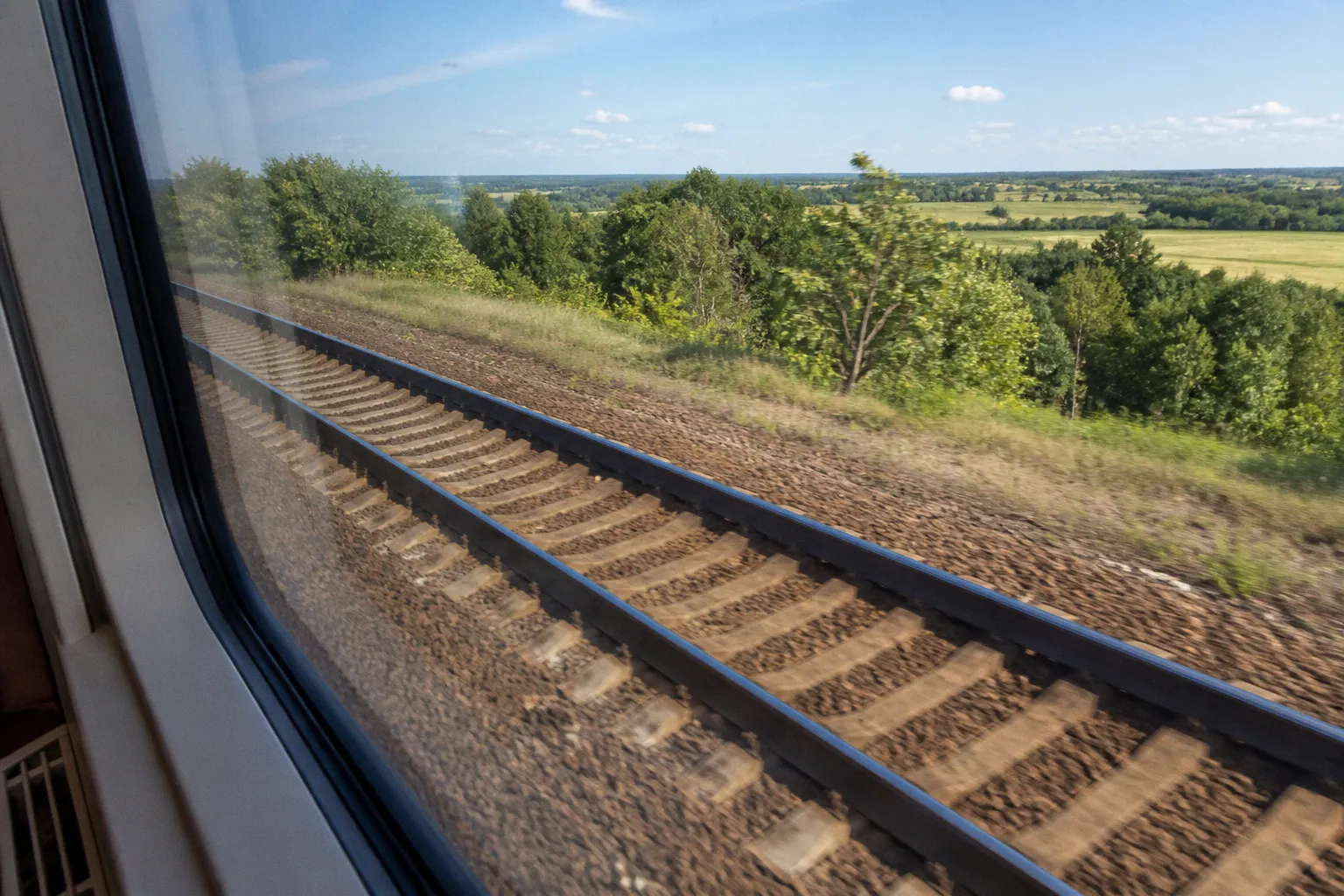
The landscape is not the main reason to choose the Sapsan, but it gives the journey a sense of movement that a flight lacks. Birch forests, broad stretches of countryside, occasional towns, and the approach to the wetter landscape around St. Petersburg pass at window level. You are not spending the entire transfer in a terminal or looking down through cloud. For a first visit, that extra visibility is part of the experience, even if it is not the deciding factor.
Fares use dynamic pricing, so the cheapest economy seats are not guaranteed. Prices rise around Friday afternoons, Sunday evenings, holidays, and periods of heavy summer demand. The White Nights season in June and July is especially popular, and attractive departure times can disappear before the route itself sells out. A ticket that is slightly more expensive but leaves at a sensible hour may still be the better choice if it saves a hotel night, a long taxi ride, or a missed tour.
Booking Strategies for Domestic Flights and Train Tickets
There is a rhythm to this booking that rewards patience, and we have learned to build it into itineraries rather than leaving the transfer to the day before departure.
For the Sapsan, ticket release is the useful trigger. Russian Railways commonly opens sales around 90 days before departure, although release timing and availability can vary by service. The lowest economy fares tend to disappear first on Friday afternoon trains leaving Moscow and Sunday evening services returning from St. Petersburg. These are the slots favored by domestic weekend travelers and business passengers.
Tuesday and Wednesday departures in the middle of the morning are often calmer. They may also fit more comfortably into a sightseeing itinerary: you can have breakfast, leave the hotel without rushing, and arrive in St. Petersburg with enough of the afternoon left for a walk along Nevsky Prospekt or the canals. Early trains are efficient but demand a realistic calculation of how you will reach Leningradsky Station.
For flights, the booking window is less uniform. Major airlines may publish schedules many months in advance, but the cheapest inventory does not necessarily appear at the moment the schedule opens. Prices move with demand, weekday, baggage, and departure time. A fare that looks attractive at first may be tied to a restrictive cabin-bag allowance or a separate charge for checked luggage.
Pobeda, the Russian low-cost carrier, is the clearest example of why the fare rules matter. Its basic structure is designed for travelers with minimal baggage, and the final cost can change substantially once a suitcase is added. This may work for a short independent trip with a small bag. It is less convenient for a traveler carrying winter clothing, shopping, or luggage collected after several weeks on the road.
Rossiya and other carriers serving the route can also apply different baggage conditions depending on the fare family and the agency through which you book. Read the ticket's baggage line rather than relying on the airline name alone. Two passengers on the same aircraft may have very different allowances because they purchased different fare types.
| Booking channel | Foreign Visa/Mastercard acceptance | Best use |
|---|---|---|
| Official Russian Railways website | Often unavailable for foreign-issued cards | Travelers with a compatible Russian payment method |
| Official airline websites | Often unavailable for foreign-issued cards | Travelers whose card and billing route are accepted |
| International-facing rail resellers | May accept international cards | Sapsan and other Russian train tickets |
| International online travel agencies | May accept international cards | Domestic flights, especially when the airline checkout fails |
| Station ticket counter | Payment depends on the counter and available method | Last-minute bookings or travelers already in Russia |
The table is a starting point, not a guarantee. Payment acceptance changes, and an agency that worked for one traveler may decline another card or stop displaying a particular fare. Always confirm that the transaction has produced an issued ticket, not merely a payment receipt or reservation request.
Timing also affects the choice between train and flight. If your Moscow hotel is near Komsomolskaya Square, the Sapsan is naturally efficient. If you are staying on the western side of the city and have a late appointment near Sheremetyevo, a flight may reduce backtracking. In St. Petersburg, a hotel close to Moskovsky Station gives the train another advantage; a destination near the airport or the southern outskirts may make Pulkovo more practical.
For a family or a small group, the train often becomes easier to coordinate. Everyone boards together, luggage stays visible, and there is no question about who has paid for a checked bag or whether one suitcase has exceeded a strict airline limit. For a solo traveler with one small bag, the price and timing of a flight deserve a closer look, especially outside peak periods.
Do not leave the Moscow–St. Petersburg transfer as an unconnected booking if it sits between two fixed arrangements. A late flight can compromise a restaurant reservation, an evening performance, or a next-day excursion. A train delay is possible too, but the consequences are often easier to absorb because the arrival point is already in the city.
Passport Requirements and Boarding Procedures
Every Russian train ticket, including a Sapsan ticket, is issued against the passenger's identity document. For international travelers, that normally means the passport used for the journey. The name and passport number on the ticket must match the document presented at boarding. Enter the name exactly as it appears in the machine-readable zone and booking form, including the correct order and spelling. Do not improvise a transliteration because a familiar version looks more natural in English.
If your passport reads “MUELLER,” the ticket should not read “MULLER” or “MILLER.” A minor typo can become a stressful conversation with the ticket inspector or station attendant. The same caution applies when an agency enters the details on your behalf: review the confirmation immediately, while there is still time to request a correction under the fare rules.
Keep the physical passport accessible. A photograph on your phone is useful as a backup but should not be treated as a substitute for the original document. The ticket may be scanned at the platform entrance and checked again onboard. The conductor is not simply verifying that the barcode works; the passenger details are part of the ticket.
For flights, passport matching applies at check-in and security, with an additional immigration-status check for foreign nationals. The airline may ask to see the Russian visa, where required, or the relevant entry record. Keep the migration card received at border control with your passport rather than buried in checked luggage. It is a small piece of paper, easy to lose, and occasionally requested during domestic travel or hotel registration.
The domestic flight is not a second international border crossing. You do not normally go through Russian immigration again when flying from Moscow to St. Petersburg. You will, however, pass airport security, and the airline may verify that your documents authorize your stay in the country. Allow enough time for that document check, particularly if you are traveling with a visa type or passport that airline staff may need to review manually.
At the train station, the process is usually calmer. You arrive at the correct terminal, locate the departure board, and follow the signs for the Sapsan platform. Depending on the station arrangement and service, you may pass through a metal detector and ticket gate before boarding. The conductor then checks the ticket and passport onboard. Once the documents line up, there is little else to do except find your seat and place your luggage.
Station names deserve attention when arranging a taxi. “Leningradsky Station” is the Moscow departure point; “Moskovsky Station” is the St. Petersburg arrival point. The names reflect the historic direction of the railway and can be confusing when spoken quickly. Show the driver the exact station name in Russian or use the station's map location in the ride-hailing application. A taxi sent to a different railway terminal can erase the time advantage you planned so carefully.
The same principle applies at airports. Check the terminal and airport code, not only the airline and departure time. Moscow's airports are in different parts of the metropolitan area, and a booking that says “Moscow” does not mean the airport is near the city center. For an early flight, the cost of an airport hotel or a pre-booked transfer can make the apparent airfare less attractive than a central train ticket.
Weather, Timing, and the Texture of the Journey
Seasonal conditions do not make either option automatically unreliable, but they change the margin you should leave.
Winter generally strengthens the case for the Sapsan. Moscow and St. Petersburg airports are equipped to operate in snow and cold, and a little frost does not stop the aviation system. The problem is what happens when conditions deteriorate: de-icing, low cloud, runway restrictions, and a backlog of delayed flights can affect the entire schedule. If you have booked through a third-party platform, changing the flight may require more coordination than changing a train ticket.
The train can also be delayed by severe weather or operational issues, but its city-center departure and arrival make the disruption easier to manage. You are not simultaneously dealing with a distant airport, a missed airport transfer, and a new baggage arrangement. For a winter itinerary with theater tickets or a pre-paid tour in St. Petersburg, that simplicity has real value.
Summer brings its own complications. Thunderstorms around Moscow can affect short-haul flights, while demand for both trains and planes rises during holidays and the White Nights season. On a bright summer evening, the train offers a more pleasant transition into St. Petersburg than a late airport arrival followed by a transfer through traffic. If you are traveling on a Friday or Sunday, book the preferred departure rather than assuming another convenient service will remain available.
Spring and autumn are genuine judgment calls. The weather can be mild, rainy, windy, or unexpectedly cold within the same week. We choose according to the day's geography: a train for a morning departure from central Moscow and an evening arrival near Nevsky Prospekt; a flight when the traveler is already near an airport, has a small bag, and needs to continue from Pulkovo.
There is also a difference in how the journey uses your attention. Airports demand a series of small transactions: find the correct terminal, check in, pass security, locate the gate, board, collect luggage, find the transfer. The train compresses most of that into one station arrival and one boarding procedure. You can read, work, eat, or simply watch the landscape without repeatedly unpacking your documents and repacking your bag.
That matters after an international arrival. A traveler who has already spent hours in transit may value predictability more than a theoretical saving of 30 minutes. Conversely, someone finishing a Moscow business meeting beside Sheremetyevo may prefer to fly rather than cross the city for a train. The best answer depends on where the day starts, where it ends, and how much luggage is moving with you.
The Moscow–St. Petersburg corridor is one of the cleanest intercity links in Russia, and either mode can work. But when comparing moscow to st petersburg train vs flight in practical terms, the Sapsan usually wins for central hotels, first-time visitors, families, and travelers carrying more than a small cabin bag. It is not merely a faster-looking alternative to the highway. It is a simpler chain of decisions.
Choose the flight when the airport is already part of your day, the fare remains attractive after baggage and transfers, or the schedule solves a genuine itinerary problem. Choose the train when you want to leave from the center, arrive in the center, keep your luggage beside you, and reduce the number of things that can go wrong.
The air journey may last 1.5 hours. The trip from hotel to hotel is what you will remember — and what determines whether the journey felt efficient or exhausting.