Winter team building in Russia: outdoor program options
Budget review for most Q1 incentive programs surfaces the same leak: accommodation surcharges stacked on last-minute equipment rentals stacked on weather contingencies nobody priced into the original number.
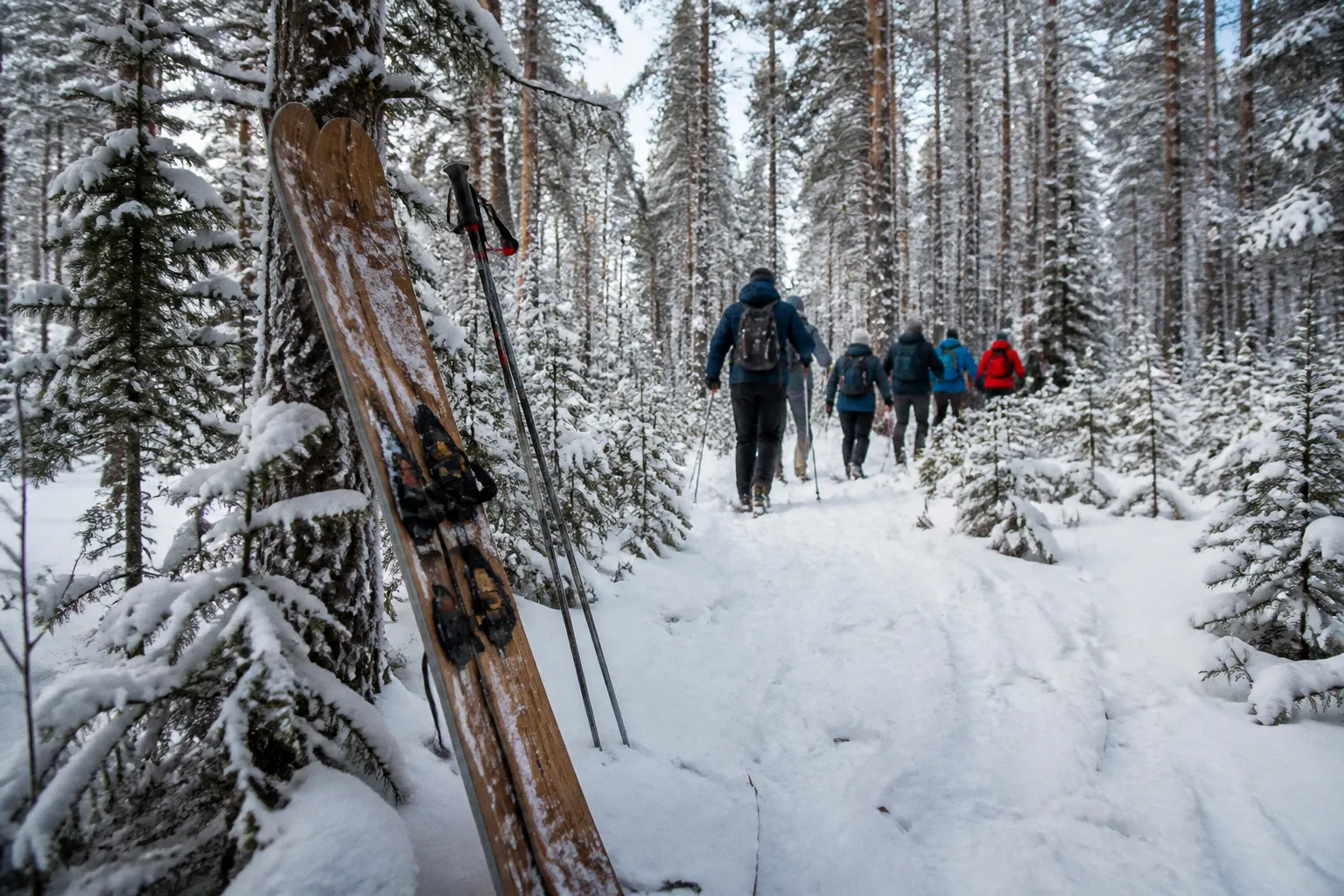
The line item that doubles is rarely the hotel rate. It is the planning assumption that treats cold weather as a liability to engineer around rather than a product to engineer with.
Russia is one of the few destinations where winter is not a seasonal interruption to the operating model. It shapes the transport network, the venue offer, the equipment market, and the activities themselves. That can work in a buyer’s favor, but only when the program is designed around a specific location rather than sold as a generic “Russian winter experience.”
The best team building activities in Russia in winter depend on four variables: headcount, tolerance for transfers, the physical profile of the group, and how much of the program must remain predictable. Moscow and St. Petersburg suit larger groups that need polished venues and short routing. Lake Baikal offers a more demanding Siberia team building program, with a corresponding increase in logistics. The Kola Peninsula is better understood as incentive travel built around the Northern Lights. Regional competitions, including the mid-February igloo-building event in Kazan, offer a cultural format without requiring every participant to take on an adventure-sport risk.
Moscow and St. Petersburg: Urban Winter Challenges and Park Retreats
For groups of 80 to 300 with a hard cap on travel days and a hard requirement on venue polish, Moscow and St. Petersburg are the volume play. Both cities have concentrated winter infrastructure, established corporate-event suppliers, and a deep inventory of hotels and park properties that can absorb a large group without turning every transfer into a separate production.
Moscow is usually the easier proposition for a group that needs international flight access, conference facilities, and a wide choice of accommodation in one package. St. Petersburg has a stronger visual identity for winter programming: historic urban settings, open spaces around the city, and suburban properties that can combine a conference agenda with outdoor activities.
The practical advantage is not that the weather is milder. It is that the fallback options are close. If wind, thaw, or poor visibility makes an outdoor competition unsuitable, the operator can move the group to an indoor venue, shorten the activity, or switch to a nearby property without sacrificing an entire travel day.
Program formats available in St. Petersburg
St. Petersburg operators offer a predictable catalogue of outdoor cold-weather competitions for corporate groups. Common formats include:
- Snowshoe relays, with short timed runs designed around coordination rather than technical ability.
- Ski biathlon, adapted for beginners with controlled distances and supervised target activities.
- Snowmen challenges, where teams compete on construction, presentation, or a shared design brief.
- Igloo building, usually delivered as an instructor-led construction exercise using prepared snow blocks or compacted snow.
- Downhill sled races on a managed course.
- Refereed snowball games built around territory, capture, or timed objectives.
- Human dog-sled races, in which teams pull a sled using harnesses and ropes rather than animals.
- Ice sculpting under instructor supervision.
- Cardboard sled building followed by a controlled descent.
The formats look simple on paper, which is part of their appeal. They can be explained quickly, photographed well, and run with mixed levels of fitness. A group does not need a week of technical preparation before arriving. The operator still has to manage clothing, warm-up space, course condition, and supervision, but the activity itself remains accessible.
For a budget controller, the cost structure is relatively legible. The main spend normally sits in accommodation, venue hire, transfers, instructors, and equipment. The activity premium can remain modest when the supplier is working with standard winter equipment rather than specialist vehicles or remote-terrain logistics. That makes urban and suburban programs suitable for groups that need a visible outdoor component but cannot justify a high-risk expedition.
Moscow park-retreat structure
Moscow’s suburban park hotels package outdoor team challenges around lakes, forest grounds, campfire areas, and seasonal sports rentals. Some properties occupy extensive grounds and can run several activities at once, which helps when a group is too large for one central competition.
The model works well for retreats up to roughly 200 participants when the group can travel directly from the city or arrive through a single airport transfer. For corporate groups already based in Russia, it removes international routing from the equation and concentrates the budget on ground programming. For international groups, the same structure can be useful after a conference or city stay: the park property becomes a short retreat rather than a separate destination.
The limitation is creative rather than logistical. A suburban retreat can begin to look like a winter sports day with a branded backdrop if the activity design is not connected to the company’s purpose. Teams may rotate through sledding, snowshoeing, and construction tasks without ever having to make a meaningful decision together. A stronger brief gives the activities a common objective: a timed rescue scenario, a design challenge, a route-planning exercise, or a team competition where communication matters more than speed.
A winter retreat turns into a budget leak the moment planners treat cold as a problem to solve instead of a format to fill. Moscow’s suburban park-hotel model works because it makes the format operationally simple.
St. Petersburg can support a similar structure, although the choice between the two cities should not be made on scenery alone. Check the distance from the main hotel, the availability of indoor warming areas, the transfer time in evening traffic, and the operator’s ability to move the program to another site if the original park becomes unusable.
Lake Baikal: High-Stakes Adventure and Frozen Terrain Logistics
For groups willing to absorb several hours of internal flying and a per-person cost that materially exceeds the Moscow park-retreat baseline, Lake Baikal trades operational simplicity for an experience that is difficult to reproduce elsewhere. This is the point at which winter becomes the central product rather than the setting.
Siberian winter conditions are part of the appeal, but they also expose weak planning quickly. A program on or near the lake must account for cold, wind, road conditions, ice access, equipment failure, and the physical difference between a short excursion and a full day in an exposed landscape. The group’s clothing, fitness, and tolerance for uncertainty matter as much as the activity list.
Activity matrix at Lake Baikal
| Activity | Skill floor | Group sweet spot | Vendor dependency |
|---|---|---|---|
| Dog-sledding along the taiga | Low | 12–30 | High — sled dogs, guides, thermal gear |
| Snowmobile riding on frozen lake surface | Moderate | 8–20 | High — cold-rated vehicles, fuel logistics |
| Ice yachting on lake ice | Moderate to high | 6–12 | Very high — specialist vessels, route and ice verification |
| Ice skating on natural lake ice | Low | Any | Moderate — maintained areas, skate rentals |
| Hovercraft ice crossing | Low | 10–25 | High — specialist transport and safety briefing |
| 4WD expedition across frozen terrain | Moderate | 6–16 | High — cold-rated vehicles and recovery equipment |
This is not a menu to be copied into a proposal. Each row represents a different vendor decision. Dog-sledding and 4WD excursions may be easier to source across the Irkutsk region. Ice yachting and hovercraft crossings depend on a smaller pool of operators with the right equipment, crews, route knowledge, and permission to operate in the selected area.
Lock the supplier before you lock the date. Ask who owns the equipment, where it is stored, how it is inspected before the season, and what happens if one vehicle becomes unavailable. A supplier that quietly aggregates vehicles and thermal gear from several tourism businesses may still be capable, but the responsibility for coordination should be visible in the contract.
Risk lines specific to Baikal
Ice access is the first major distinction between a Baikal program and an ordinary snow activity. Ice conditions change from season to season and from one part of the lake to another. The selected operator should explain how routes are assessed, who authorizes a crossing, what conditions stop the activity, and how the group is informed if the route changes.
Equipment cold-rating is the second. A standard rental suit may be adequate for a short transfer and inadequate for several hours in wind. The relevant question is not whether a supplier has “winter equipment,” but what equipment is issued for the exact activity, exposure time, and temperature range. Build a spare-size policy into the operating plan, especially for gloves, boots, face protection, and outer layers.
The third issue is medical access. There is no single evacuation profile for Lake Baikal. A lakeside hotel, a settlement-based activity, and a mid-lake route can have very different transfer times and medical options. The operator should provide the route-specific plan, including the nearest suitable medical facility, transport method, communication procedure, and the point at which the group would be returned to the main road or accommodation. Do not accept a generic statement based only on the hotel address.
The same logic applies to participant screening. Snowmobile riding, ice crossings, and long outdoor rotations are not appropriate for every employee simply because the activity is marketed as beginner-friendly. A good brief separates the core group from optional activities and gives the operator enough information to plan alternatives without publicly labeling participants by ability or medical status.
The Kola Peninsula: Incentive Travel and Northern Lights Expeditions
For a leadership-tier retreat where the goal is reward rather than team cohesion—top performers, regional heads, or a small client group—the Kola Peninsula operates on a different model. This is incentive travel, not team building at scale: smaller groups, higher per-person spend, fewer synchronized activities, and a larger share of the program built around atmosphere and timing.
That distinction matters when comparing winter corporate events in Russia. A Northern Lights expedition may produce a stronger emotional memory than a Moscow competition, but it is not automatically a better team-building tool. Participants can share an extraordinary setting without having to solve anything together. If cohesion is the objective, the aurora should sit alongside a structured activity rather than replace it.
Northern Lights as the core deliverable
The aurora viewing season generally runs through the darker months from autumn into early spring. Viewing depends on several factors at once: darkness, cloud cover, visibility, and solar activity. No operator can guarantee a sighting or promise a particular intensity on a particular night.
That changes the way the itinerary should be written. The Northern Lights are the headline, but the trip needs a complete program even when the sky does not cooperate. Saami cultural visits, husky-park experiences, snowmobile transfers, snowshoeing, local dining, and a sub-Arctic hotel or tented camp can all carry the schedule. The value of the trip should not disappear with the cloud cover.
A longer stay may create more opportunities to attempt viewing, but there is no universal number of nights that creates statistical certainty. The right duration depends on the season, the route, the accommodation, the group’s budget, and the operator’s ability to move to a clearer location. Ask the supplier to explain the viewing strategy in practical terms: how many attempts are planned, whether the group can relocate, how late-night departures are handled, and what indoor programming replaces an abandoned outing.
Weather and cloud-cover policies must be negotiated in writing. They are not uniform industry terms. One operator may offer a rescheduled excursion if conditions prevent departure; another may provide an alternative activity; another may treat the missed outing as a normal weather risk. The contract should state exactly what is included, what is refundable, whether a replacement excursion is possible, and whether unused services can be credited toward a future booking. These are commercial terms to agree with the selected supplier, not standard protections to assume.
Saami villages and husky parks as supporting programming
The cultural anchor of the Kola Peninsula is Saami heritage; the experience layer is often a husky park or a winter transfer through the surrounding landscape. Both can fit incentive groups of roughly 10 to 40 more comfortably than a large salesforce retreat.
Scale changes the character of the visit. A small group can move through a cultural program with time for conversation and questions. A larger group needs rotations, additional guides, more transport capacity, and a clear plan for waiting periods in the cold. If the group exceeds the practical capacity of the site, the operator should split the experience into timed waves rather than promise that everyone will receive the same program simultaneously.
For groups above that scale, Moscow or St. Petersburg usually offers a more controllable anchor. The Kola Peninsula can still work, but it becomes a collection of parallel logistics rather than one shared incentive experience.
Regional Traditions: Igloo Building and Cultural Winter Competitions
Cultural-format programs sit in a different cost and risk category from adventure or aurora programs. The anchor here is the regional igloo-building competition, an outdoor winter format associated with regional events and active programming. Kazan is an established mid-February competition venue.
The value of this format is not a set of universal mechanics. Event duration, team size, judging, construction materials, and the role of cultural programming can vary by organizer and year. A corporate group should ask the selected operator for the current event brief rather than assume that every igloo-building program follows the same competition structure.
What can be planned with more confidence is the basic design principle: teams work on a shared physical task in cold conditions, then connect that task to a broader regional or cultural setting. The activity can support a group interested in cross-cultural integration, collaboration, and creative problem-solving without demanding the technical commitment of ice yachting or a long snowmobile route.
The format also gives planners room to protect the conference agenda. A regional competition can be used as a defined outdoor block while plenary sessions, breakouts, dinners, and awards remain in a nearby hotel or event venue. The exact balance has to be agreed with the organizer, especially if construction or judging is part of a public event. Do not promise a precise timetable or a fixed share of the agenda until the current event schedule is confirmed.
This is where regional traditions can add more than decoration. A winter event becomes weak when the cultural layer is reduced to costumes, a photo opportunity, and a generic dinner. A stronger brief asks what the group is actually learning, who leads the activity, how local participants are involved, and how the experience will be interpreted for an international audience. The answer may be modest: a guided explanation, a local workshop, a food program, or a conversation with the event organizers. It still needs to be intentional.
The same principle applies to other regional winter competitions. Let the local format determine the schedule instead of importing a fixed corporate template and placing it in a different landscape. In Kazan, that may mean building the day around the mid-February event calendar. In another region, it may mean a shorter activity with a separate cultural program. The operator should confirm what is genuinely available for the selected dates and group size.
Cultural winter competitions work best when the local format is treated as the program, not as scenery added behind a standard corporate agenda.
Operational Planning for Cold-Weather Corporate Events
The four formats above describe activities. This section describes what you should be writing into the proposal and contract before you sign.
Vendor selection criteria
Three criteria do the initial filtering work for cold-weather operators in Russia. Treat each one as a contract gate rather than a line in a marketing presentation.
- References with documented recovery experience. Ask for recent corporate references and ask what happened when weather, equipment, transport, or participant readiness disrupted the plan. A flawless sales story tells you less than a clear account of how the operator recovered from a failed activity.
- Activity-specific insurance. Generic event liability may not describe snowmobile riding, ice crossings, dog-sledding, natural-ice skating, or other specialist activities. Request the relevant policy schedule and exclusions. Confirm who is responsible for participants, equipment, transport, and third-party sites.
- Owned equipment or transparent supplier control. A supplier that owns its cold-rated vehicles and gear may have more control over availability. A supplier using rental partners can still be suitable, but the chain of responsibility should be written down: who provides the equipment, who inspects it, who replaces it, and who pays if it is unavailable.
The strongest operator is not necessarily the one with the most dramatic activity catalogue. It is the one that can explain the limits of each activity without trying to turn every concern into a sales objection.
Capacity and contingency planning
A winter program needs contingencies at three levels: the activity, the transport route, and the accommodation.
For the activity, agree on a substitute that preserves the purpose of the original block. If a snowmobile route is closed, a generic indoor lecture is not an equivalent replacement. It may be safer, but it does not deliver the same shared challenge. The backup should be selected in advance and priced clearly.
For transport, establish the decision point at which a road, airport, lake route, or excursion is considered unavailable. Specify who makes that call and how quickly the group is informed. A vague promise to “monitor the weather” leaves the buyer paying for indecision.
For accommodation, ask whether additional nights, meals, meeting rooms, and transfers can be held or added if the group cannot depart as planned. There is no universal winter contract term that automatically gives the client a free night or converts the whole program into a future credit. These protections vary by supplier, property, destination, and booking conditions. Negotiate them directly and write the trigger into the agreement.
The operating plan should also identify:
1. The indoor warming point for every outdoor activity, including how long participants can remain outside before a rotation.
2. The clothing issue and return process, with spare sizes and a plan for wet gloves, boots, and outer layers.
3. The transport reserve, including replacement vehicles and drivers where the location makes a missed transfer consequential.
4. The medical response for the exact activity site, not merely the address of the hotel.
5. The communication system used when mobile coverage is weak or the group is divided across routes.
6. The procedure for removing a participant from an activity without turning the decision into a public failure.
Visa support and arrival coordination
For international corporate groups, the winter program begins before the first outdoor briefing. Visa requirements, invitation documents, entry rules, and processing times depend on nationality and current regulations. They should be checked for every participant category rather than copied from a previous group’s file.
A destination management company or visa-support provider should receive the final participant list early enough to identify missing documents, passport validity issues, and changes in routing. The same provider should coordinate the relationship between the visa itinerary and the actual program. A package that lists Moscow as the destination while the group later moves to Baikal or Murmansk may require additional documentation or a clearer explanation of internal travel.
Do not treat visa support as an administrative add-on to be solved after the event design. It affects the choice of arrival city, the amount of internal flying, the timing of hotel confirmations, and the feasibility of late changes. For incentive groups, one unresolved document can hold up a participant whose place in the program is commercially important.
Cost optimization levers
Three levers scale across the main formats.
1. Equipment standardization. Rent rather than purchase for an activity used only occasionally, but consolidate the rental order where possible. The purpose is not merely to seek a lower rate. It is to reduce the number of suppliers responsible for sizing, delivery, inspection, and replacement.
2. Venue consolidation. A single-property stay reduces transfers and gives the operations team one base for meals, briefings, storage, and weather changes. The cheapest room rate can be a false economy if every activity requires a long transfer from the hotel.
3. Lead time. Premium winter dates and specialist equipment become harder to secure as the season approaches. Build the calendar backward from the event date and confirm the venue, operator, visa pathway, and principal activities before the itinerary becomes non-refundable.
For Moscow and St. Petersburg, the savings often come from reducing transfers and using a property with enough on-site infrastructure. For Baikal and the Kola Peninsula, the larger question is whether the group is buying a genuinely remote experience or paying for remote logistics that do not materially improve the program. For regional cultural competitions, confirm the public event calendar before committing to a package built around it.
The vendor who cannot explain ice verification, equipment sourcing, weather substitutions, and medical-evacuation timelines in the same conversation is not ready to carry a winter corporate program.
The final choice is therefore less romantic than the destination brochure suggests. Large groups with limited travel days will usually find the cleanest operating model in Moscow or St. Petersburg. Lake Baikal is the stronger answer when the experience itself is the deliverable and the group accepts a higher logistics burden. The Kola Peninsula suits incentive-tier recognition travel, provided the itinerary remains valuable when the sky is cloudy. Kazan and other regional venues fill the space where cultural integration and shared construction matter more than speed or technical adventure.
The negotiation move that closes most Russian winter contracts is straightforward: attach the operational facts to the agreement. Equipment inventory, supplier responsibility, weather substitutions, route decisions, medical response, visa support, and cancellation terms should not remain marketing language. They should be written as deliverables, with the selected operator responsible for confirming what can actually be provided on the chosen dates.