Russian corporate group logistics: five hidden budget leaks
A flight booked less than seven days before departure can cost 40% to 50% more than an advance group booking. That is not a minor variance.
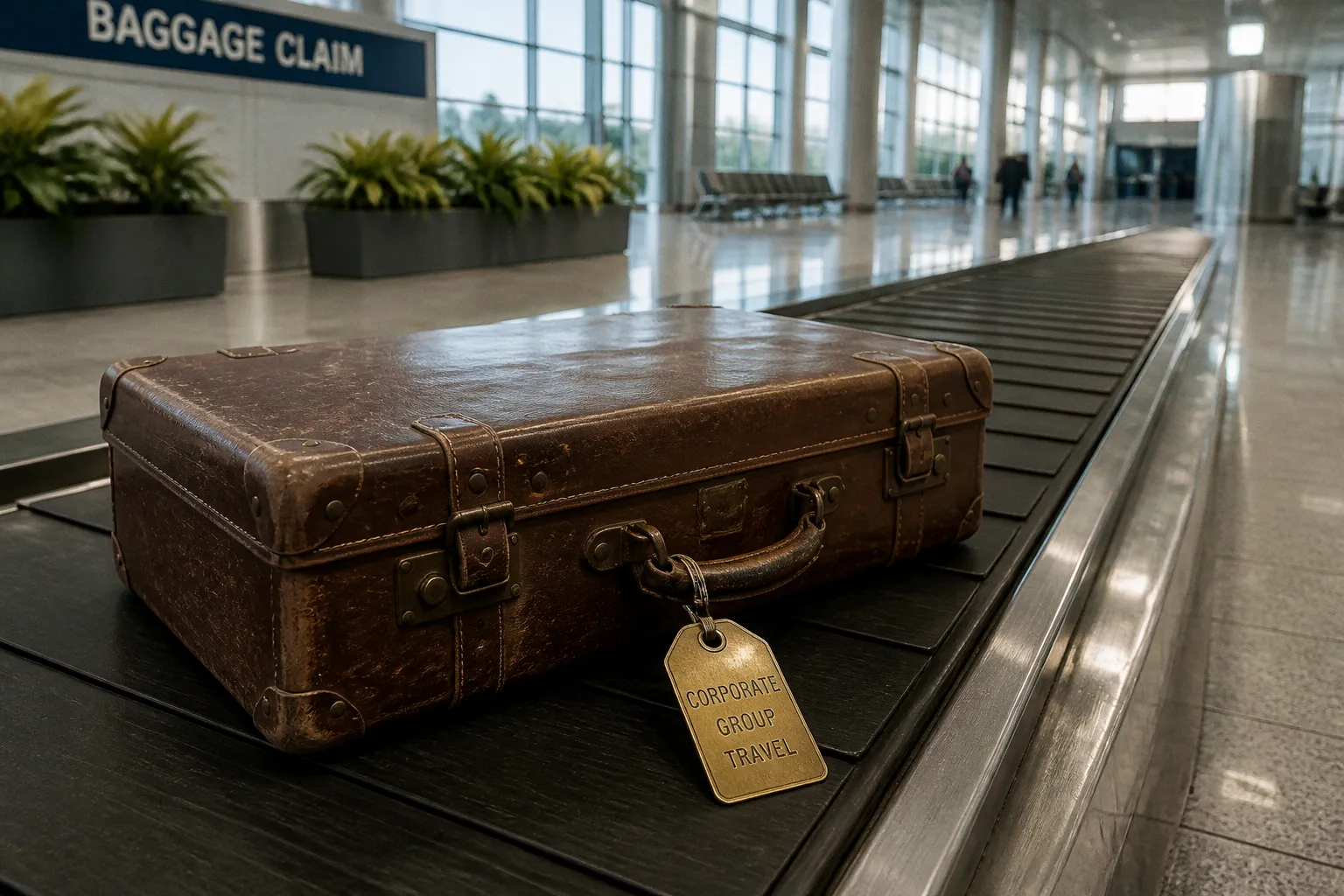
It can erase the contingency reserve before the first transfer leaves the airport.
Russian corporate group travel logistics also fails through smaller leaks: decentralized bookings, transport supplements, venue labor, individual meal claims, Wi-Fi upgrades, permit delays, and idle vehicle hours. Each item may appear manageable. In combination, they can push total event spending 15% to 30% above the approved budget.
The control model is procedural. Centralize purchasing. Fix passenger data deadlines. Separate transport corridors. Lock venue inclusions in writing. Build permit and payment dependencies into the master schedule. Do not treat these as administrative details. They are cost controls.
1. Decentralized booking removes the corporate rate
The first leak begins before the itinerary is finalized.
When employees, departments, or regional offices book flights and accommodation independently, the company loses control of the inventory. The result is not only a higher ticket price. It is a fragmented operation with separate invoices, inconsistent fare rules, missed cancellation windows, and no reliable passenger manifest.
Unmanaged travel bookings and non-centralized purchasing can consume 15% to 30% of overall travel spend through missed corporate rates and uncontrolled reimbursements. The exact loss depends on the program, but the mechanism is consistent:
- The group is split across several booking channels.
- Corporate or group rates are not applied to all passengers.
- Arrival times no longer support one transfer plan.
- Late changes generate separate service fees.
- Employees submit expenses outside the approved cost structure.
- The operations team pays for flexibility that was not priced at the start.
A Russian incentive program requires one operational record. Passenger names, passport details, arrival terminals, rail segments, hotel nights, dietary requirements, visa status, and transfer assignments must sit in one controlled manifest. A spreadsheet is sufficient if it has one owner, one version, and a timestamp for every change. A booking platform is preferable when the group includes several countries, multiple arrival waves, or strict reporting requirements.
The booking control sequence
Use a deadline sequence. Do not wait for "final names" if the supplier requires an earlier commitment.
1. Create the master passenger file.
Separate confirmed travelers, provisional travelers, and pending approvals. Do not mix them in one status column.
2. Set a name-freeze deadline.
The deadline must precede the supplier's penalty window. If the airline, railway operator, hotel, or visa provider uses a different cutoff, record each cutoff separately.
3. Route every booking through one procurement channel.
Employee self-booking should be an exception with written approval, not the default process.
4. Match transport to the ground plan.
A lower air fare is not a saving if it creates a separate vehicle movement, an additional hotel night, or a driver standby period.
5. Reconcile the manifest against invoices.
Review names, dates, room nights, transfers, taxes, cancellation fees, and unused services. Do this before the event, not after the finance department receives the final file.
6. Freeze the cost baseline.
Any change after the baseline must show the operational reason, the added cost, and the approving person.
This is the core of business travel Russia logistics. Travel procurement and event operations cannot run as separate workstreams. The cheapest component in isolation may produce the highest total cost.
A group rate is not a discount if the group is not managed as one group.
Room blocks are operational inventory
Hotels in Moscow and St. Petersburg must be treated as inventory, not as a line in a proposal. Room blocks affect transfers, check-in staffing, luggage handling, breakfast capacity, meeting-room access, and late arrival procedures.
The accommodation rate can change during peak periods and major forums. Do not build the budget around a static room price unless the rate, release date, tax treatment, and cancellation terms are documented.
Record at least these fields:
- contracted room type and number of rooms;
- release dates for unused rooms;
- early check-in and late check-out terms;
- breakfast inclusion and service hours;
- payment schedule;
- cancellation scale;
- city tax or other mandatory charges, if applicable;
- group check-in procedure;
- luggage storage and handling;
- location of meeting rooms relative to guest rooms.
A low room rate with an early release date can be more expensive than a higher rate with controlled attrition. A block that is released before the passenger list stabilizes creates a second booking cycle. That cycle is where rates rise and room categories disappear.
2. Ground transport absorbs the next margin
Transport rates in Russia are exposed to fuel and carrier cost changes. Fuel price increases have raised transportation carrier expenses by 4.5% to 5.5%, while commercial freight and bus transport rates have increased by an average of 12% to 15%. On specific regional routes, increases can reach 50%.
The operational error is to budget transfers as a single product: "airport to hotel" or "hotel to venue." A group movement is a corridor with time, vehicle, luggage, driver, access, and waiting requirements.
For every movement, define:
- departure point and loading zone;
- destination and access restrictions;
- passenger count;
- luggage volume;
- vehicle capacity;
- loading duration;
- route duration;
- permitted driver hours;
- standby requirement;
- return movement;
- backup vehicle position;
- tolls, parking, and access fees;
- language and coordination requirements.
A 45-seat coach does not provide 45 usable seats when the group carries conference luggage, display materials, or equipment. Capacity must be calculated against the actual load. Splitting one movement into two vehicles may be required. It may also create a second driver, second parking charge, and second dispatch window. The budget must show these consequences before approval.
Transfer corridors must be separated
Do not combine incompatible movements in one transfer block. Airport arrivals, hotel-to-venue shuttles, evening departures, and regional excursions have different failure points.
| Transfer corridor | Primary cost drivers | Control point | Backup requirement |
|---|---|---|---|
| Airport to hotel | Arrival spread, terminal access, luggage volume, waiting time | Consolidate arrivals by time window | Dispatch contact and spare capacity |
| Hotel to venue | Traffic, venue loading zone, security access, repeated departures | Assign fixed departure slots | Second departure wave |
| Venue to dinner or activity | Road restrictions, parking, return timing | Confirm venue and restaurant access | Alternate pickup point |
| Intercity movement | Route length, driver hours, fuel, regional availability | Confirm corridor and rest requirements | Vehicle or rail alternative |
| Hotel to airport | Check-in deadline, baggage, flight changes | Set collection time from airline cutoffs | Separate emergency transfer |
The common mistake is to price only vehicle hire. The actual transport line includes dispatch, parking, waiting, route changes, tolls, additional mileage, and late-night operation. These must be listed in the supplier quotation.
Do not assume that a foreign corporate card will function without a specialized cross-border payment solution for local Russian services. Payment routing can affect vehicle confirmation, deposits, and supplier release. The procurement plan must identify who pays, in which currency, through which approved channel, and at what stage.
Idle time is a billable service
A vehicle waiting outside a venue is not free capacity. It is paid operational downtime. The same applies to drivers held between an early arrival and a late departure.
Build a movement schedule with:
- actual passenger release time;
- baggage collection time;
- venue access time;
- driver arrival time;
- loading time;
- expected departure;
- maximum included waiting;
- overtime trigger;
- dispatch approval for route changes.
Do not instruct drivers to "wait nearby" without a time limit. That phrase transfers the cost from the itinerary to the final invoice.
3. The last-minute premium starts before the last minute
Flights booked within seven days of departure can carry a 40% to 50% premium compared with advance group bookings. The operational cause is usually not a single late decision. It is a chain of unresolved approvals:
- the attendee list is not frozen;
- passport details are missing;
- visa status is unclear;
- the host has not confirmed the invitation data;
- the company is waiting for internal budget approval;
- the group has not selected one arrival window;
- rail and air segments are being priced separately;
- a speaker or executive is added outside the passenger process.
The deadline must therefore be placed at the start of the project. A visa application, an airline booking, and a transfer reservation have different lead times. The slowest mandatory dependency determines the schedule.
For international groups, establish these milestones:
1. Destination and entry review.
Confirm passport validity, visa route, invitation requirements, permitted stay, and transit conditions.
2. Participant data collection.
Use the exact document fields required by the carrier, visa provider, hotel, and receiving organization.
3. Preliminary transport hold.
Hold group inventory where the supplier permits it. Record the hold expiration.
4. Approval and payment.
Assign one financial owner. A booking without a payment path is not a confirmed booking.
5. Passenger name submission.
Meet the carrier deadline. Do not rely on a verbal extension.
6. Final manifest reconciliation.
Compare tickets, visas, hotel rooms, and transfers. Any mismatch is an operational defect.
A transit corridor needs its own review. An itinerary can look efficient on paper and still fail because the connection requires a terminal change, an additional entry procedure, a new baggage process, or a document that the passenger does not hold. Route selection must include the border and transfer process, not only the timetable.
Use one arrival window where the program allows it
A group arriving across a wide time range requires repeated airport coordination. It may require multiple vehicles, longer guide coverage, separate welcome staff, and additional luggage storage. The cost is not always visible in the air fare.
A controlled arrival window reduces:
- vehicle duplication;
- dispatch hours;
- airport meet-and-greet coverage;
- hotel check-in fragmentation;
- meal and meeting-room idle time;
- risk of missing the first scheduled activity.
Do not force all passengers into one flight if the fare, visa, or route makes that inefficient. Use a defined primary wave and a defined secondary wave. Price both. Assign each passenger to a transfer corridor before tickets are issued.
4. Venue inflation is hidden in the exclusions
Meeting and venue logistics are exposed to two cost pressures: accommodation rates and A/V services. Around 80% of event planners report difficulty with rising accommodation costs, and more than 70% face higher A/V service costs.
The proposal often looks complete because it contains a room rental and a package rate. The exclusions carry the variance.
A venue quotation must state whether the following are included:
- room rental duration;
- setup and dismantling time;
- furniture;
- stage or riser;
- lectern;
- microphones;
- translation equipment;
- projection and display;
- lighting;
- sound technician;
- event technician;
- internet bandwidth;
- dedicated Wi-Fi network;
- power supply and distribution;
- branding installation;
- security;
- cleaning;
- overtime;
- storage;
- loading access;
- service charge;
- taxes;
- cancellation and postponement terms.
"Standard A/V" has no budget meaning. It must be converted into equipment and labor. A room with a projector is not the same as a room with two presentation screens, stage lighting, recording, interpretation, remote participation, and an on-site technician.
Build a venue matrix before selecting the room
| Requirement | Included in base rate | Charged separately | Approval needed |
|---|---|---|---|
| Meeting room access | Confirm hours | Overtime | Yes |
| Setup and dismantling | Confirm duration | Extra labor | Yes |
| Screens and projection | Specify quantity | Additional equipment | Yes |
| Sound and microphones | Specify equipment | Technician or upgrade | Yes |
| Wi-Fi | State network and capacity | Dedicated bandwidth | Yes |
| Branding | Confirm permitted surfaces | Installation labor | Yes |
| Catering | State menu and service window | Extended service | Yes |
| Loading and storage | Confirm access | Handling or storage fee | Yes |
This matrix belongs in the contract or operating order. It should not remain in a sales presentation.
Roughly 65% of corporate event planners experience budget overruns. Ground transport additions, individual meal reimbursements, and unbudgeted venue labor or Wi-Fi upgrades are recurring causes. The control response is not to remove all flexibility. It is to define the authorization path for flexibility.
Use a change order for:
- additional vehicles;
- extra transfer waves;
- extended room access;
- A/V upgrades;
- additional staff;
- menu changes;
- special dietary production;
- Wi-Fi expansion;
- late-night service;
- branding installation outside the agreed scope.
No verbal request should become a payable service without a named approver. On-site staff must know the spending limit and the escalation contact. Otherwise, the venue controls the change process by default.
5. Permits and downtime turn the schedule into a cost center
Corporate group travel includes more than passengers and rooms. It may require local regulatory permits, venue approvals, road access, security coordination, museum or heritage-site permissions, filming clearance, and activity-specific documentation.
Specialized travel coordination, accommodation room blocks, and local regulatory permits commonly account for 20% to 30% of total logistics budgets for corporate group and international destination events. This is a planning category, not an incidental fee.
Permit lead times must be integrated with the itinerary. A city transfer, private reception, museum access, industrial visit, or outdoor team activity may depend on approvals outside the hotel and airline process. If the document is late, the program may require:
- a route change;
- a different venue;
- additional security;
- extra transport;
- a revised insurance file;
- a new contract;
- a second briefing;
- a cancellation payment.
The schedule must show each permit as a dependency with an owner and release date. The timetable must be costed as a dependency chain, not a list of activities. Each entry should show the operational owner, the cost category, and the trigger that releases the cost.
The operational downtime ledger
Downtime is usually omitted because it does not appear as a named activity. It still produces cost.
Record:
- staff arrival before the group;
- vehicle standby;
- guide and interpreter holding time;
- venue setup;
- registration and badge production;
- security screening;
- luggage storage;
- delayed check-in;
- meal service outside the booked window;
- transfer gaps between activities;
- departure-day early access.
A 90-minute gap between hotel checkout and airport collection may require luggage storage, staff coverage, and a holding area. A late venue opening may extend the coach hire. A delayed badge process can push the entire program into overtime. The downtime ledger turns these gaps from invisible overhead into a line item that can be planned, reduced, or absorbed deliberately.
Permit dependencies by program type
Different programs carry different permit loads. A standard hotel conference rarely requires more than venue confirmation and basic security coordination. A program that includes factory visits, private museums, restricted areas, or outdoor activities expands the permit layer significantly.
Build a permit list at the start of the project, not after the venue is confirmed:
- venue access confirmation;
- external vendor approval for A/V, catering, or production;
- film or photography clearance;
- security pass issuance;
- road access or parking permission;
- coach idling permit for restricted zones;
- museum, gallery, or heritage-site reservation;
- industrial site safety clearance;
- alcohol service notification, where required;
- drone operation permit, if applicable;
- public gathering notification for outdoor segments.
Each permit carries a lead time and a dependency. The master schedule must show the dependency, not just the event date.
Insurance and risk exposure
Downtime and permit failures also affect insurance. A cancelled activity, a delayed venue, or a forced route change may require notification to the insurer before the new plan is executed. Failure to notify can affect coverage.
Document:
- the activity underwritten;
- the cancellation or change trigger;
- the notification deadline;
- the new activity profile;
- the confirmed communication channel.
The procurement and operations teams must agree on the insurance workflow before the first invoice is raised. A claim submitted without a notification trail is typically declined, which converts a permit delay into a direct out-of-pocket cost.
Five leaks, one operational record
The five leaks do not exist in isolation. A decentralized booking creates late transfers, late transfers create idle vehicles, idle vehicles create added hours, added hours trigger change orders, change orders bypass the venue matrix, and venue overruns interact with permit dependencies. Each leak feeds the next.
The fix is procedural, not financial. The operational record is the single source of truth. The procurement channel is the single booking path. The transfer corridor is the single movement plan. The venue matrix is the single inclusion list. The permit map is the single dependency chain. Each control is auditable, each cost is traceable, each change has a named approver.
This is the working model for incentive travel Russia budget control and corporate MICE logistics in the current environment. It does not eliminate every variance, but it removes the leaks that produce double-digit overruns without warning.
If the cost is not visible in the operational record, it will appear in the final invoice.
A group program is not priced by the line items in a proposal. It is priced by the discipline that runs from the first passenger file to the last transfer reconciliation. The five leaks are closed by that discipline, not by extra budget.