Russian incentive travel: regional options for groups
The most common mistake in Russian incentive travel is not choosing the wrong city. It is underestimating the country between the airport, the hotel, the activity site, and the evening venue.
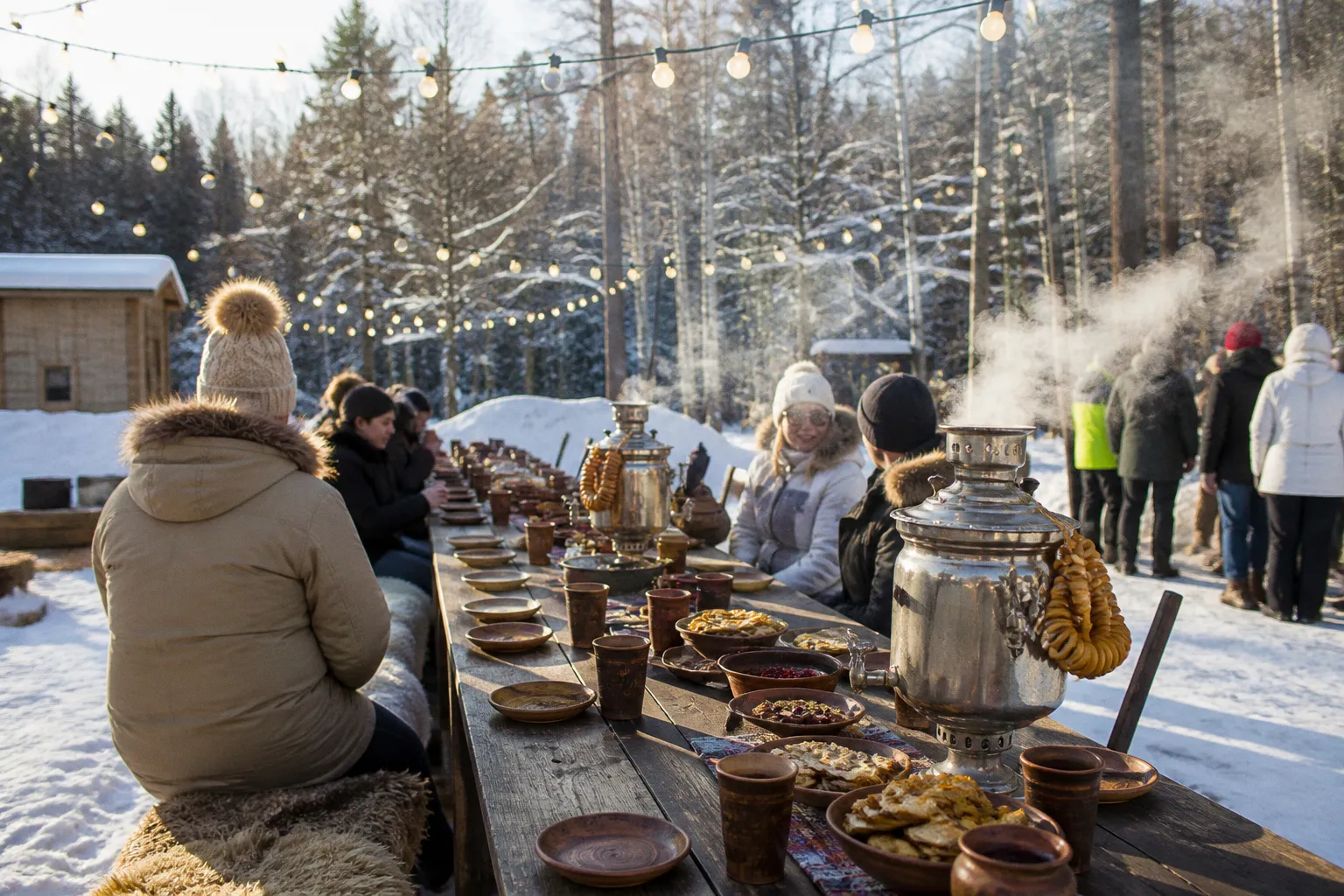
A group may arrive in a city with excellent conference facilities and still lose the value of the programme if the daily schedule ignores elevation, road conditions, winter daylight, or the simple fatigue of moving across a vast landscape.
Compare car rental deals in United Kingdom
See available offersPartner link — DiscoverCars comparisonFor corporate groups, the right regional destination is therefore less about collecting famous locations and more about matching the geography to the purpose of the trip. Sochi offers a mature event environment where mountain and coastal programmes can sit within one itinerary. Kazan and the Golden Ring are stronger when cultural interpretation and urban comfort matter. Altai, Lake Baikal, Kamchatka, and Murmansk work differently: they create a stronger sense of place, but they demand more careful pacing, realistic transfer planning, and a tolerance for weather-led changes.
Here is the catch: Russian incentive travel regional options are not interchangeable versions of Moscow or St Petersburg. Each destination has its own operating rhythm, and a successful programme respects it from the first airport transfer to the final departure.
Sochi: the most adaptable regional MICE base
Sochi remains one of the easiest regional destinations in Russia to shape around different corporate objectives because its geography gives planners several environments within one broad destination. The coast provides comparatively straightforward access to hotels, restaurants, entertainment, and formal event spaces, while the mountain zone introduces a different scale of experience without requiring an expedition-style programme.
The infrastructure developed around the 2014 Winter Olympic Games gives Sochi a particularly strong foundation for conferences, product launches, incentive dinners, and large group movements. The Olympic Park, the Formula 1 track, Sochi Park, and Sky Park offer distinct activity formats, from structured entertainment to high-adrenaline team challenges. The city’s strength is not that every group should visit all of them; it is that a planner can build several levels of intensity without changing the destination entirely.
For a corporate group, the most useful distinction is between a coastal base and a mountain base.
A coastal programme is generally easier for mixed groups, especially when attendance includes senior executives, partners, or guests who do not want every day to involve physical exertion. It also gives us more flexibility for evening functions, restaurant bookings, and parallel activities. A mountain programme, by contrast, sharpens the sense of retreat and works well for leadership gatherings, recognition travel, or smaller groups that value outdoor time over urban variety.
The transfer between these zones is not merely a line on a map. Traffic, road conditions, loading times, luggage, and the number of vehicles all affect the real duration. A group that has spent a morning in transit may not be ready for a demanding afternoon activity simply because the map suggests the two locations are close.
Where Sochi performs well
- Large corporate events: Olympic-era venues and established hotel infrastructure can support formal programmes more comfortably than many remote destinations.
- Mixed-interest groups: A single itinerary can combine coastal leisure, mountain excursions, structured entertainment, and formal meetings.
- Shoulder-season travel: Sochi’s coastal and mountain microclimates create different possibilities across the year, although rain, fog, and road conditions still need to be monitored.
- Shorter incentive programmes: For groups with only a few days, the destination can deliver variety without the additional internal flight logistics required by Kamchatka or Baikal.
Sochi is often the strongest answer when the brief asks for Russian MICE programmes with a visible experiential element but does not allow the schedule to become physically demanding. It also works well when the group profile is mixed and the organiser needs a reliable alternative for anyone who cannot join an outdoor activity.
Sochi’s advantage is not simply its event infrastructure; it is the ability to change altitude, atmosphere, and activity level without changing the entire operating base.
The limitations are equally clear. Sochi can feel over-programmed if every available attraction is added to the agenda. Corporate guests need time to recover from flights, settle into the hotel, and enjoy the destination without being moved from one activation to another. We normally protect at least one unhurried window in the itinerary, particularly after arrival and before the principal event.
Altai: a mountain retreat with genuine event capacity
Altai is a more deliberate choice than Sochi. It is not the destination we select when the priority is immediate urban convenience. It is the destination we consider when a company wants the physical setting itself to become part of the programme: mountain air, open space, outdoor movement, and a retreat atmosphere that is difficult to reproduce in a metropolitan hotel district.
The Manzherok resort is especially relevant for corporate groups because it combines a mountain setting with modern MICE infrastructure. The resort has more than 30 venues for corporate events and business retreats, allowing organisers to work with different room sizes and formats rather than placing every group activity in a single conference hall.
That combination changes the planning conversation. Altai does not have to be treated only as a reward trip built around scenery. It can host strategic sessions, leadership workshops, recognition events, and team programmes, provided the schedule leaves room for weather and transfer realities.
A practical Altai itinerary usually benefits from a clear separation between cognitive and physical demands. A morning meeting followed by a moderate outdoor excursion may work well. A full day of transfers, high-energy team building, and a formal dinner can quickly exhaust a group, particularly if guests are adjusting to a different elevation and a more remote environment.
Corporate formats that suit Altai
1. Leadership retreat: Use the resort as a concentrated base for planning sessions, with short outdoor activities providing a change of pace rather than becoming the main event.
2. Recognition programme: Build around scenic routes, mountain experiences, and a carefully produced evening function, keeping the daily movement manageable.
3. Team development: Choose activities that require cooperation without assuming that every participant is comfortable with height, speed, or uneven terrain.
4. Small or mid-sized business gathering: Altai is particularly effective when the group values privacy, shared time, and a strong environmental setting over extensive nightlife.
The strongest Altai programmes usually have a spacious rhythm. We plan fewer headline activities, then give them enough time to feel substantial. A mountain excursion that is rushed between two transfers becomes a logistical exercise; the same excursion, with a warm meal and a proper pause built around it, can become the memory that holds the programme together.
The trade-off is access. Depending on the group’s origin and the final operating base, the journey can require more coordination than a Moscow or Sochi programme. Current flight schedules, coach availability, road conditions, luggage handling, and emergency alternatives need to be resolved before the itinerary is presented as final. Remote scenery is not a substitute for an operational plan.
Golden Ring and Kazan: cultural depth with a softer logistical profile
Not every incentive trip needs remoteness. For many companies, the desired result is a feeling of discovery combined with comfortable hotels, polished dining, manageable transfers, and enough cultural content to give the group a shared narrative. In that case, Kazan and the cities of the Golden Ring can be more effective than an adventure-led region.
Suzdal is particularly suited to programmes built around traditional Russian culture, white-stone architecture, local crafts, folk music, and carefully staged culinary experiences. The value lies in the concentration of these elements. A group can move through a historic setting, meet local makers, attend a performance, and dine in a distinctive environment without committing to long wilderness transfers.
The Golden Ring is not one uniform product. A route that includes several historic cities may look attractive in a proposal but become tiring in practice if the group is changing hotels every night. For incentive travel, we generally prefer a base-led approach or a limited number of overnight changes, especially when the programme includes evening events. Guests remember the quality of the experience, not the number of coach hours accumulated between breakfast and dinner.
Kazan offers a different balance. It is a major urban destination with the ability to support corporate events while providing a distinctive regional identity through architecture, cuisine, and the meeting of cultural traditions. It is more suitable than a small heritage town when the brief calls for formal conference sessions, larger dinners, or a programme where guests may split into several activity groups.
Kazan versus the Golden Ring
| Planning factor | Kazan | Golden Ring, including Suzdal |
|---|---|---|
| Event capacity | Stronger for formal conferences, larger business gatherings, and parallel sessions | Better for intimate retreats, cultural dinners, and smaller group formats |
| Transfer pattern | Primarily city-based, with excursions planned around one urban base | Often involves intercity road movements and careful overnight planning |
| Cultural programme | Urban heritage, cuisine, architecture, and varied evening formats | White-stone architecture, crafts, folk traditions, and historic townscapes |
| Group energy | Suitable for mixed agendas combining business and leisure | Best when the itinerary allows slower pacing and fewer transitions |
| Weather sensitivity | More manageable for indoor alternatives | Outdoor and walking elements may need stronger seasonal contingency planning |
| Best fit | Corporate events, conferences, incentive extensions | Cultural immersion, leadership retreats, recognition travel |
These destinations also make sense for companies that want to introduce Russia through lived culture rather than spectacle. A craft workshop, a well-hosted meal, or a music programme becomes more meaningful when the itinerary explains the place without turning the guests into passive observers. We look for activities that allow participation, because a corporate group bonds more naturally while making, tasting, learning, or solving something together than while simply being shown a sequence of landmarks.
The main risk is underestimating walking and surface conditions. Historic centres may involve uneven paving, limited coach access, and a surprising amount of time spent outdoors. In winter, cold exposure and reduced daylight affect the pace; in warmer months, heat and crowded public areas can change the comfort of a walking programme. Shoes, outerwear, meal timing, and vehicle drop-off points belong in the operational design, not in the last-minute notes.
Kamchatka and Lake Baikal: adventure programmes with different kinds of risk
Kamchatka and Lake Baikal are often grouped together because both create a powerful regional identity and both can support outdoor incentive travel. Operationally, however, they are very different.
Kamchatka is an adventure destination first. Volcano excursions using quads or off-road vehicles can form the centre of a programme in summer or winter, with the exact activity design adjusted to the season and terrain. The attraction is not a polished urban event environment; it is the scale of the landscape and the sense that the group has entered a place with its own physical rules.
That experience requires more than good equipment. It requires honest briefing, medical and mobility information collected in advance, vehicle planning, weather monitoring, and a clear decision process for postponing or changing an excursion. A group cannot be managed as if it were moving between conference rooms. A volcanic landscape, gravel route, snow surface, or remote lunch stop introduces variables that must be accepted rather than disguised.
Kamchatka can be highly effective for groups that want challenge, shared achievement, and a strong contrast with office life. It is less suitable for a programme whose participants expect continuous connectivity, a wide choice of evening venues, or a seamless indoor alternative for every outdoor activity.
Lake Baikal creates a different type of incentive programme. Strict environmental protections limit dense urban development around the lake, which means the destination’s appeal comes from its open landscapes, shoreline settings, horseback riding, camping, and carefully managed outdoor experiences rather than from a conventional resort concentration.
This can be an advantage. The group is given space, and the itinerary can feel genuinely separate from metropolitan routines. But the absence of dense infrastructure also means that accommodation, catering, sanitation, heating, communications, and transport need to be assessed with greater care. A “simple” lakeside activity can require a substantial logistical chain behind it.
The operational difference
- Kamchatka is usually built around expedition-style activities, with weather and terrain directly influencing the daily plan.
- Lake Baikal is more focused on landscape, environmental sensitivity, and low-density experiences, with camping or horseback riding used as experiential elements rather than as casual add-ons.
- Both destinations need a physical-readiness conversation before contracting, so that the programme is challenging without becoming exclusionary.
- Neither destination should be sold as having identical MICE infrastructure to Moscow or St Petersburg.
In remote incentive travel, contingency planning is not an admission that the programme may fail; it is what allows the programme to remain credible when the landscape changes the timetable.
For both regions, the group’s arrival day deserves protection. Long-distance travel, possible time-zone changes, baggage delays, and transfer fatigue can make a demanding first afternoon a poor investment. We prefer a light orientation, a substantial meal, and a gradual introduction to the destination before the principal activity begins.
Exact flight schedules and charter availability for remote locations must be confirmed for the intended travel period rather than assumed from a previous programme. This is especially important when a company is working with a fixed event date or a narrow conference window. The destination may be suitable, but the route structure can determine whether the itinerary remains comfortable.
Moscow, Sochi, or a regional route?
Moscow is usually the most practical choice for a corporate event when the programme depends on formal venues, business hotels, sophisticated production, and a wide range of indoor alternatives. It also works well as an arrival or departure anchor for a longer Russian itinerary. Country hotel retreats in the Moscow Region can often be planned within approximately a two-hour driving radius, offering a useful compromise between metropolitan access and concentrated off-site time.
Sochi becomes more attractive when the brief needs a regional identity, outdoor variety, and a strong resort environment without moving into remote expedition logistics. Its Olympic infrastructure gives planners a broad toolkit, while the coast-to-mountain geography allows the programme to change character across several days.
A regional route through Kazan or the Golden Ring is better when culture, cuisine, architecture, and shared interpretation are central to the incentive. Altai suits groups looking for a mountain retreat with credible event facilities. Kamchatka and Lake Baikal should be selected when the company is genuinely prepared to make the landscape part of the operational challenge.
The decision becomes clearer when we define the group’s tolerance for movement.
| Group priority | Most suitable direction | Why |
|---|---|---|
| Formal conference with extensive production | Moscow | Broad venue, hotel, transport, and indoor-event ecosystem |
| Resort incentive with varied activity levels | Sochi | Coastal and mountain environments with Olympic-era infrastructure |
| Mountain retreat with corporate sessions | Altai | Manzherok offers more than 30 event venues in a natural setting |
| Cultural immersion and controlled transfers | Kazan or Golden Ring | Strong heritage content with options for urban or town-based programmes |
| High-adventure team experience | Kamchatka | Volcano and off-road formats create a distinctive challenge |
| Landscape-led retreat with environmental sensitivity | Lake Baikal | Outdoor experiences and low-density settings shape the itinerary |
This comparison is not a ranking. It is a reminder that an incentive programme should be chosen by its intended group behaviour. Do guests need to recover, collaborate, compete, learn, celebrate, or disconnect? The destination should make that behaviour easier, not fight against it.
The logistics that make or break a regional programme
The best regional incentive programmes are usually won in the planning documents, long before the group boards its first flight. We map the itinerary by actual movement rather than by attraction names, allowing for loading, security, meal stops, weather, and the time it takes a group of people to leave a hotel lobby.
A few practical questions shape the route:
- How many times will the group change accommodation? One additional hotel move can affect luggage operations, rooming lists, coach loading, and the guests’ willingness to join an evening activity.
- What is the longest continuous transfer? A scenic route is still a transfer, and it should have suitable vehicles, rest stops, refreshments, and an explanation of what guests will encounter.
- What happens if the headline activity is cancelled? The alternative should preserve the purpose of the day, not simply fill the hours with an unrelated indoor stop.
- Which guests need a lower-intensity version? A parallel programme can protect participation without making anyone feel excluded from the main journey.
- Where is the group’s first proper meal? Arrival logistics, dietary requirements, and transit fatigue often make this more important than the first attraction.
- How will visas and entry documentation be handled? Group travel benefits from an early document calendar, clearly assigned responsibilities, and a process for resolving passport or invitation issues before departure.
- What communication method will the operation use? Remote areas and large vehicle movements require a dependable contact structure between guides, drivers, hotels, activity providers, and the group lead.
For international corporate groups, visa support should be treated as part of the itinerary architecture rather than as an administrative attachment. The required documents, processing timelines, and entry conditions need to be checked against the guests’ nationalities and the actual route. A programme involving several regions may create more points of coordination than a single-city stay, particularly when internal travel and hotel registrations are involved.
The same principle applies to risk management. We do not need to dramatise weather or terrain, but we do need to describe them accurately. A winter walking route, a mountain cable-car activity, a volcanic excursion, and a lakeside camp each require different clothing guidance, health information, supervision, and cancellation thresholds. “Outdoor activity” is too broad a category to be useful in a corporate proposal.
Seasonal timing: choose the landscape you can operate
Seasonality changes the character of every regional destination. It also changes the amount of time available for outdoor activity, the comfort of transfers, and the type of evening programme that feels appropriate after a full day outside.
Sochi offers the broadest seasonal flexibility, but the coast and mountains should still be treated as separate microclimates. A programme can encounter humidity by the sea, cooler conditions at elevation, rain, or fog during the same regional stay. Spring and autumn can be especially valuable for groups that want a more measured pace, while winter opens a different mountain operating environment.
Altai is strongest when the chosen activities match the mountain season rather than being forced into a generic year-round template. The resort setting can support corporate work, but outdoor access, road conditions, and participant comfort should guide the programme’s length and intensity.
The Golden Ring and Kazan can work across the calendar, with winter cultural programmes benefiting from indoor dining, music, craft, and heritage formats, while warmer months allow longer walking routes and more outdoor gatherings. We plan daylight carefully in winter and avoid assuming that a historic town can be experienced comfortably through a continuous outdoor schedule.
Kamchatka demands the most direct seasonal conversation because the available adventure formats can change substantially between summer and winter. The programme should be built around the realistic conditions of the chosen month, not around a catalogue of activities gathered from different seasons.
Lake Baikal is similarly season-dependent, particularly where camping, horseback riding, shoreline movement, or winter access is concerned. Environmental protection and low-density infrastructure remain central to the design in every season.
Our preferred timing recommendation is simple: choose the destination first by the experience the group needs, then choose the month that allows that experience to operate comfortably. Do not begin with a calendar slot and ask a region to behave like another region.
A regional itinerary should feel intentional, not merely distant
Russia offers a wide spectrum of incentive travel destinations, from the production-ready scale of Moscow to the mountain and volcanic landscapes of Altai and Kamchatka. The best choice depends on how much infrastructure the programme needs, how much movement the guests can absorb, and whether the central value lies in comfort, culture, challenge, or a carefully balanced combination.
For short corporate programmes, Sochi is often the most forgiving regional base. For cultural groups, Kazan and the Golden Ring provide a richer sense of place without requiring expedition logistics. Altai gives a mountain retreat real corporate capacity, while Lake Baikal and Kamchatka reward companies willing to plan around remoteness rather than treating it as a decorative backdrop.
We build these journeys by protecting the spaces between the headline moments: the first meal after arrival, the quiet hour before a gala dinner, the lower-intensity option for a tired guest, and the contingency that does not feel like a compromise. That is where pacing becomes hospitality.
The right regional programme does not try to make Russia smaller. It teaches the group how to move through its scale with purpose, comfort, and enough time to notice where they are.