St Petersburg MICE planning: essential pre-booking steps
A successful incentive programme in St Petersburg is rarely decided by the prettiest venue proposal.
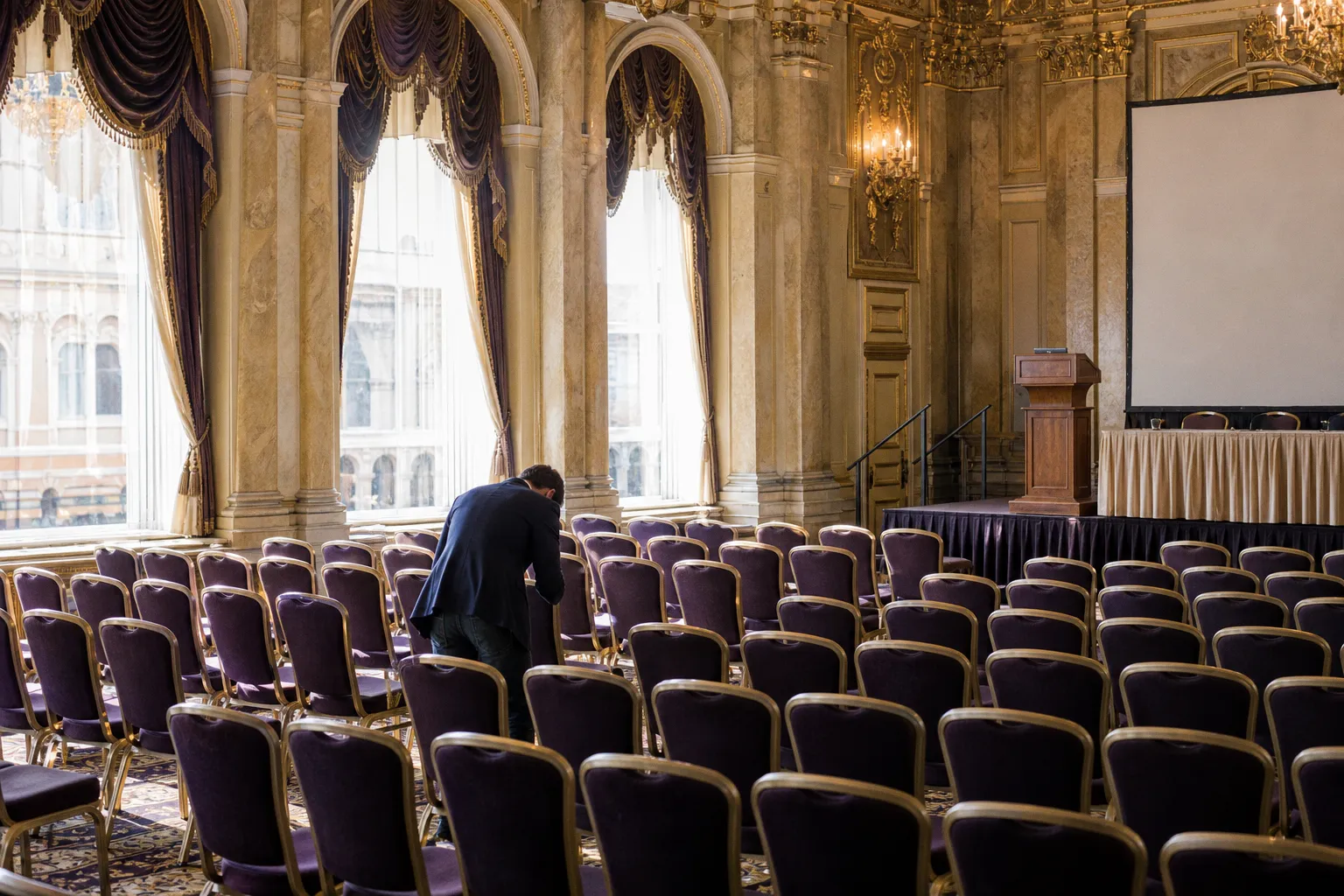
It is decided earlier, when the planner checks whether the group can enter on the intended dates, how the corporate budget will move through the local payment environment, and whether the selected venue actually fits the programme rather than merely appearing large in a brochure.
Russia requires a separate operating model. Entry rules, payment methods, transport arrangements and supplier contracts all need to be treated as part of the event design. A group can have an excellent creative concept and still lose time and money because the visa application was filed too early, the deposit route was never confirmed, or a venue’s impressive total floor area concealed a poor fit for the plenary and exhibition layout.
That is the practical starting point for a st petersburg mice planning checklist: remove the avoidable friction before the first contract is signed.
1. Lock the e-visa window before you commit to the programme
The first item in any Russian incentive travel preparation plan is the entry calendar. The e-visa validity period runs from the date of issue, not from the date on which the traveller crosses the border. That distinction matters when a group is assembled months in advance and applications are submitted centrally by a corporate travel team.
Under the updated regime described in the current entry guidance, Russian e-visas for citizens of eligible countries are valid for 120 days from issuance and permit a maximum continuous stay of 30 days. The previous limits were shorter. Eligibility, document requirements and the rules applicable to a particular nationality should still be checked for each traveller before the group is ticketed, because an e-visa is not a universal substitute for other visa categories.
The sensible planning method is to work backwards:
1. Fix the planned departure date and the date on which the last delegate will leave Russia.
2. Check the validity period against both dates, allowing room for changes to the programme.
3. Leave time for application processing, corrections and the possibility that a delegate’s passport data needs to be resubmitted.
4. Confirm that every passport has sufficient validity and available pages for the intended journey.
5. Keep a controlled manifest showing application status, approval, passport number and the responsible person on the organising side.
The maximum stay is a ceiling, not a signal that a programme should be designed around the full allowance. A three-week corporate programme may fit within a 30-day limit without requiring a visa run or a second application. If the itinerary approaches the limit, however, the margin for flight changes, extensions, pre- or post-tour arrangements and delayed departures becomes very small. A longer stay may require a different visa solution altogether, so it should be addressed before deposits are released.
Plan backwards from the programme end date, not forwards from the venue booking date. The visa clock is part of the event calendar.
The lead planner should also separate three questions that are often treated as one:
- Can the traveller enter? This concerns nationality, passport, visa eligibility and the purpose of the trip.
- Can the traveller enter on the intended date? This concerns the issue date and the validity window.
- Can the traveller remain for the complete itinerary? This concerns the permitted stay and any additional days added by flight changes or leisure extensions.
That separation becomes especially important for incentive programmes with family members, executives joining for only part of the event, or delegates arriving on different dates.
Families, minors and passport data
Family participation adds another layer of administration. The draft rule concerning travellers under 14 and individual international passports should be confirmed against the current official requirements before family registrations are opened. Do not assume that a birth certificate, notarised document or additional parental paperwork can replace an individual travel document if the applicable rule requires one.
For a corporate group, the risk is not limited to a single missing document. A family member who cannot travel can affect rooming lists, transfers, excursions, catering numbers and the commercial terms of the package. Build a separate family-document check into registration rather than leaving it to the general passenger manifest.
Passport data also needs to be copied exactly into visa applications and ticketing records. Transliteration differences, an omitted middle name where one is required, an incorrect passport expiry date or a last-minute passport renewal can create more trouble than the visa fee itself. The DMC should have a defined process for reviewing these details, but the corporate organiser remains responsible for making sure the information supplied by delegates is complete.
Air routing is a planning variable, not a fixed assumption
Flight schedules and available routes can change, and the correct routing depends on the traveller’s origin, nationality, airline access and ticketing arrangements. It is therefore safer to avoid promising one universal transit solution for the whole delegation.
Some travellers may need to connect through a third country; others may have different options depending on the departure market. The practical consequences are familiar to any group travel planner: separate tickets may carry different change rules, baggage may not be checked through, and a missed connection can split the group across several arrival windows.
Ask the air team or DMC to map the actual options for the principal origin markets. The request should show:
- proposed routes and transit points;
- whether the itinerary is on one ticket or several;
- minimum connection assumptions;
- baggage and re-check requirements;
- arrival times in relation to hotel check-in and the first event;
- a recovery plan if a flight is delayed or cancelled.
Do not build the transfer schedule around a route that has not been ticketed or confirmed for the season in question. A published schedule is useful for planning, but it is not the same as an issued group booking.
2. Build a payment infrastructure that works before the group arrives
Payment planning is one of the most underestimated parts of MICE in St Petersburg. Foreign-issued Visa and Mastercard cards may not function for ordinary purchases in Russia, and access to other international card products can depend on the issuing bank, the card network and the specific merchant. A finance department cannot assume that the payment tools used in London, Frankfurt or Singapore will work in exactly the same way on the ground.
The first distinction to make is between supplier settlement and delegate spending.
A hotel deposit, venue invoice or production payment is a corporate transaction. It should be arranged through a route that the supplier can legally and operationally accept, with the currency, invoice format, bank details and payment deadline documented in advance. Delegate spending is different: it involves meals, taxis, small purchases, incidentals and emergency costs, often at merchants with different levels of payment capability.
For the corporate layer, confirm with every major supplier:
- the currency in which the quotation and final invoice will be issued;
- whether payment must be made to a Russian account or through an approved intermediary;
- the bank details and beneficiary name;
- the required payment reference;
- whether a deposit is refundable, transferable or creditable against another date;
- what happens if the supplier cannot receive the planned payment;
- the documents the finance department will need for reconciliation.
A supplier accepting a bank transfer for a deposit does not automatically mean that the same supplier can process every later expense through the same route. The settlement method for venue hire may differ from the method used for on-site catering, transport or entertainment.
Virtual MIR cards and other local options
Pre-arrival virtual MIR cards are one possible tool for foreign visitors. Current services aimed at inbound travellers may support online transactions and QR-code payments, but the exact functionality, eligibility, limits, activation procedure and merchant acceptance vary by provider. Those conditions should be confirmed in writing rather than inferred from the product name.
Do not present a particular service as the established default for every group, and do not promise that a virtual card will work at every point-of-sale terminal. A card that is suitable for delegate incidentals may not be appropriate for a large venue pre-authorisation or a supplier’s corporate invoice.
If the company already has access to UnionPay or another card product that may operate in Russia, test it against the actual programme suppliers before relying on it. Acceptance can vary between hotels, restaurants, transport companies and smaller cultural venues. A card held by the finance lead is not a payment strategy unless the team knows where it works and what the backup is.
A robust payment plan normally has several layers:
1. Pre-arrival supplier payments. Settle the major deposits through an agreed corporate route before the group travels.
2. A controlled on-site account. Give the trip leader or finance lead access to a documented reserve for authorised operating expenses.
3. A delegate spending solution. Provide clear guidance on the local options available to travellers, including any registration or identity checks.
4. A modest cash reserve. Keep cash available for situations in which a terminal, network connection or QR-payment service is unavailable.
5. Daily reconciliation. Require receipts, approval records and a simple process for matching expenses to the right budget line.
The size of the cash reserve should be based on the programme, not on a universal per-delegate formula. A group travelling with most meals, transfers and activities prepaid has a different exposure from a delegation expected to pay for meals independently. Carrying a large amount of cash also creates security and distribution issues. Use a controlled reserve, split responsibility between designated staff, and clarify who can authorise emergency spending.
Payment resilience is not the same as giving everyone cash. It is knowing which costs are prepaid, which route will settle them, and what happens when the first method fails.
The same principle applies to hotels. Do not assume that a foreign card can pre-authorise rooms, incidentals or a group block merely because the hotel’s website accepts cards from international guests. Ask the property’s group sales and finance teams to confirm the accepted method for the exact contract. If the hotel cannot process the planned guarantee, resolve it before the rooming list is finalised.
3. Match the venue to the programme, not the brochure
For mice st petersburg programmes, Expoforum and Lenexpo are often considered first because they offer the scale and infrastructure associated with major conferences, exhibitions and corporate events. They are not interchangeable, however, and the choice should follow the programme architecture.
A venue’s total indoor area is only one part of the calculation. The organiser needs to know how many people will be in plenary, how many rooms are needed at the same time, whether production equipment will be suspended, how much space the exhibition or branding zone requires, and how delegates will move between registration, catering and sessions.
| Planning parameter | Expoforum Convention and Exhibition Centre | Lenexpo Exhibition Complex |
|---|---|---|
| General profile | Large convention and exhibition venue with substantial pavilion and meeting infrastructure | Exhibition complex suited to a range of corporate and event formats |
| Strongest fit | Large conferences, incentive groups with complex production, multi-track programmes and exhibition components | Mid-size corporate programmes, launches, meetings and formats that do not require the same concentration of large-scale infrastructure |
| Space planning | Multiple halls and pavilions allow more separation between plenary, breakouts, catering and exhibition functions | Hall configuration and meeting-room availability need to be checked carefully against the programme’s simultaneous-use requirements |
| Production questions | Confirm rigging points, ceiling heights, loading access, technical restrictions and the exact hall allocation | Confirm technical capacity, load-in arrangements, permitted production scope and the distance between functional areas |
| Commercial question | The larger footprint can be valuable, but unused space becomes a visible cost | A more compact plan may be efficient when the programme does not need exhibition-scale capacity |
| Decision test | Does the programme genuinely need the available scale and parallel infrastructure? | Can the venue support the required flow without forcing compromises in plenary, catering or production? |
Published venue information can be a useful first filter, but it is not a substitute for a technical proposal. Capacities may change according to room layout, stage size, fire and safety requirements, translation booths, camera positions, registration furniture and the space required for catering.
For this reason, avoid a universal threshold such as “over 500 delegates means Expoforum”. A 500-person event with one plenary and a small networking reception is not the same as a 500-person conference with an exhibition, multiple breakouts, sponsor builds and simultaneous meal service. Conversely, a smaller group can require a large venue if the creative concept depends on complex staging or a significant product display.
The questions that belong in the RFP
The request for proposal should include a drawing or written schedule of the event rather than only a headcount. Ask the venue to respond to the actual operating model:
- plenary capacity in the proposed seating format;
- number and size of breakout rooms available at the same time;
- exhibition, branding and storage requirements;
- ceiling height, rigging capacity and approval process;
- loading access and permitted build hours;
- registration, security and accreditation arrangements;
- catering locations and the maximum service flow;
- distance between the main functions;
- technical supplier rules and preferred suppliers;
- cancellation, postponement and date-change terms.
The answer should include the specific halls, not simply the name of the complex. A venue can be suitable in principle while the available hall on the requested dates is not.
For executive meetings, satellite sessions or a VIP programme running alongside a larger event, a smaller meeting venue may be more appropriate. CORT INN St Petersburg, for example, is cited in the draft as offering conference rooms in a range from 10 to 320 people. That makes it a possible option for breakouts or executive sessions, subject to checking the current room capacities, dates and technical specifications.
Do not ask a hotel concierge to make the strategic venue decision. The venue should be selected by comparing the session plan, guest movement and production requirements against a confirmed proposal. A cheaper square metre is not necessarily a cheaper event if it creates long transfers between rooms, extra signage, duplicated technical equipment or a poor arrival experience.
4. Choose the season with the event experience in mind
Timing affects much more than the room rate. St Petersburg’s hotel demand, cultural calendar, daylight, weather and supplier availability all influence the value of a corporate programme. Mid-May through mid-September is generally a more competitive period for hotel inventory and event space, with additional pressure during the White Nights season. Winter can offer a different commercial equation, but only if the programme is designed for it rather than treated as a summer itinerary in colder conditions.
The November-to-March period may offer more negotiating room with some hotels and venues, particularly when the programme is primarily indoors. The exact saving will depend on the dates, property, room category, event pattern and local demand. Avoid building the business case around a fixed percentage unless it comes from current written quotations.
The more useful comparison is between two complete programme models:
| Planning factor | Late autumn and winter | Late spring and summer |
|---|---|---|
| Hotel and venue negotiation | May offer greater availability on selected dates, but depends on the city calendar | Stronger demand can reduce flexibility, especially around major cultural and business periods |
| Outdoor activity | Weather and limited daylight make outdoor formats less predictable | More options for walking programmes, terraces, river activities and open-air receptions |
| Indoor cultural programme | Museums, theatres and evening performances become the natural backbone | Indoor venues remain valuable, but the programme can be balanced with outdoor elements |
| Delegate comfort | Transfers, coats, footwear and weather contingencies need careful management | Heat, rain, long daylight and higher visitor volumes require a different operating plan |
| Supplier capacity | Some DMCs and production teams may have more room in the calendar | Popular dates may require earlier confirmation and tighter coordination |
| Budget logic | Potentially attractive when the creative concept is indoor and the dates are flexible | Potentially more expensive, but may support a broader incentive proposition |
The seasonal decision should start with the purpose of the trip. If the group is coming for a cultural reward programme built around theatres, museums, private dining and controlled indoor experiences, winter may work well. If the incentive depends on outdoor movement, river time or long evenings on terraces, a colder-month plan needs a different creative treatment.
White Nights dates deserve their own discussion. They can create a compelling backdrop, but the same atmosphere that attracts incentive groups also brings demand from leisure travellers, cultural visitors and local events. Hotel inventory, restaurant availability, guides, coaches and premium experiences may be harder to secure. Treat those dates as a high-demand period even when the event itself is small.
Weather planning should also be operational rather than decorative. A winter programme needs arrival procedures that account for coats and luggage, shorter walking segments, indoor waiting areas and vehicles that can absorb delays. A summer programme needs alternatives for rain, heat, river conditions and outdoor venues that become uncomfortable if the schedule slips.
Compare complete scenarios, not isolated rates
A Q4–Q1 quotation and a Q2–Q3 quotation should be compared on a like-for-like basis. Include room nights, meeting space, transfers, technical production, cultural programming, staffing, weather contingencies and the cost of moving activities indoors or outdoors.
A lower hotel rate can disappear if the winter programme requires more transfers, additional cloakroom operations, indoor replacements or late-night transport. Equally, a summer premium may be justified if it enables a signature experience that is central to the incentive objective. The correct question is not simply which season is cheapest. It is which season delivers the intended experience with a manageable level of operational exposure.
5. Use a local DMC to coordinate the moving parts
Corporate group travel logistics in Russia are difficult to manage from another country, particularly when the programme involves several venues, changing flight information, local payment arrangements, bilingual communications and suppliers operating on different schedules.
A local DMC can coordinate visa-support administration, airport transfers, hotels, restaurants, cultural venues, guides, production suppliers, on-site staffing and last-minute changes. The value is not the existence of a glossy itinerary. It is the DMC’s ability to resolve a problem at the moment it appears: a delayed flight, a revised rooming list, a missing transfer vehicle, a supplier invoice that does not match the agreed scope or a venue instruction that arrives only in Russian.
Companies such as RUSMICE, Olta Travel and Baltma DMC are examples of names that may appear in a St Petersburg MICE search. Their suitability should be assessed for the specific programme, dates and nationality mix rather than assumed from market reputation alone. Ask for the team that will actually operate the event, not only the senior person who presents the proposal.
Structure the engagement before the creative work expands
The DMC brief should define the work in operational terms. At a minimum, ask for:
- a named project lead and a named on-site lead;
- the languages covered by the operating team;
- the DMC’s responsibility for visa-support coordination and document collection;
- the transport plan, including vehicle standards and dispatch procedures;
- the supplier categories included in the fee;
- mark-ups, commissions and pass-through costs;
- the process for approving substitutions;
- emergency contact coverage during arrivals and the event;
- the format and timing of budget updates;
- the post-event reconciliation procedure.
A fixed fee can be useful when the scope is clearly defined, but it is not automatically better than a percentage model. The important point is transparency. If the DMC is paid through a management fee, supplier mark-ups, commissions or a combination of methods, the corporate buyer should know how the total is built.
Payment milestones should be linked to deliverables rather than vague calendar dates. For example, the contract can connect stages to an approved venue plan, confirmed rooming list, transport manifest, final operating schedule and post-event reconciliation. That gives both sides a clear record of what has been delivered and what remains open.
Liability needs equally careful wording. There is no sound basis for assuming that one “default Russian hospitality contract” always places the burden on the client. Liability depends on the supplier agreement, governing law, negotiated clauses, the DMC’s role and the cause of the loss. The contract should state who is responsible for errors in bookings, supplier failures, cancellations, delays, property damage, force majeure events and delegate claims. A local lawyer should review material contracts where the financial exposure is significant.
Ask the DMC to identify which obligations it accepts directly and which it passes through to the hotel, venue, airline or local supplier. If the DMC is acting only as an intermediary, the client’s remedies may differ from a situation in which the DMC has contracted and resold the complete service. That distinction is commercial, not semantic.
Test the DMC with a real scenario
A useful selection exercise is to give shortlisted DMCs the same operating problem. Ask them to respond to a late arrival, a change in the plenary schedule, a missing passport document or a payment failure affecting an on-site supplier. The best response will not necessarily be the longest itinerary. It will show who makes the decision, how quickly the client is informed, what the cost consequence is and which parts of the plan remain protected.
The DMC should also be able to provide a Russian-speaking liaison for venues and suppliers. That person needs more than language ability. They need authority, current contacts and enough familiarity with the account to reach the right event manager quickly. Confirm whether the person quoted in the proposal will be present during the programme or whether the account will be handed to another team.
What should be settled before the first contract
The essential decisions in a st petersburg corporate event planning process are connected. Entry timing affects flight planning. Flight planning affects hotel and transfer schedules. Payment arrangements affect whether deposits and on-site expenses can be settled. Venue choice affects transport, production and staffing. The DMC sits across all of those layers, but cannot compensate for assumptions that were never written down.
Before signing, make sure the working file contains:
- a nationality-by-nationality visa and passport review;
- a visa issue-date plan that leaves room for the complete itinerary;
- confirmed flight assumptions rather than a generic routing promise;
- a written supplier-payment route for each major deposit;
- a tested method for authorised delegate and on-site expenses;
- a venue proposal based on the real session, catering and production plan;
- a seasonal comparison using current quotations;
- a DMC scope of work with transparent fees and named personnel;
- negotiated cancellation, postponement and liability provisions;
- an escalation plan for delays, payment failures and document problems.
The most useful document is not a generic checklist handed to a supplier. It is a single operating brief that connects the delegate manifest, visa status, flight plan, rooming list, venue schedule, payment responsibilities and emergency contacts. Everyone involved should be working from the same version, with changes recorded rather than passed informally between email threads.
The strongest Russian incentive programme is not the one with the most elaborate itinerary. It is the one in which the entry rules, payment route, venue plan and local responsibilities are settled before the itinerary has to perform in public.
St Petersburg rewards a planner who treats logistics as part of the guest experience. A smooth arrival, a venue that makes sense, a payment system that does not fail at dinner and a DMC that can answer in real time are not background details. They are what allow the creative parts of the programme to be noticed for the right reasons.
The city can support ambitious corporate groups, but it should not be booked as if it were an interchangeable European destination. Start with the visa calendar, confirm the financial mechanics, test the venue against the actual event design, price the season honestly and appoint local coordination with clearly negotiated responsibility. That is the practical foundation of a resilient MICE programme in St Petersburg.