Taronga Zoo Tickets: A Step-by-Step Booking Route
Taronga Zoo Sydney operates every day of the year, but the admission decision is not limited to selecting a date and paying online.
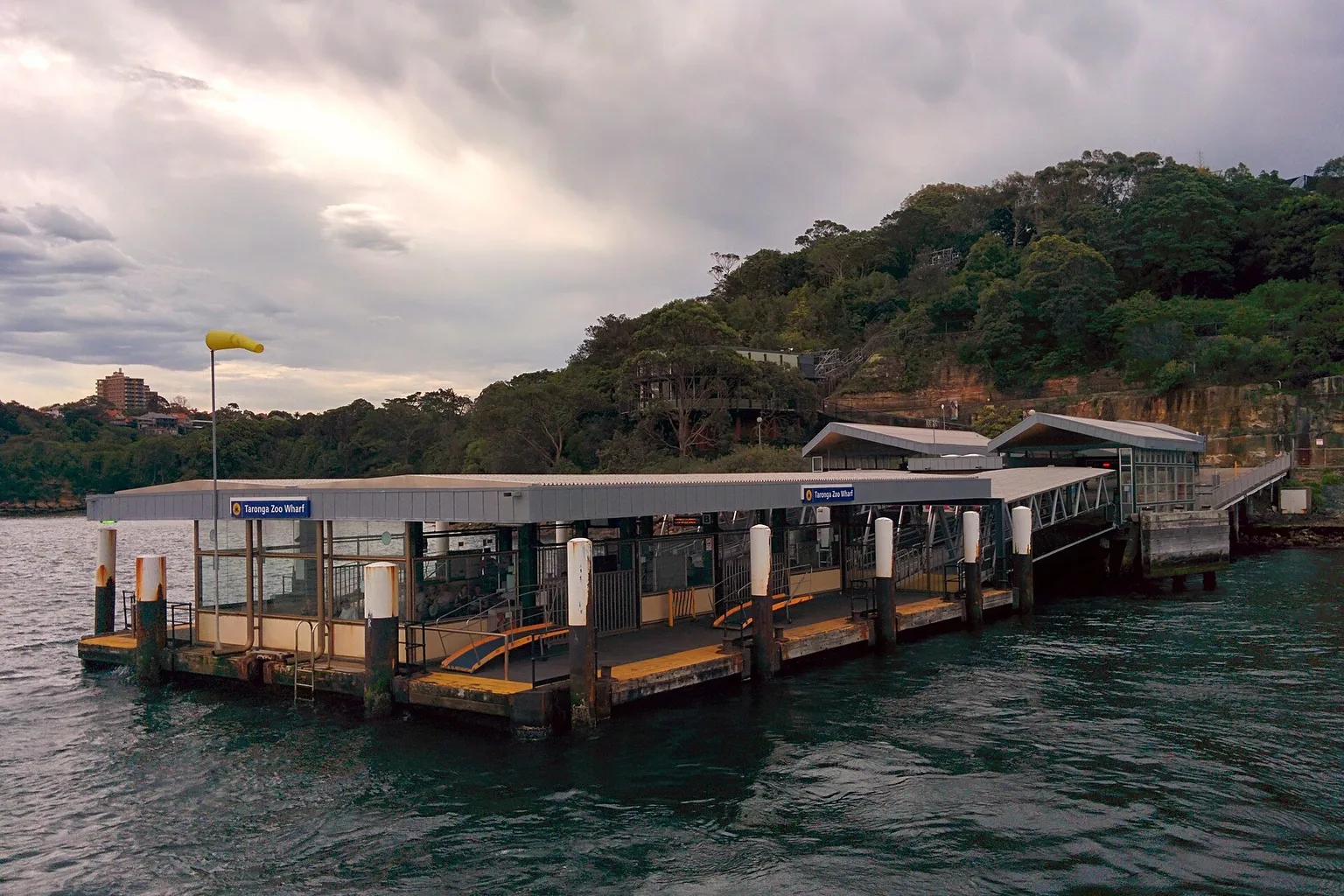
The main failure points are transport separation, seasonal closing time, family-ticket eligibility, and add-on confusion.
Tickets and prices
Taronga Zoo
I
Our pick · day trip
Day trip — full-day ticket
This full-day ticket includes access to see native Australian and exotic animals, daily presentations, and keeper talks.
AUD56.71
Check availabilityII
combo ticket
Combo ticket — 1 day with return rocket ferry
This one-day combo ticket includes entry and a return rocket ferry ride from Circular Quay to see over 2,900 animals.
III
entry ticket
Entry ticket with return ferry
This entry ticket includes a roundtrip ferry ride from Darling Harbour or Circular Quay to see native animals.
AUD81.01
Check availabilityThe zoo opens at 9:30am. From September through April, standard operating hours run until 5:00pm. From May through August, the zoo closes at 4:30pm. Ferry travel from Circular Quay takes about 12 minutes, while Route 100 bus travel from QVB, City, takes about 30 minutes. These timings determine the usable length of your visit. They also determine whether an advertised return-ferry option is operationally better than admission alone.
If you plan to buy tickets for Taronga Zoo, process the booking in this order: define the visitor group, select admission, confirm the transport corridor, reserve paid encounters separately, then build a time buffer around the return journey.
1. Select the correct admission route
Taronga Zoo admission is available through online booking and at the entrance. The gate is the fallback route, not automatically the best route.
Online booking can provide lower family rates than standard gate admission. It also removes one queue from the arrival sequence and gives you a defined booking record. General admission tickets purchased online remain valid for 12 months from the date of purchase. That validity is useful when the date is not fully fixed, but it does not remove the need to check operating hours and transport before travel.
Use the following decision sequence.
1. Count adults and children before opening the ticket page. Family products are structured around defined combinations, including two adults with two children, two adults with one child, and one adult with two children. Do not assume that a family bundle can be modified without changing the product.
2. Exclude children under four from the paid-entry count. Children under four receive free entry. Carry the relevant age information in case the booking flow requests it.
3. Compare online admission with gate admission. The difference is not only a question of price. Online purchase gives you a booking confirmation and may provide access to online-only rates.
4. Check whether transport is included. A zoo-only ticket does not automatically include public ferry travel. A combined product must state the ferry component explicitly.
5. Review the date and validity conditions. A ticket valid for 12 months is not the same as a reservation for a specific encounter, event, or transport departure.
Do not buy the first product that contains the words Taronga Zoo. The product title must match the operational requirement: admission only, admission plus return ferry, or admission with an additional animal experience.
The best way to buy Taronga Zoo tickets is to separate the mandatory element—zoo admission—from optional elements—ferry combinations, encounters, and special programs.
2. Decide whether you need a ferry-and-entry pass
Taronga Zoo is on Bradleys Head Road in Mosman, across Sydney Harbour from the central city. The ferry is usually the cleanest transit corridor from the CBD because it combines direct access with a short crossing.
From Circular Quay Wharf 4, the ferry journey takes approximately 12 minutes. The zoo has its own ferry wharf. You still need to allow time for walking to the wharf, boarding, disembarking, and reaching the admission point. The published sailing duration is not the total transfer duration.
A return-ferry product can be useful in three cases:
- You are starting near Circular Quay.
- You want one booking covering admission and the return transport element.
- You do not want to manage a separate public-transport payment and timetable during the day.
It is not automatically the correct product for every visitor. If you already hold a transport pass or intend to use a different route, buying a combined product may add a component you will not use. If your return time is uncertain, confirm the conditions for the return ferry before payment. A ticket that includes a ferry component does not mean every departure is unrestricted.
The bus route is the alternative corridor. Route 100 takes about 30 minutes from QVB, City, under normal conditions. Actual end-to-end travel will depend on the stop location, boarding time, traffic, and the walk at the zoo end. The bus is operationally preferable when you are already positioned near the route or when ferry departures do not align with your schedule.
Ferry versus bus
| Parameter | Ferry from Circular Quay | Route 100 bus from QVB, City |
|---|---|---|
| Published travel time | About 12 minutes | About 30 minutes |
| Main departure point | Circular Quay Wharf 4 | QVB, City |
| Arrival point | Taronga Zoo ferry wharf | Road access near the zoo |
| Primary risk | Sailing interval and boarding capacity | Road traffic and stop location |
| Best use case | Harbour-side itinerary and direct access | City itinerary without a Circular Quay transfer |
| Ticket requirement | Confirm whether ferry is included or separate | Confirm the public-transport method separately |
| Buffer requirement | Allow time beyond the sailing duration | Add traffic and stop-to-entrance time |
The transport choice should be made before finalising the admission product. This prevents the common error of booking a zoo ticket first and discovering that the selected ferry timing does not fit the planned entry or return window.
3. Build the day around the zoo’s closing time
The opening time is fixed at 9:30am throughout the stated seasonal schedule. The closing time changes.
From September to April:
- Gates and standard visitor operations run from 9:30am to 5:00pm.
- Plan the return corridor before the final hour.
- Do not treat 5:00pm as the ferry departure time or the moment to begin walking out.
From May to August:
- Standard operating hours run from 9:30am to 4:30pm.
- The shorter day reduces the margin for late arrival.
- Transport planning becomes more sensitive to keeper talks, shows, and animal encounters.
A late arrival has a compounding effect. You lose exhibit time, then compress the schedule around a show or encounter, then risk missing the preferred return departure. The admission ticket may remain valid, but the day’s usable access is reduced.
For a first visit, schedule arrival as close to opening as practical. This is not a recommendation based on atmosphere. It is a capacity and compliance measure. Early arrival gives you more options if a ferry, bus, or paid activity does not run according to plan.
A workable sequence is:
1. Reach the departure area with a transport buffer.
2. Arrive at the zoo before the first fixed activity you intend to attend.
3. Check the daily program after entry.
4. Place time-specific encounters and shows into the route.
5. Set a return cutoff earlier than the official closing time.
6. Keep the last part of the day flexible for the exit corridor.
The zoo is not a compact city attraction that can be cleared in a short stop. It is a large site with elevation changes, animal habitats, scheduled presentations, and multiple transport interfaces. Treating it as a quick admission-only visit creates a schedule failure.
4. Use the daily program as the routing framework
Daily shows are included with admission. The confirmed program includes Seals for the Wild at 11:00am and 2:00pm, and Free Flight Birds at 12:00pm and 3:00pm.
These times should not be treated as the entire schedule. They are fixed points around which you arrange the rest of the visit. Program details can change, so review the current day’s timetable after entry rather than relying only on a saved itinerary.
A practical routing method is to select one morning anchor and one afternoon anchor. For example:
- Morning: arrive, review the map, then reach the 11:00am seal presentation.
- Midday: use the interval after the presentation for nearby habitats and lunch.
- Afternoon: select either the 2:00pm seal presentation or the 3:00pm bird show.
- Final phase: move toward the exit and transport corridor without adding a distant encounter.
Do not schedule every activity at maximum density. A zoo timetable includes walking time, queues, viewing time, food service, and unscheduled delays. The correct buffer is not empty time. It is the control margin that prevents one missed presentation from disrupting the entire day.
If an animal encounter is a priority, place it before optional general touring. Paid encounters require separate booking and may have their own availability rules. General admission does not guarantee access to a koala encounter, behind-the-scenes activity, or another special session.
5. Separate admission from animal encounters
Taronga Zoo admission gives access to the zoo. It does not automatically grant access to every animal encounter or special program.
The booking structure should therefore be split into two layers:
Mandatory layer
- General admission for each paid visitor.
- A family ticket where the group matches the stated combination.
- A confirmed date or valid online ticket condition.
- Transport arrangements to Bradleys Head Road.
Optional layer
- Koala encounter.
- Other animal encounter booking.
- Behind-the-scenes access.
- Roar and Snore camping.
- Any product combining entry with a ferry or special activity.
This separation matters because optional products may have limited availability. The current availability of specific behind-the-scenes encounters cannot be assumed from the general admission inventory. Bookings should be checked independently.
If the purpose of the visit is a particular animal experience, start with that activity’s availability and schedule. Then select admission that covers the same date. If the purpose is general access to native Australian wildlife and the harbour-facing zoo grounds, admission can be secured first, with optional activities treated as enhancements.
Do not use the term “full access” unless the product explicitly defines it. It can refer to different things: standard zoo grounds, shows included with admission, paid encounters, or a combined transport package. Product scope is a compliance issue, not a wording detail.
6. Understand family and group ticket logic
Family pricing is built around specific visitor combinations. The confirmed family structures include:
- Two adults and two children.
- Two adults and one child.
- One adult and two children.
The online booking rates for these products can be lower than the corresponding gate rates. The applicable product depends on the group composition. Do not select a family bundle merely because it appears cheaper before confirming that all visitors fit its conditions.
Children under four enter free. Older children should be counted according to the ticketing rules displayed during booking. Age cutoffs and proof requirements can change, so use the live booking conditions for the final decision.
Groups of 12 or more may qualify for group ticket rates. Group bookings must be arranged at least 24 hours in advance. This is not a same-day queue solution. A group that arrives without the required advance arrangement may be processed under another admission category, subject to availability and current policy.
For group organisers, the operational sequence is different:
1. Confirm the final headcount.
2. Separate adults, children, and children under four.
3. Submit the group request at least 24 hours before arrival.
4. Obtain the booking confirmation.
5. Distribute the meeting and transport instructions.
6. Set a single arrival buffer for the group.
7. Keep the group together until admission is cleared.
The weak point in group travel is not usually the zoo itself. It is fragmented arrival. One late subgroup can delay ticket validation, ferry boarding, or the start of a booked activity.
7. Compare online booking with gate purchase
The gate remains useful when plans are uncertain, but uncertainty has a cost. It transfers the burden to arrival day, when queues, capacity, and transport delays are already active.
Online booking is stronger when:
- The travel date is known.
- The visitor group fits a listed family or group category.
- You want a booking record before departure.
- You are considering a combined ferry-and-entry product.
- You want to compare current ticket variants without waiting at the gate.
- Your schedule depends on reaching a fixed show or encounter.
Gate purchase is stronger when:
- You cannot commit to a date or ticket category.
- The group composition may change.
- You need to resolve an eligibility question in person.
- Online inventory does not match the required product.
The gate should not be treated as a guarantee of immediate entry. Ticket availability, operating conditions, and queue time remain relevant. If you are travelling on a compressed Sydney itinerary, online booking generally provides better schedule control.
The phrase “Sydney zoo booking online” can describe several different actions. It may mean buying general admission, selecting a family product, reserving a group booking, or adding an experience. Confirm which layer is being booked. A receipt for one layer does not prove that the other layers are included.
8. Check the product before payment
Before payment, inspect the product description against the route you intend to operate. Use a short control sequence:
- Admission scope: Does the ticket provide standard Taronga Zoo entry?
- Visitor count: Does the category match the number of adults and children?
- Age rule: Is a child under four included correctly as free entry?
- Transport: Is a ferry included, excluded, or sold as a separate component?
- Direction: Does “return ferry” cover the outbound and inbound legs you require?
- Validity: Is the ticket date-specific or valid within a stated period?
- Activities: Are shows included while encounters require separate payment?
- Group threshold: If travelling as a group, was the booking submitted at least 24 hours in advance?
- Operating hours: Does the seasonal closing time fit your arrival and return plan?
- Confirmation: Have you received the booking record before leaving the payment page?
Do not infer inclusions from photographs, headline wording, or a general reference to Taronga Zoo. The inclusion list controls. If ferry access is not expressly stated, plan and pay for public transport separately.
Cash policy also requires caution. Do not assume that admission desks accept cash. Taronga Zoo maintains cashless operations, so use an accepted electronic payment method and retain the digital confirmation.
9. Allow for the transport corridor after entry
The ferry is not an abstract add-on. It controls the last stage of the day.
If you use a Taronga Zoo ferry and entry pass, verify where the ferry component begins and ends. Confirm whether the product covers only the transport leg or also admission. Confirm whether boarding is tied to a selected departure. Confirm the return instructions before entering the zoo, when you still have time to correct a misunderstanding.
For separate public transport, keep the following information available:
- Departure point.
- Route or wharf number.
- Intended outbound departure.
- Intended return window.
- Payment method.
- Alternative corridor.
The alternative should be realistic. If the primary plan is ferry travel, the fallback may be Route 100 from the city-side corridor. If the primary plan is the bus, the ferry may require a transfer to Circular Quay. Neither option should be described as immediate. The 12-minute ferry and 30-minute bus figures are route durations, not door-to-door guarantees.
Build a departure buffer before the zoo closes. The correct trigger is not the official closing time. It is the latest time at which you can leave the final exhibit, reach the relevant exit, walk to the wharf or stop, and still retain a transport margin.
10. Do not overbook the day
Taronga Zoo supports several visit formats, but they require different time allocations.
General admission visit
Use this when the objective is the zoo itself, its habitats, native Australian wildlife, daily shows, and harbour setting. The route should remain flexible. Prioritise opening, one or two fixed presentations, and the return corridor.
Admission plus ferry
Use this when central Sydney is the origin point and the ferry is part of the transport plan. Confirm the full product scope. Treat the return departure as a fixed constraint.
Admission plus animal encounter
Use this when a koala encounter or another paid experience is the main objective. Secure activity availability first. Then schedule admission and transport around the assigned time.
Overnight or extended program
Roar and Snore is a separate format. It should not be treated as an ordinary same-day admission product. Check its own dates, conditions, inclusions, and arrival requirements.
The booking mistake is usually caused by mixing these formats. A visitor selects a general ticket, assumes an encounter is included, then attempts to add the activity after arrival. Another visitor books a ferry product but plans an exit after the last practical sailing. Both errors originate in the same place: product scope was not mapped to the day’s operating sequence.
A valid admission ticket is not a complete itinerary. It is one clearance document in a route that also includes transport, timed activities, and an exit buffer.
11. Use a troubleshooting matrix before departure
| Failure point | Operational symptom | Corrective action |
|---|---|---|
| Wrong family category | Visitor count does not match the selected bundle | Recount adults and children; apply the under-four rule separately |
| Ferry assumed to be included | Ticket confirms zoo entry but gives no transport details | Treat ferry as separate unless the product explicitly includes it |
| Late seasonal arrival | Winter closing time leaves insufficient touring margin | Move arrival earlier; prioritise fixed shows and required encounters |
| Encounter unavailable | General admission is confirmed but the activity is not | Check encounter inventory independently; do not infer availability |
| Group booked too late | Twelve or more visitors arrive without group confirmation | Arrange the group booking at least 24 hours in advance |
| Return transport unclear | No defined departure or boarding instruction | Confirm the return procedure before entering the zoo |
| Cash assumption | Visitor arrives without an electronic payment method | Prepare an accepted cashless payment method |
| Overloaded schedule | Shows, encounter, lunch, and transport occupy every interval | Remove optional items and protect the return buffer |
| Product validity misunderstood | Flexible admission is treated as a fixed activity reservation | Read validity and reservation conditions separately |
This matrix is more useful than a generic list of travel tips because each failure has a specific control. The objective is not to eliminate every variable. It is to prevent one variable from becoming a missed entry, missed encounter, or missed return connection.
12. Final booking sequence
Use this order when you buy tickets for Taronga Zoo:
1. Define the trip objective. General zoo access, ferry combination, animal encounter, group visit, or overnight program.
2. Fix the visitor composition. Adults, children, and children under four.
3. Select the admission category. Compare online booking with gate purchase.
4. Check the seasonal hours. Use 9:30am–5:00pm from September to April and 9:30am–4:30pm from May to August.
5. Choose the transport corridor. Ferry from Circular Quay Wharf 4 or Route 100 from QVB, City.
6. Verify transport inclusion. Never infer it from the attraction name.
7. Book paid encounters separately. Confirm their current availability and time requirements.
8. Review the daily shows. Use the confirmed 11:00am and 2:00pm seal presentations or the 12:00pm and 3:00pm bird presentations as planning anchors.
9. Reserve group arrangements early. Groups of 12 or more require at least 24 hours’ advance arrangement.
10. Save the confirmation. Keep it accessible offline and retain the payment record.
11. Set the exit cutoff. Leave enough time for the walk, boarding, and transport margin.
12. Prepare the fallback route. Know whether the ferry or Route 100 is the secondary corridor.
The final decision is simple. Buy general admission online when the date and visitor group are stable. Select a combined ferry product when the ferry is part of the route and the inclusion is explicit. Add encounters only after confirming their own availability. Use the gate when uncertainty is unavoidable, not because the gate is assumed to be faster.
Fail-safe plan
If the online product does not match the group, stop and recalculate the visitor categories. If the ferry component is unclear, purchase admission separately and manage public transport as a separate transaction. If an encounter is unavailable, retain the zoo visit and rebuild the day around the included shows. If arrival is delayed, remove optional activities before sacrificing the return buffer.
That is the correct fallback hierarchy: preserve admission, preserve transport, then preserve optional experiences. Taronga Zoo is straightforward when the booking is treated as a route-control problem rather than a single ticket purchase.
Practical info
Currency: AUD
Driving: on the left
Emergency number: 000
FAQ
What time does Taronga Zoo open and close?
Does a Taronga Zoo ticket include the ferry?
How long does it take to reach Taronga Zoo by ferry or bus?
Are children under four free at Taronga Zoo?
Are animal encounters included with Taronga Zoo admission?
How far in advance must groups book Taronga Zoo tickets?
Photo: Grendelkhan / CC BY-SA 4.0 — Wikimedia Commons