New Zealand Maritime Museum: Ticket Booking Route and Tips
The New Zealand Maritime Museum in Auckland admits visitors from 10:00am to 5:00pm every day. Final gallery entry is at 4:00pm. Treat that cutoff as mandatory. A late arrival does not create extra museum time.
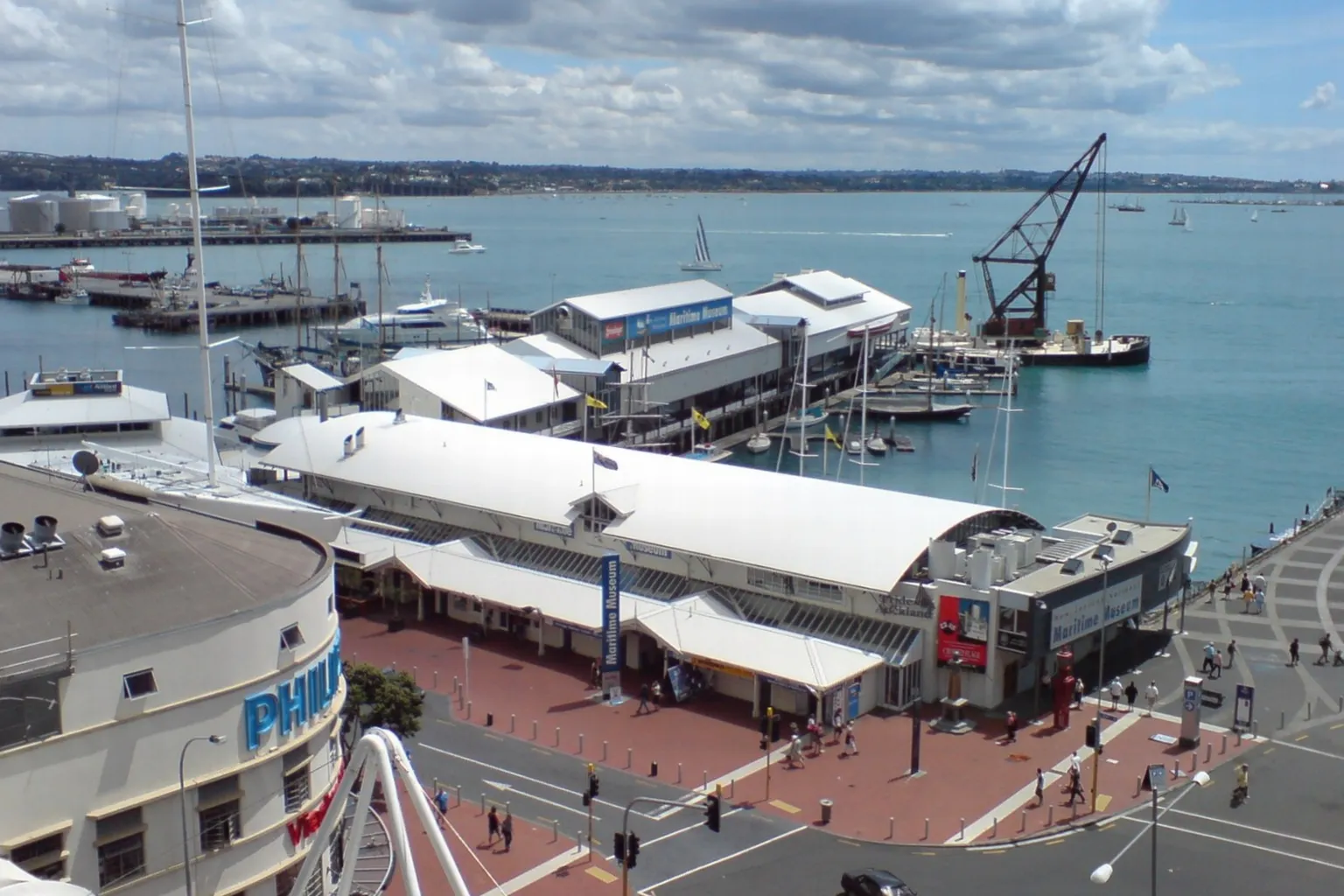
The museum is located at Hobson’s Wharf in Viaduct Harbour, on Quay Street. Entry planning has two separate routes: general museum admission and heritage sailing. The sailing route requires an additional booking step, but the sailing ticket includes general museum entry. Auckland residents use a different access rule and must carry proof of address.
Admission pricing and resident access
The museum uses a simple admission structure, but the applicable route depends on three variables:
- Whether the visitor lives in the Auckland region.
- Whether the visit covers museum galleries only or includes a heritage sailing.
- Whether the booking is made for an individual visitor, a child, a student, a senior, or a family group.
General visitor admission is paid. The displayed admission price can change, so confirm the current amount during the booking process rather than relying on a static guide. Children under five enter free.
Auckland residents receive free general museum admission when they present valid proof of address. The museum accepts documents such as:
- An Auckland library card.
- A driver licence showing the relevant address.
- A utility bill or comparable proof of residence.
The resident rule applies to museum entry. It does not remove the need to arrange a place on a heritage sailing. Sailing availability, booking conditions, and resident rates are handled separately.
The first compliance check is not the ticket price. It is your visitor category: Auckland resident, general visitor, or sailing passenger.
Do not confuse the New Zealand Maritime Museum with Auckland Museum in Parnell. They are separate institutions with separate admission systems, locations, and visitor conditions. Searching for Auckland museum tickets without the full name can lead to the wrong booking page.
Which admission route applies?
| Visit requirement | Booking route | Operational consequence |
|---|---|---|
| Museum galleries only | General museum admission | Entry is available during operating hours; final entry is at 4:00pm |
| Auckland resident, galleries only | Resident admission process | Valid proof of Auckland address is mandatory |
| Museum plus heritage sailing | Sailing booking | Sailing ticket includes general museum entry |
| Child under five | Child admission rule | General museum entry is free |
| Sailing without a confirmed departure | No completed sailing booking | Do not assume museum admission guarantees a place aboard |
The museum may present several ticket and tour options depending on the date. Read the product description before payment. A gallery admission ticket and a sailing reservation are not interchangeable products.
How to book tickets online
The most direct route for standard admission is to use the museum’s current visitor booking system or purchase entry at the ticket desk. Online booking is preferable when the visit is tied to a fixed Auckland itinerary, a cruise departure, a group schedule, or a same-day connection.
Use this sequence:
1. Set the visit date.
Confirm that the museum is operating on that date. It opens seven days a week but closes every Christmas Day.
2. Select the visit type.
Choose general museum admission if the plan covers the galleries. Choose a heritage sailing option if the schedule includes a vessel departure.
3. Apply the correct visitor category.
Auckland residents should not book as standard visitors and attempt to resolve the difference later. Prepare proof of address before arrival.
4. Check the entry window.
The museum closes at 5:00pm, and final entry is at 4:00pm. For a sailing, calculate the time required for ticket collection, bag check, boarding instructions, and movement to the departure point.
5. Review the inclusion list.
A heritage sailing ticket includes general museum entry. Confirm whether the selected option is a sailing, a museum visit, or a combined product.
6. Save the booking confirmation.
Keep the confirmation accessible on the device used for travel. If the booking is made for a group, verify that the passenger count and visitor categories match the party.
Heritage sailings can be booked online, by email, or by phone. Use the method that gives the clearest confirmation of the sailing time and passenger allocation. Email is useful when the party has accessibility requirements, a child passenger, a large group, or a narrow transit corridor between the museum and another scheduled activity.
Do not treat third-party tour listings as a substitute for the museum’s own operational information. Reseller inventory can change. The sailing date, departure time, inclusion of general admission, and cancellation terms must be checked at the point of booking.
Booking online versus booking at the desk
Online booking reduces queue exposure and gives the visitor a record of the selected product. It does not eliminate the need to arrive before the relevant cutoff.
Desk purchase is workable for a gallery visit when the schedule has buffer time. It is less suitable when the day includes a sailing or another timed activity. The ticket desk is also where visitors handle bag check arrangements and resident proof-of-address checks.
Use a desk purchase only when all of the following conditions are true:
- The visit is for general admission.
- The group can absorb a queue.
- The group is not dependent on a fixed sailing departure.
- The arrival time is comfortably before 4:00pm.
- Any resident documentation is ready for inspection.
For a sailing, book in advance. A general museum ticket does not create a sailing reservation.
Heritage sailing: the second booking layer
The heritage sailing is not a passive extension of the gallery visit. It is a timed operational activity. The vessel has a departure schedule, a passenger capacity, and a boarding process. The museum visit must be planned around that schedule.
A sailing booking includes general museum entry, which allows the visitor to use the galleries before or after the sailing, subject to opening hours and the departure timetable. Confirm the sequence in the booking information. Some visitors will need to complete gallery access before boarding; others may have time to return after the sailing.
Use a minimum planning sequence:
- Identify the sailing departure time.
- Confirm the check-in location.
- Allow time for ticket verification.
- Deposit large bags before boarding if required.
- Move to the designated boarding point without relying on the final minutes.
- Keep the booking confirmation available until the sailing has started.
- Retain enough post-sailing time for the remaining galleries.
The sailing option is useful for visitors who want a structured maritime component rather than galleries alone. It is also the route most exposed to timing failure. A missed departure can affect the entire day and may not be recoverable through a general admission ticket.
Auckland residents should check the resident sailing category separately. Resident eligibility for free museum entry does not mean that every sailing element is free. The published resident sailing structure includes separate categories for adults, seniors or students, children, and family groups. Non-resident sailing prices and conditions should be confirmed at booking because they are not fixed in this guide.
What to verify before confirming a sailing
- Departure time and check-in requirement.
- Whether the selected product includes general museum entry.
- Passenger categories and documentation.
- Weather or operational conditions stated by the provider.
- Cancellation and change conditions.
- Whether the sailing returns in time for the intended onward activity.
- Whether children require an accompanying adult.
- Whether food and drink restrictions apply during the sailing.
Do not stack the sailing against a flight, a short transfer, or a cruise boarding deadline without buffer time. The museum is located in a busy harbour area. Harbour movement, road traffic, and ticketing delays can compromise a schedule that looks adequate on paper.
Operating hours and arrival control
The standard operating window is 10:00am to 5:00pm, seven days a week. Final entry is at 4:00pm. Christmas Day is the annual closure date identified in the visitor information.
The practical effect is direct:
- A 4:00pm arrival is not a full museum visit.
- A 3:30pm arrival leaves limited time for ticket processing and galleries.
- A late afternoon sailing may compress or eliminate gallery time.
- A morning arrival provides the largest margin for a combined visit.
- A visit on a public holiday should still be checked against current operational notices.
The museum sits at Viaduct Harbour, so the surrounding area may already be part of an Auckland itinerary. That does not justify removing transit buffer. The destination is accessible by the harbour area, but the visitor still has to locate the correct entrance, complete ticket procedures, and manage belongings.
For groups, nominate one person to hold the booking record and one person to manage documents. Do not send the entire group to the desk with separate phones, bags, and payment cards. That creates a processing delay with no operational benefit.
For residents, keep proof of address ready before reaching the desk. A claim without documentation is not a completed eligibility check.
Bags, food, and gallery compliance
Backpacks and large bags are not permitted inside the galleries. The museum provides a complimentary bag check at the ticket desk. Use it before entering the exhibition areas.
This rule affects arrival sequencing. Visitors carrying day packs, shopping bags, or luggage should not proceed directly to the galleries. First complete the ticket process and bag check. For a sailing, deposit the bag early enough to avoid a boarding delay.
Do not bring food or drinks into the gallery spaces. Food and drink may be consumed on the concourse or during heritage sailings, subject to the operating conditions of the sailing. This is a location rule, not a general permission to eat throughout the museum.
A compliant visit requires only a short preparation list:
- Separate essential items from the large bag before arrival.
- Keep the ticket confirmation and identification in a small accessible item.
- Avoid carrying food and drinks into the galleries.
- Ask the desk about bag handling if the group has mobility equipment or specialist items.
- Keep children’s supplies compact and removable from the main bag.
- Do not assume that a vehicle or hotel transfer can store items after arrival.
The bag check is complimentary, but it is still a process step. Queue time may increase during school holidays, weekend periods, and sailing departures.
The daily cannon firing
A replica cannon fires every day at 12:00pm into the marina. Visitors can watch the event from the concourse.
This creates a fixed point for itinerary planning. If the cannon firing is part of the visit objective, arrive before midday and remain in the concourse at the relevant time. Do not schedule a gallery transition across the 12:00pm window. The event is brief and cannot be treated as a flexible exhibition.
The cannon firing also provides a useful midpoint for a combined visit:
- Enter in the morning.
- Complete the first gallery circuit.
- Move to the concourse before noon.
- Watch the cannon firing.
- Continue with galleries or proceed to the sailing check-in, depending on the booking.
- Use the remaining opening hours for the sections not covered earlier.
Do not assume that the cannon event replaces a sailing experience. They are separate visitor elements with separate timing.
A workable visit sequence
The museum can be handled as a short gallery stop or as a timed half-day component. The correct sequence depends on the booking.
General admission only
For a standard gallery visit:
1. Arrive at Hobson’s Wharf with time before the intended entry.
2. Complete ticket purchase or scan the booking confirmation.
3. Present resident documentation if claiming Auckland resident access.
4. Check large bags at the ticket desk.
5. Enter the galleries.
6. Move to the concourse before 12:00pm if observing the cannon firing.
7. Complete the remaining galleries.
8. Collect checked items before departure.
The final entry time is 4:00pm. Do not use the closing time as the arrival target.
Museum plus heritage sailing
For a combined visit:
1. Confirm the sailing departure and check-in instruction.
2. Arrive with enough buffer for admission and bag handling.
3. Complete the sailing check-in before attempting a long gallery circuit.
4. Follow the boarding instruction.
5. Keep the booking confirmation available until boarding is complete.
6. Return to the galleries after the sailing if the timetable permits.
7. Exit before the museum’s closing procedure.
If the sailing is scheduled near midday, decide in advance whether the cannon firing or the vessel departure has priority. The two events may not fit into the same narrow interval.
Group visit
For a group:
- Consolidate the booking confirmation.
- Record the visitor categories before arrival.
- Separate Auckland residents from non-residents for documentation purposes.
- Keep children with the responsible adult during ticket processing.
- Check all large bags at one point.
- Do not rely on every member having a different interpretation of the schedule.
A group with a sailing reservation should arrive as a group. Late passengers create a boarding problem, not a museum-entry problem.
What the ticket does not solve
A ticket confirms an admission route. It does not solve every logistical issue.
It does not automatically provide:
- A place on a heritage sailing unless the sailing is specifically booked.
- Permission to bring large bags into galleries.
- Permission to consume food or drinks in exhibition spaces.
- Extra entry time after the 4:00pm final-entry cutoff.
- Resident eligibility without proof of Auckland address.
- A solution for an onward transfer scheduled without buffer time.
This distinction matters because museum visits are often inserted between other Auckland commitments. The booking is only one component of the transit corridor. Arrival, security or desk processing, bag handling, gallery access, sailing check-in, and departure must all fit the available window.
Final booking position
To book tickets for the New Zealand Maritime Museum, first choose between general admission and a heritage sailing. Then classify each visitor correctly. Auckland residents need proof of address. Children under five use the free-entry rule for general museum admission. Sailing passengers need a separate reservation, and the sailing ticket includes general museum entry.
Use the museum’s current booking information for the live admission amount and sailing availability. Do not rely on old prices or an incomplete third-party listing. Plan around the fixed operating controls: 10:00am opening, 4:00pm final entry, 5:00pm closure, daily noon cannon firing, and Christmas Day closure.
The fail-safe plan is straightforward: book the sailing in advance if it is part of the objective, arrive with buffer time, carry resident documentation when applicable, check large bags before entering the galleries, and keep a general gallery visit as the fallback if the sailing schedule no longer fits.