Russia Reports 7.5% Growth in Organized Inbound Tourism During the First Half of 2026
5% year on year in the first half of 2026 according to the Russian Union of Travel Industry, whose co-chair of the inbound committee, Alexander Musikhin of Intourist, presented the figures at an RST…
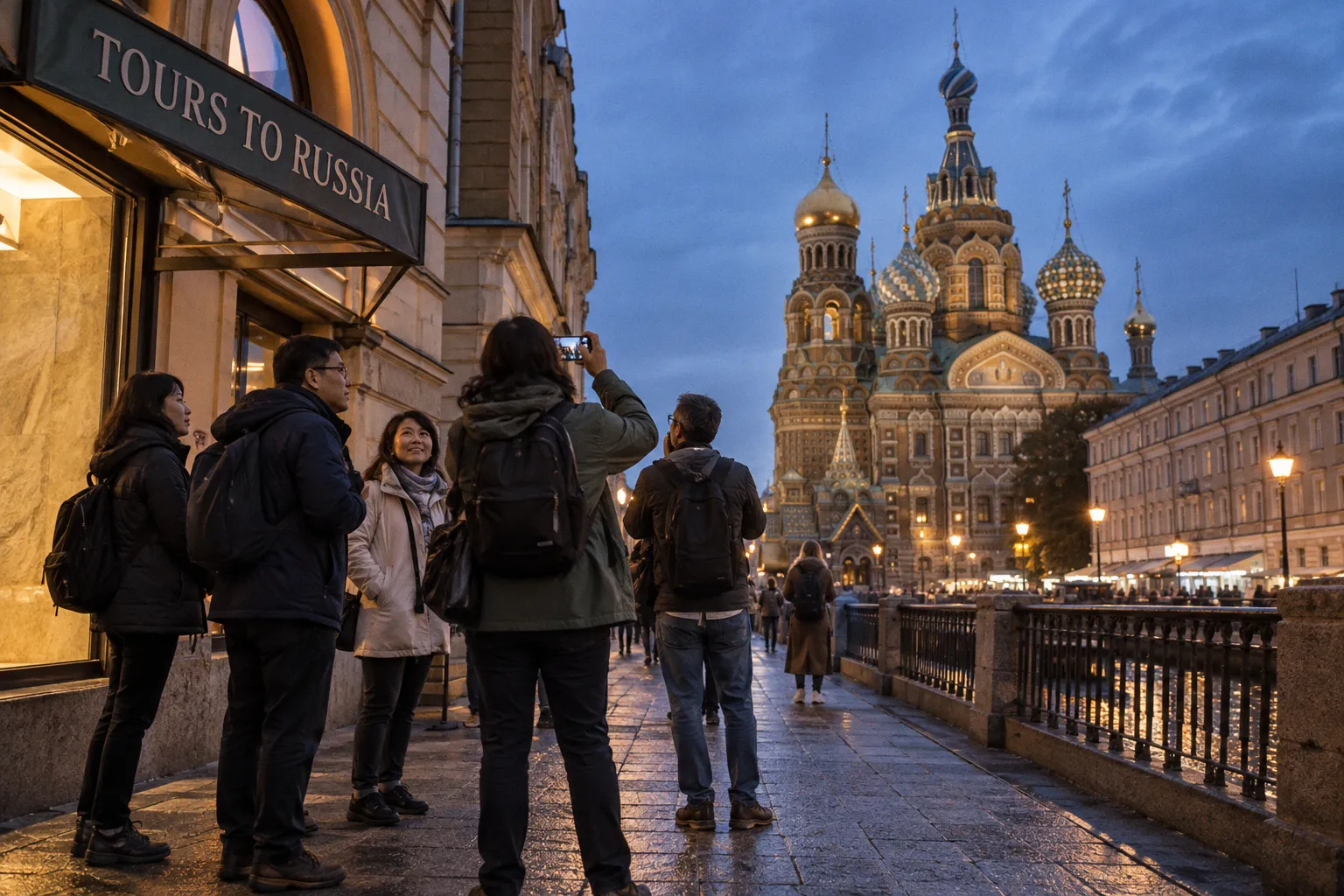
The ruble is doing something quietly useful for those of us planning routes across Russia this autumn — it is making the arithmetic work in our favor, even as the country's organized inbound tourism grew only 7.5% year on year in the first half of 2026 according to the Russian Union of Travel Industry, whose co-chair of the inbound committee, Alexander Musikhin of Intourist, presented the figures at an RST press conference in Moscow. Here is the catch: that headline number masks a far more interesting shift in who is moving, where they are going, and for how long — and it tells us a great deal about how to shape an itinerary for the seasons ahead.
Where the traffic is actually flowing
China continues to hold first place among source markets, up roughly 20% and riding on more than 250 weekly flights plus last year's visa-free arrangement. Turkey is also up around 20%, India up 15%, and Vietnam has surged nearly 69%. The decline tells its own story: Saudi Arabia is down 4%, summer arrivals from the UAE, Oman, Kuwait and Iran have softened, and Cuba has effectively halved since direct flights were pulled. At the same time, self-drive travelers from mainland China are increasingly rolling across the border in their own vehicles, and we are watching meaningful growth from Hong Kong, Taiwan, Singapore, Japan, and — quietly — from Latin America, with Colombia more than doubling.
The route mix has settled into a recognizable pattern. The classic Moscow-plus-St. Petersburg pairing still anchors most packages, with Primorsky Krai and Amur Oblast absorbing cross-border Chinese demand and Krasnodar Krai pulling the seasonal sun seekers. Murmansk in summer and Lake Baikal across the autumn window have become reliable shoulder-season draws, while business travel concentrates in Moscow, St. Petersburg, Kazan and Yekaterinburg. There is also growing appetite for transborder loops — Russia paired with Belarus or Kazakhstan — and for longer journeys built around the Trans-Siberian.
What this means for our planning on the ground
We are watching the average tour length compress to roughly seven days, pulled down by the retreat of Gulf travelers who traditionally stayed nine or more. If your itinerary is built around a single week, you can comfortably pair the two capitals and add a short side excursion, but stretching across regions — say, Moscow, Kazan and a Baikal leg — will require either trimming stops or reframing the trip as a slower rail journey.
Pricing has been a pleasant surprise. The average inbound package now runs a little over $1,000 excluding international air, and electronic visas — open to travelers from 60 countries — remain straightforward, with the RST reporting essentially no refusals along their channel. We would still build in extra padding for connectivity and card payments outside the two capitals, where cash and patience remain useful companions.
The high season for inbound runs through the end of October, and we are already seeing 2027 inquiries landing this autumn — a clear sign that booking windows are stretching earlier than they used to. For our readers planning a 2027 journey, this is the moment to start locking in the harder pieces: Trans-Siberian berths, the narrow Murmansk summer window, and Baikal accommodations around the ice or the thaw. Those who wait until spring will find the best stretches gone.