Germany Leads EU Push to Severely Restrict Tourist Visas for Russian Citizens
Germany's chancellor's office is formally pushing the European Union to reduce tourist visa issuance to Russian citizens to what officials call an absolute minimum.
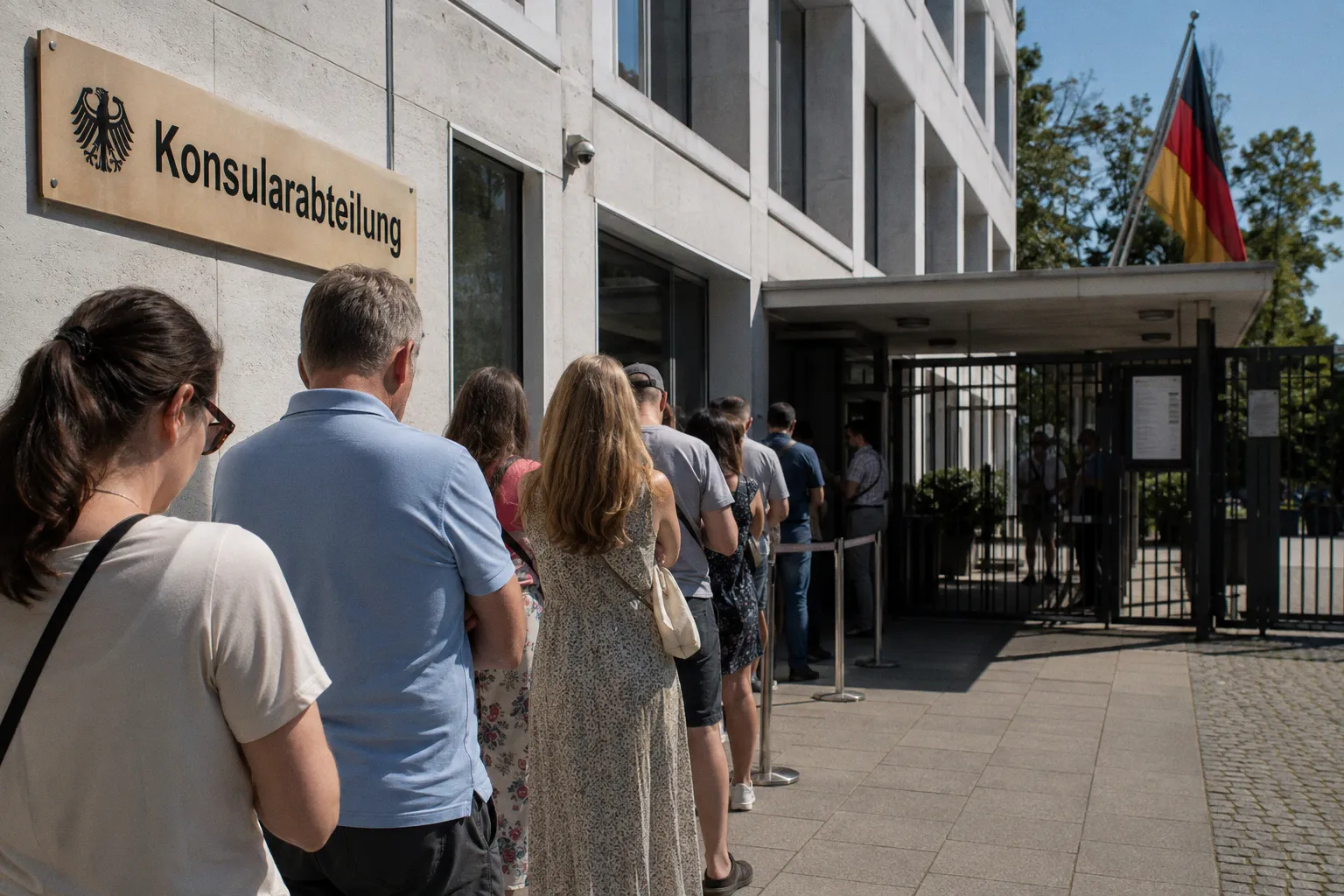
The move, reported by The Guardian, follows a failed drone attack on Leipzig/Halle airport that German authorities attributed to Russia on September 1 and closes out a week of diplomatic escalation including the shutdown of Moscow's consulate in Bonn. For anyone routing into or out of Russia through Schengen territory, the policy trajectory is now clear: fewer permits, longer screening, higher rejection probability. Plan accordingly.
The trigger and the policy demand
The immediate catalyst is the Leipzig incident. German law enforcement is investigating a suspect holding both Belarusian and Russian citizenship who reportedly entered the Schengen zone on an Italian tourist visa. A second suspect is described as a Russian-born holder of a Latvian passport. German authorities have concluded that the current scale of visa issuance is incompatible with the sanctions regime imposed since Russia's full-scale invasion of Ukraine. Roderich Kiesewetter, the CDU's lead on foreign and security policy, has called for an immediate suspension of tourist visas to Russian nationals, describing the existing practice as contradicting the European strategy of isolating Russia. The German Foreign Ministry is actively working the issue at EU level.
EU response: broad support, no unanimity yet
EU foreign ministers, meeting informally in Ireland on September 2, signalled what High Representative Kaja Kallas described as broad support for tightening the rules — but stopped short of unanimity. Mediterranean states that depend on Russian summer spending remain the principal holdouts. Kallas noted that several member states had warned for some time that tourist permits were being used for acts of sabotage, and expressed hope the Leipzig case would shift resistant capitals. Separately, the European External Action Service has circulated a proposal to list roughly 1,600 additional Russian individuals and companies, mostly in the defence sector, with adoption targeted for October. Russian nationals already lost access to multiple-entry Schengen visas in November 2025 and must now apply per trip.
What this means for Russia-bound travel logistics
No final decision has been taken, and the process requires Council-level agreement that does not yet exist. But the direction of travel is unambiguous. Monitor the following:
- Transit risk. If you route through Schengen airports en route to Russia — Frankfurt, Helsinki, Istanbul via a Schengen stopover — expect intensified screening of Russian-passport holders on your flights. Buffer time: add a minimum of 90 minutes to any Schengen layover involving a Russian-transiting leg.
- Reciprocity pressure. Each round of EU visa tightening has historically triggered a Russian countermeasure. Track consular announcements from the Russian MFA for any changes to entry requirements for EU nationals. The Bonn consulate closure signals Berlin is treating this as a structural shift, not a temporary gesture.
- Application timing. If you hold Russian citizenship and have a pending Schengen tourist application, submit documentation now. Processing windows compress as member states implement additional vetting. Expect longer turnaround at Italian, French, and Spanish consulates — the three largest issuers by volume.
- Backup routing. Non-Schengen hubs — Istanbul, Dubai, Belgrade — remain unaffected by this policy track. For time-sensitive travel, route through third countries that maintain direct Moscow or St. Petersburg service without Schengen transit.
The safe assumption for the next quarter: visa access narrows, not widens. Build your itinerary with that baseline in mind.