Russian incentive travel: a step-by-step planning route
Russian incentive travel planning route design starts with a deadline, not a destination list.
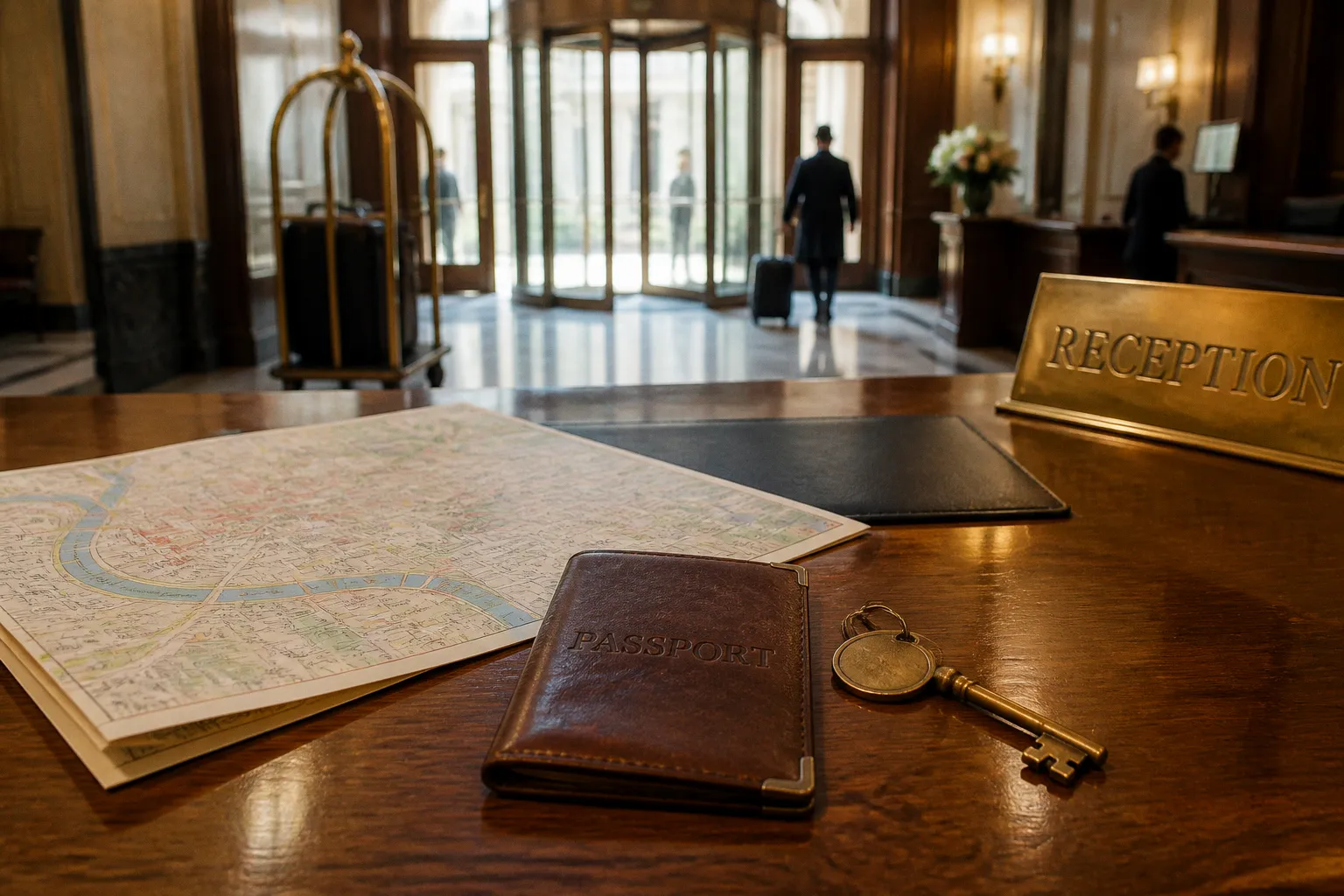
A corporate group needs visa clearance, fixed transport corridors, hotel inventory, venue confirmation, payment procedures and a local operating chain before the itinerary can be treated as viable.
For most programs, the working format is 3 to 6 nights, with Moscow, St. Petersburg, or both cities as the operating base. The standard accommodation tier is a 4-star or 5-star business hotel. The program must combine business sessions with controlled access to cultural assets, group transfers and a defined contingency layer.
The sequence is mandatory:
1. Define the business objective.
2. Fix the delegation profile and route.
3. Start visa and document control.
4. Reserve hotels, venues and transit corridors.
5. Build the experience schedule.
6. Transfer operational control to the DMC.
7. Execute against a master run sheet.
8. Measure delivery and business result.
Do not reverse this order. A gala venue does not solve a visa delay. A confirmed hotel does not create a transport plan. A published program is not an operational program until every dependency has an owner.
1. Define the objective before selecting Moscow or St. Petersburg
The first planning document is not the itinerary. It is the program brief.
Russian incentive programs design usually fails at the objective stage. The client requests “a premium trip to Russia,” suppliers return a list of attractions, and the group receives a sequence of disconnected appointments. That is a content problem and a control problem.
Set the program around one primary business function:
- reward high-performing employees;
- reinforce distributor or partner relationships;
- support a product launch;
- align regional teams;
- host senior clients;
- combine a conference with a recognition program;
- deliver a controlled cultural experience for a corporate delegation.
Then define the operating constraints:
- delegate count;
- nationality and residence of each traveler;
- arrival and departure airports;
- preferred travel window;
- business-session requirement;
- accommodation tier;
- language requirement;
- accessibility requirements;
- protocol restrictions;
- budget structure;
- payment route;
- decision deadline.
The itinerary should not be approved until the client has separated mandatory elements from optional elements. This distinction protects the program when transport capacity, venue access or visa processing creates a constraint.
Moscow, St. Petersburg, or a two-city route
Moscow and St. Petersburg support different operational profiles.
| Planning parameter | Moscow | St. Petersburg | Two-city route |
|---|---|---|---|
| Primary function | Business sessions, senior meetings, corporate events | Cultural programming, gala formats, heritage access | Broader incentive program with intercity movement |
| Program density | High. Suitable for conference and meeting schedules | Moderate to high. Requires careful transfer timing | Lower daily density because of transit |
| Signature assets | Kremlin access, Bolshoi backstage programs, Star City simulator sessions | Imperial palace dinners, museum and theatre formats | Combined business and cultural route |
| Transit requirement | Local transfers across a large urban area | Local transfers across a large urban area | Sapsan or overnight luxury express |
| Main control issue | Traffic and venue access windows | Venue timing and seasonal demand | Luggage, boarding, hotel checkout and rail coordination |
A one-city program gives the operations team more buffer time. A two-city route gives the delegation more range but consumes a material part of the schedule. The route decision must be based on the business objective, not on the number of landmarks that can be inserted into a proposal.
A standard multi-city corridor uses the Sapsan high-speed train. An overnight option may use a luxury express service such as the Red Arrow. Each option requires a different group-handling plan. Daytime rail movement affects the program calendar. Overnight movement affects cabin allocation, baggage control, sleep conditions and the next morning’s performance.
A two-city incentive itinerary is not two city programs. It is one program with a transit operation inside it.
Build the itinerary by operational blocks
Use blocks. Do not schedule isolated attractions.
A workable 3-to-6-night structure normally includes:
- arrival and controlled hotel check-in;
- orientation and document confirmation;
- one or more business sessions;
- a cultural or recognition event;
- a structured team-building activity;
- intercity movement where required;
- a closing dinner or awards format;
- departure management.
Each block needs five fields:
1. Purpose: what the block delivers.
2. Location: venue, hotel or transit point.
3. Duration: including access and exit time.
4. Owner: DMC, hotel, venue, transport provider or client team.
5. Failure response: the alternative action if the block is delayed or unavailable.
Do not use the full published duration of a venue visit as usable program time. Add access control, group assembly, security procedures, coat storage, bathroom movement, photography and departure loading. These are not optional details. They consume the clock.
2. Establish visa compliance before contracting the program
Visa handling is the first hard compliance gate for corporate group travel in Russia.
A delegation cannot be managed as one administrative unit until the traveler list has been checked by nationality, passport type, residence status, travel dates and route. The client must provide a controlled document register. The DMC or visa specialist must then confirm the applicable entry route for every traveler.
A standard group tourist visa process is available for organized groups of more than 7 people traveling on identical dates and routes. This threshold does not remove the need for individual document control. It also does not make every corporate delegation eligible for group processing. The route, nationality, passport details and supporting documentation remain decisive.
Eligible nationals may use the Russian electronic visa system. Eligibility is nationality-specific. It must be verified against the current rules before the itinerary is sold as operationally cleared.
The visa control sequence
Use one traveler register. Do not manage visa data through separate email threads.
The register should contain:
- full name exactly as shown in the passport;
- date of birth;
- nationality;
- passport number;
- passport issue and expiry dates;
- place of residence;
- arrival date;
- departure date;
- entry and exit points;
- internal traveler status;
- document receipt date;
- application status;
- approval date;
- escalation owner.
The compliance sequence is straightforward:
1. Freeze the preliminary traveler list.
2. Separate nationalities and document categories.
3. Confirm the permitted visa route for each category.
4. Verify passport validity and blank-page requirements against current consular rules.
5. Match visa data with air, rail and hotel records.
6. Set a submission deadline with buffer time.
7. Reconcile every approved document against the final manifest.
8. Lock changes after the final operational cut-off.
The most common failure is not a complex legal issue. It is a mismatch. A passport number changes. A middle name is omitted. The rail booking reflects a different spelling. The traveler changes passport after application. The delegation then reaches a transport or border-control stage with inconsistent records.
Buffer time is an operating asset
Do not plan against the theoretical processing period. Build buffer time between document submission, approval, final ticketing and departure.
The buffer must cover:
- missing documents;
- data corrections;
- consular or processing delays;
- traveler substitutions;
- passport replacement;
- changes in entry or exit routing;
- internal approval delays.
The traveler list should have a formal freeze date. After that date, substitutions must be treated as a new compliance case. Do not silently replace one delegate with another inside an existing manifest.
Corporate travelers also require a payment protocol. Foreign-issued Visa and Mastercard cards should not be presented as a seamless arrival solution. Payment access, deposits and settlement must be arranged in advance with the DMC, hotel and relevant suppliers. The operating plan needs a confirmed payment mechanism for transport, venue charges, incidentals and emergency purchases.
Visa and itinerary dependencies
The visa route must match the actual program. A delegation cannot hold one declared route and operate another without checking the documentation impact. This matters in a Moscow–St. Petersburg program, where entry, exit, hotel and rail records form one connected chain.
Control these dependencies in one matrix:
| Dependency | Required match |
|---|---|
| Visa application | Passport data, travel dates, declared route |
| Hotel confirmation | Guest name, city, dates |
| Rail booking | Passenger name, passport data, travel segment |
| Airport transfer | Arrival time, terminal or meeting point, group manifest |
| Venue access | Delegate identity requirements, arrival window |
| Departure plan | Exit date, airport or rail station, baggage movement |
Any unresolved mismatch remains a live operational risk. Mark it. Assign it. Set a resolution date.
3. Build the transit corridor between Moscow and St. Petersburg
Intercity transit is where many incentive itineraries lose their timing discipline. The distance is manageable. The group movement is not automatic.
A Russian business travel Russia guide must treat the rail segment as a production block, not as a line between two hotel names. The operation includes hotel checkout, baggage collection, loading, transfer, station arrival, group assembly, boarding, carriage allocation, arrival handling, hotel check-in and program restart.
Sapsan or overnight express
The Sapsan is the standard high-speed option for a daytime Moscow–St. Petersburg movement. It preserves a night in a hotel and gives the program a predictable rail corridor. It also consumes a daytime schedule block and requires exact coordination at both stations.
An overnight luxury express such as the Red Arrow shifts the movement into the night. This can protect daytime programming but introduces cabin allocation, baggage, sleep and morning readiness issues.
| Transit factor | Sapsan high-speed train | Red Arrow or comparable overnight express |
|---|---|---|
| Program impact | Uses daytime hours | Uses overnight hours |
| Hotel nights | Usually retains hotel accommodation structure | Can reduce or replace one hotel night |
| Group control | Station assembly and carriage coordination | Cabin allocation and baggage control |
| Main risk | Late hotel departure or station arrival | Morning fatigue, missed wake-up and luggage separation |
| Best use | Efficient intercity movement with daytime operating control | Preserving daytime event capacity |
The choice must be made against the next scheduled activity. A morning boardroom session and an overnight train may create a performance issue. A daytime train before a gala may create a timing issue. The transit corridor is compliant only when it fits the program’s energy, access and recovery requirements.
Baggage control
Use one baggage protocol:
- assign an owner for each segment;
- define collection time at the hotel;
- separate hand luggage from checked or transferred baggage;
- label group items;
- record missing pieces at every handover;
- confirm delivery at the destination hotel;
- retain emergency access to medication, travel documents and work equipment.
Do not put passports, medications or essential presentation materials into a general group baggage movement. The group manifest must identify who retains critical documents.
Station operations
The station plan should state:
- hotel departure time;
- vehicle allocation;
- loading sequence;
- station entry point;
- group assembly point;
- passenger manifest owner;
- boarding control;
- assistance requirements;
- destination meeting point;
- transfer vehicles at arrival;
- luggage handover procedure.
The group should not arrive at the station with no defined assembly point. A station is a transit corridor with multiple access routes, passengers and timing dependencies. Assign a visible coordinator and a secondary coordinator. The DMC must hold the final passenger list.
Rail capacity is not the same as group readiness. The operation succeeds only when every passenger, bag and document reaches the correct carriage.
City transfers require the same discipline
Moscow and St. Petersburg both require urban transfer planning. A hotel may be close to a venue on a map and still be unsuitable for a group schedule because of access restrictions, loading conditions, traffic, security or coach positioning.
For each transfer, define:
- vehicle type and seat capacity;
- boarding order;
- guide or escort position;
- route;
- loading point;
- estimated movement time;
- buffer time;
- contact hierarchy;
- no-show procedure;
- vehicle replacement procedure.
Do not build a program that requires every vehicle to arrive at the exact minute. That is not precision. It is zero tolerance. Use arrival windows and a controlled staging plan.
4. Select venues and experiences as operational assets
Russian incentive travel works when the experience has a clear function inside the program. A private Kremlin tour, Bolshoi Theatre backstage access, Star City simulator session or imperial palace gala can support recognition, leadership, team cohesion or client engagement. None of these assets should be inserted only because they are recognizable.
Classify each experience before contracting:
- recognition asset: rewards delegates and supports status;
- team-building asset: requires group participation and facilitation;
- cultural asset: provides context, access and interpretation;
- protocol asset: supports senior guests or formal hosting;
- content asset: produces material for an internal or external event;
- recovery asset: gives the group controlled time after a dense business block.
Cultural access
Private or restricted-access programs carry additional dependencies. These may include:
- venue approval;
- identity lists;
- security screening;
- access windows;
- photography rules;
- dress or conduct requirements;
- transport staging;
- language support;
- supplier insurance or payment conditions.
A backstage theatre program is not the same as a standard performance visit. A Kremlin program with controlled access is not the same as a public sightseeing block. An imperial palace dinner involves venue capacity, catering, transport, technical production and protocol.
The proposal must identify what is confirmed, what is subject to approval and what is available only by negotiated quotation. High-profile venue buyouts do not have a standard per-person price that can be treated as fixed without a supplier quote.
Team-building in a corporate program
Team-building must produce an observable result. It should not be a decorative gap between meetings.
Define:
- group objective;
- participant count;
- activity duration;
- facilitation method;
- physical requirements;
- language;
- scoring or feedback system;
- indoor alternative;
- transport requirement;
- medical or accessibility constraints.
Star City simulator sessions, for example, require a specific operational concept. The client must know whether the block is an observation, a facilitated group activity or a technical session for selected participants. Each format has a different timing and capacity profile.
Avoid overloading the schedule with activities that require separate transfers, separate registrations and separate safety briefings. One well-managed activity produces more usable engagement than three compressed attractions.
Gala dinner control
A gala format requires a production schedule. The venue selection must cover:
- guest arrival;
- welcome reception;
- seating;
- speeches;
- awards;
- entertainment;
- meal service;
- photography;
- departure.
The DMC should hold a venue floor plan, supplier list, technical rider and event run sheet. The client should approve the sequence before the event date. Changes at the venue are expensive in time and control.
The dinner should also have a transport exit plan. A program that ends without vehicle staging creates a queue, a delay and a loss of group control.
5. Select hotels for group operations, not room photographs
Business hotels in Moscow and St. Petersburg must be evaluated as operating bases.
The room category is only one line in the hotel decision. The operating review should cover:
- group check-in capacity;
- coach access;
- luggage storage;
- meeting-room inventory;
- breakfast timing;
- early departure service;
- late arrival procedures;
- payment and deposit conditions;
- foreign guest registration process;
- language coverage;
- incident escalation;
- proximity to the first and last program blocks.
A hotel may have the required star category and still fail the program because its lobby cannot process the delegation, its coach cannot stage, or its meeting rooms cannot support the client’s technical setup.
Rooming list control
The rooming list is a compliance document and a service document. Freeze it in stages:
1. Preliminary rooming list for inventory.
2. Confirmed rooming list for contracting.
3. Final rooming list for check-in and registration.
4. Exception list for late changes.
Record single and twin occupancy separately. Identify executives, speakers, interpreters, production staff and DMC personnel. Keep room requirements connected to arrival and departure records.
Do not distribute the full rooming list beyond the teams that require it. Access should be controlled. The DMC, hotel and client lead need aligned versions.
Meeting-room requirements
A corporate event needs a technical brief before the venue is accepted. Define:
- seating layout;
- stage or presentation position;
- interpretation requirement;
- screen and projection;
- sound;
- lighting;
- power;
- internet;
- registration desk;
- storage;
- rehearsal window;
- speaker holding area.
The venue contract should identify access time for setup and strike. A room available from the event start time is not a production solution. Technical installation, signage and testing require earlier access.
6. Put the DMC at the center of the operating chain
A local Destination Management Company is not a booking mailbox. It is the control layer between the client, hotel, transport provider, venue, guide, visa specialist and emergency response team.
Engage the DMC during route design. Late engagement creates fragmented contracts, duplicated instructions and unclear responsibility. Early engagement allows the team to test the route against local access, supplier capacity, visa protocol and payment conditions.
The DMC scope should state:
- itinerary design;
- visa coordination;
- hotel contracting;
- venue contracting;
- rail and local transport;
- guide and interpreter provision;
- group manifest control;
- supplier payment;
- on-site staffing;
- emergency response;
- daily reporting;
- post-event reconciliation.
The master operations file
Use one master file. It must include:
- final itinerary;
- contact hierarchy;
- traveler manifest;
- visa status;
- rooming list;
- rail tickets;
- transfer schedule;
- venue confirmations;
- meal requirements;
- technical requirements;
- payment status;
- risk register;
- emergency procedures;
- backup plan.
Every change needs a timestamp, an owner and an impact statement. A change to a rail departure affects hotel checkout, baggage, the next venue and the guide schedule. Do not record it as a standalone update.
Daily operational control
The DMC should run a daily briefing with the client lead. Keep it short and factual:
- delegates present;
- next movement;
- next venue;
- outstanding risk;
- supplier confirmation;
- weather or access issue where relevant;
- payment issue;
- decision required.
Use a single escalation chain. The traveler should not receive conflicting instructions from the client, guide, hotel and transport coordinator. The client lead receives the decision. The DMC distributes the operational instruction.
7. Use a troubleshooting matrix before the group travels
A corporate group travel Russia guide is incomplete without failure handling. The risk register must be written before the first arrival.
| Failure point | Immediate control | Backup action |
|---|---|---|
| Visa document mismatch | Stop manifest release and verify against passport | Remove affected traveler from the active movement plan until cleared |
| Late traveler substitution | Open a new document and ticket check | Use an approved reserve delegate only after compliance confirmation |
| Rail delay | Notify hotel, venue and transport lead | Move the first low-dependency program block or activate city-based content |
| Missing baggage | Record at the handover point | Deliver essentials and continue the delegate’s schedule |
| Vehicle failure | Contact transport control | Dispatch replacement vehicle under the same manifest |
| Venue access delay | Hold group in a controlled area | Start the next approved block only if the timing permits |
| Payment failure | Escalate to DMC finance lead | Use pre-agreed local settlement route |
| Delegate illness | Assign one escort and isolate the operational impact | Preserve the group schedule with a named substitute lead |
Do not create a backup plan that depends on the same failed supplier. A second vehicle from the same unavailable fleet is not a full contingency. A second venue with the same access restriction is not a contingency. The backup must change the dependency.
The program’s reserve capacity
Keep reserve capacity in three places:
- time;
- transport;
- content.
Time reserve covers late departures and access delays. Transport reserve covers vehicle failure, baggage movement and delegate separation. Content reserve covers a venue cancellation or a delayed intercity segment.
The reserve content should be pre-approved. The group should not wait for a new creative proposal during an active failure. The DMC must know which activities can be expanded, compressed or moved indoors.
8. Measure delivery after departure, not only during the trip
Post-event ROI assessment closes the project phase. It should compare the approved objectives with the delivered result.
Measure the items that match the brief:
- attendance;
- participation;
- business meetings completed;
- partner or client engagement;
- session completion;
- satisfaction;
- recognition outcomes;
- schedule variance;
- incident count;
- supplier performance;
- budget variance.
Separate operational success from strategic success. A program can run on time and still fail to support the commercial objective. It can also deliver strong engagement while carrying an avoidable logistics defect. Record both.
The post-event report should include:
- final itinerary;
- delivered versus contracted services;
- incident log;
- visa and entry issues;
- transport performance;
- venue performance;
- payment reconciliation;
- delegate feedback;
- recommended route changes;
- supplier retention or replacement decision.
This record improves the next Russian incentive travel program. It also exposes weak assumptions before they become recurring costs.
The fail-safe planning route
Build the program in this order:
1. Write the business objective in one sentence.
2. Select one city or confirm the Moscow–St. Petersburg corridor.
3. Fix the 3-to-6-night operating frame.
4. Classify every traveler by nationality and visa route.
5. Freeze the first controlled manifest.
6. Confirm hotel inventory and meeting capacity.
7. Select the rail option and create the baggage protocol.
8. Contract the DMC and define its authority.
9. Confirm cultural, gala and team-building assets.
10. Add buffer time to every critical movement.
11. Create a failure matrix with independent backups.
12. Freeze the final manifest, rooming list and run sheet.
13. Execute through one escalation chain.
14. Reconcile the result against the original objective.
The route is viable only when the compliance layer, transit corridor, venue layer and payment mechanism are aligned. The strongest incentive itinerary is not the one with the largest number of premium inclusions. It is the one that keeps the group moving, keeps the documents consistent and preserves the business purpose when one component fails.
That is the standard for Russian incentive travel planning route design. Build for normal delivery. Hold a backup for every critical dependency. Release the program only after the operating chain is closed.