New EU Travel Restrictions and Visa Hurdles Following German Security Incident
According to BBC reporting on 3 September 2026, the EU and NATO have committed to expanded sanctions and tightened entry restrictions on Russian visitors after Germany formally attributed the…
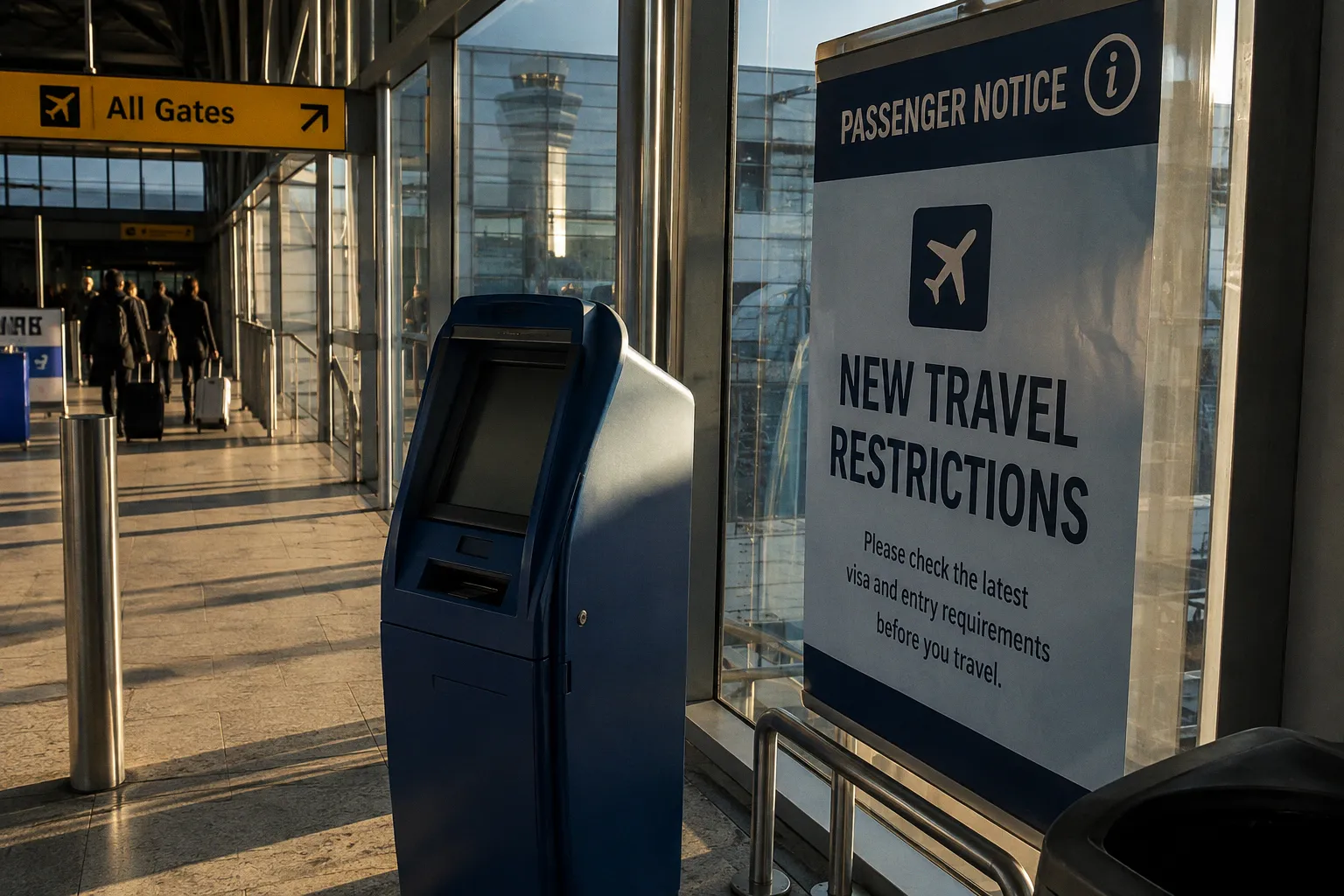
According to BBC reporting on 3 September 2026, the EU and NATO have committed to expanded sanctions and tightened entry restrictions on Russian visitors after Germany formally attributed the Leipzig/Halle airport drone incident to Moscow. Commission President Ursula von der Leyen called the attack a "new escalation on European Union soil directly attributed to Russia" and confirmed a coordinated bloc response. For inbound travelers to Russia routing through EU transit hubs, this triggers a mandatory review of visa compliance corridors and documentation redundancy.
Compliance status
- German attribution: Police and intelligence findings confirmed Russian involvement. The drone's configuration, components, explosives, and detonator match known Russian hybrid operation patterns.
- Berlin's measures: Closure of the Russian consulate in Bonn and the Russian House cultural institution in Berlin. Two suspects identified.
- Moscow's reciprocal action: Goethe-Institut cultural centres in Moscow, St Petersburg, and Yekaterinburg ordered closed. Putin labelled Germany's measures "a serious mistake that clearly runs counter to the interests of the German people."
- EU coordination track: Foreign ministers convened in Wicklow, Ireland. France's Jean-Noël Barrot signalled action against Russia's shadow fleet. Extended sanctions and entry bans under discussion.
- Suspect profile: One Belarusian-Russian dual national entered on a tourist visa; a Latvian-Russian dual national arrived in Berlin by plane two days before the failed attack.
Transit and visa checkpoints
- Consular capacity: German consular services in Russia face disruption. Expect reduced appointment availability and longer processing buffers.
- Tourist visa scrutiny: The tourist visa entry route is now a documented case file. Applicants should anticipate enhanced documentation requirements and extended adjudication windows.
- Transit hubs: Leipzig/Halle operates as a key NATO logistics node, regularly used by Ukrainian Antonov transport aircraft. Sanctions enforcement at this hub may delay or reroute connecting flights.
- Reciprocity risk: Russia's closure of Goethe-Institut centres confirms a tit-for-tat posture. Further restrictions on European travelers cannot be ruled out.
- EU policy direction: Von der Leyen stated the alliance must be "ready to respond to Russia's recklessness faster and better." Implementation timelines will vary by member state.
Fail-safe procedure
- Application fallback: If a primary consulate closes, redirect submissions to jurisdictions accepting third-country filings. Confirm acceptance before rebooking any appointments.
- Route backup: Map non-EU transit corridors (Istanbul, Doha, Dubai) as secondary entry points before finalising itineraries.
- Documentation redundancy: Carry certified copies of all entry permits. Secondary screening at border control is probable.
- Monitoring cycle: Check EU Council sanctions decisions weekly. Member-state implementation is not uniform.
Leipzig is the trigger event. All travelers holding Russia-bound or Russia-adjacent itineraries should complete a visa status audit, transit route verification, and document backup before the next EU Council review window opens.