Germany Closes Russian Consulate Following Failed Airport Drone Attack
blamed Russia on Tuesday for a failed drone attack on Leipzig/Halle Airport on August 4 and announced the closure of the Russian consulate in Bonn effective September 18, alongside tighter entry controls on Russian nationals.
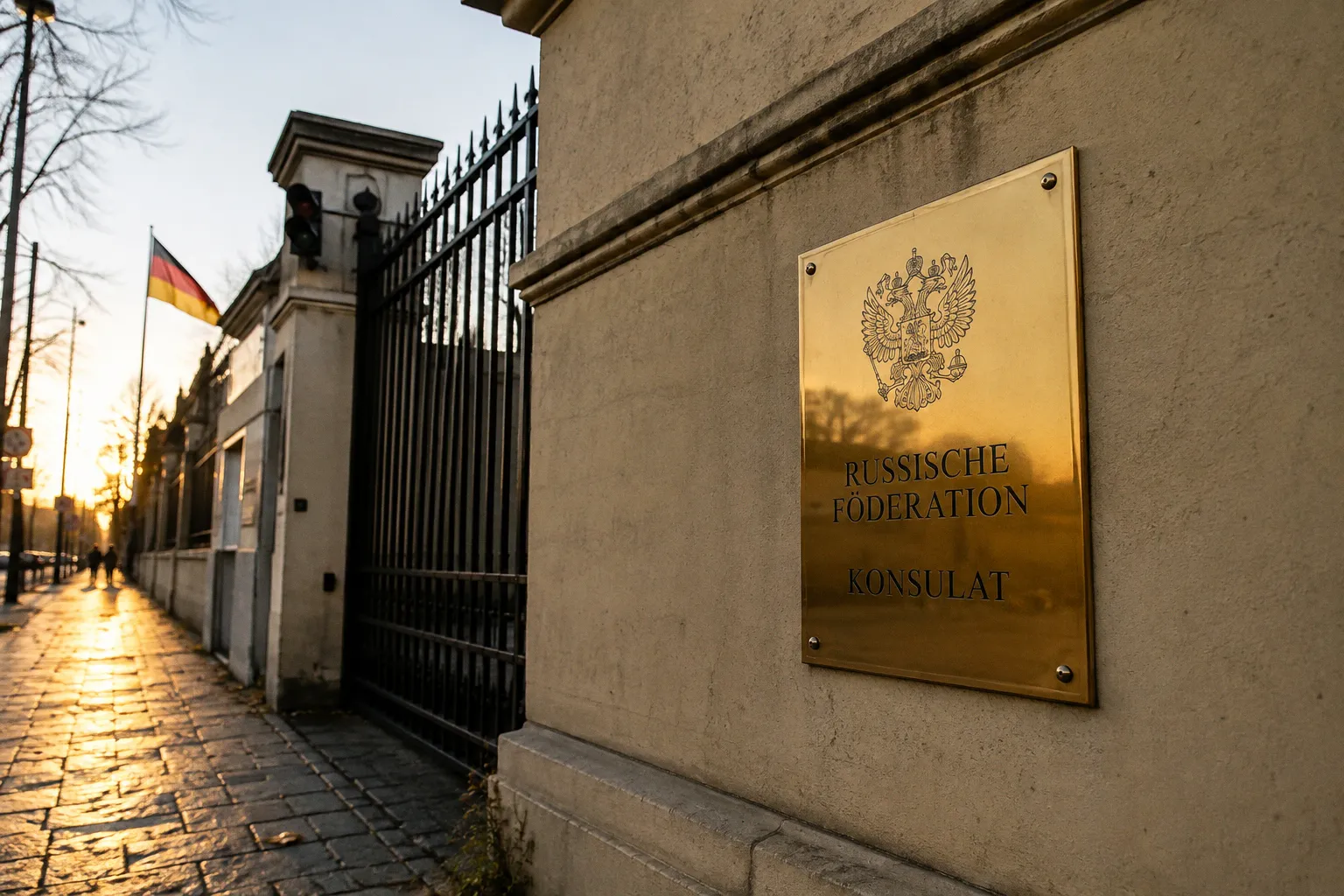
For travelers planning routes into Russia through European transit points, the move signals a coordinated tightening of visa processing and border procedures that warrants buffer time on every booking.
Germany's response
German Interior Minister Alexander Dobrindt confirmed that police investigations and intelligence findings establish Russian responsibility for the attempt. Two suspects have been identified, including a Belarusian holding a Russian passport who entered on a tourist visa. Germany's countermeasures:
- Russian consulate in Bonn closes effective September 18
- Operating contract rescinded for the Russian House cultural center in Berlin
- Additional Russian nationals to be proposed for EU sanctions lists
- Stepped-up entry controls for travelers arriving from Russia
- Increased enforcement against tankers moving sanctioned Russian oil
Foreign Minister Johann Wadephul described the attempt as deliberate damage to Germany's bilateral relationship with Russia. Moscow rejected the accusations and signaled reciprocal measures; the Russian ambassador was summoned to the Foreign Ministry in Berlin. EU Commission President Ursula von der Leyen labeled the incident a new escalation on EU soil, with NATO Secretary General Mark Rutte confirming full alliance solidarity.
Implications for Russia-bound travel
The consulate closure and promised Russian counter-measures affect visa issuance logistics for travelers entering Russia. Procedural friction to anticipate:
- Longer processing windows at Russian consular posts across Europe as capacity contracts
- Increased document scrutiny on applications, with heightened sensitivity to invitation letters, sponsor documentation, and travel itineraries
- Transit friction through EU hubs as border controls intensify, particularly for connections routed through Germany
- Potential reciprocal Russian restrictions on European consular services operating on Russian territory
Germany had already reduced visas issued to Russians roughly tenfold since the start of the full-scale war, with further cuts planned. While these measures target Russian passport holders specifically, broader EU-Russia deterioration raises compliance risk for all Russia-bound travelers — from insurance underwriting to payment processing for bookings and on-ground services.
Fail-safe: contingency checklist
- Verify Russian visa validity dates and re-entry allowances before committing to European transit flights.
- Build a minimum 72-hour buffer into any itinerary involving an EU transit point.
- Retain printed copies of invitation letters, hotel confirmations, and travel insurance policies in carry-on luggage.
- Subscribe to Russian consular bulletins and German Foreign Ministry travel advisories for processing-window updates.
- Identify backup visa application posts outside the EU for contingency routing if Russian consular services in Europe contract further.