Moscow metro guide: ticket purchase to platform route
A foreign Visa, Mastercard, American Express card, Apple Pay wallet, or Google Pay wallet will not get you through a Moscow Metro turnstile. It will not purchase a ticket at the station either.
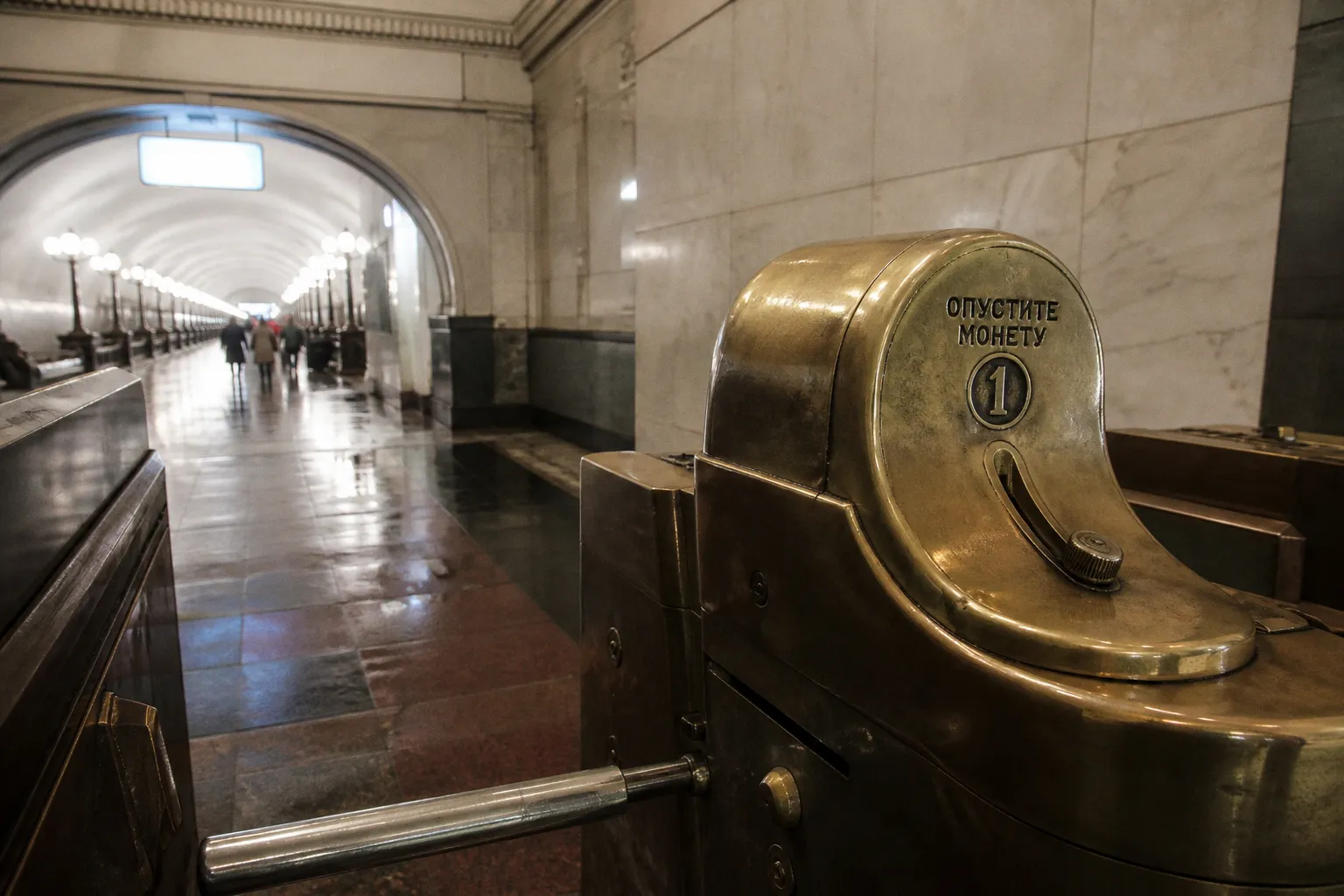
Moscow Metro Guide: How to Pay and Navigate the System
Since the suspension of foreign card processing in March 2022, the metro payment workflow has required Russian ruble cash or a Russian-issued Mir card.
For most foreign visitors, the operational solution is simple: carry ruble cash, buy a physical Troika card, load it at the station, and use it for each journey. Do not build your route around contactless payment from a foreign bank card. That is a payment failure, not a navigation issue.
This Moscow metro ticket guide for tourists covers the complete sequence: payment, card selection, entrance control, platform routing, transfers, and online top-up validation.
Why Foreign Cards Do Not Work
Moscow Metro access is controlled at two stages:
1. Ticket acquisition
2. Turnstile entry
Foreign-issued Visa, Mastercard, and American Express cards cannot be used at the ticket windows or vending machines for metro tickets. The same restriction applies to Apple Pay and Google Pay. A phone may have a working foreign card in other countries. That does not change the Moscow Metro payment rule.
Payment options are therefore limited:
| Payment method | Works for foreign tourists? | Operational condition |
|---|---|---|
| Foreign Visa or Mastercard | No | Cannot purchase a ticket or open a turnstile |
| Foreign American Express | No | Same restriction |
| Apple Pay or Google Pay with a foreign card | No | Mobile wallet does not bypass card restrictions |
| Russian ruble cash | Yes | Use at a ticket window or vending machine |
| Russian-issued Mir card | Yes | Requires access to a domestic card |
| Physical Troika card | Yes | Purchase and reload with ruble cash |
| Online Troika top-up | Conditional | Requires later validation at a yellow terminal |
The practical consequence is a cash buffer requirement. Do not arrive at the station with only a foreign bank card and a phone wallet. Carry ruble notes before entering the metro system.
Station vending machines and ticket windows can accept cash. Bank notes of 100 or 500 rubles are the most practical denominations for the first purchase and reload. Large notes create a change problem. A ticket window may resolve it. A machine may not.
Treat foreign contactless payment as unavailable. Treat ruble cash as mandatory until your Troika card is active.
Buying a Troika Card in Moscow
The physical Troika card is the default instrument for repeated metro travel. It is reusable, supports stored-value travel, and also works across integrated Moscow transport modes.
The purchase sequence is direct:
1. Enter a metro station.
2. Go to a ticket window or self-service vending machine.
3. Request a physical Troika card.
4. Pay the refundable card deposit and add travel balance.
5. Tap the card at the turnstile.
6. Keep the card for the rest of the trip.
The card deposit is 150 RUB. It is refundable within five years if the undamaged card is returned to a ticket window. The deposit is separate from the travel balance. Do not treat the entire amount loaded onto the card as a refundable deposit.
The card itself is not the fare. It is the access medium. Travel is charged either from the stored “Wallet” balance or through an activated unlimited pass.
How much cash to carry for the first purchase
Use a small cash reserve rather than calculating the transaction to the last ruble. Your first station transaction may include:
- The 150 RUB card deposit.
- A stored-value balance for individual journeys.
- An unlimited pass, if selected.
- A second card for another traveler.
- Additional balance for a return trip or transfer.
The exact amount depends on the fare product. The operational rule is more useful than a single total: carry enough rubles for the card deposit plus the first day of transport, and do not assume the machine will accept a foreign payment card for the difference.
One card per traveler
A physical Troika card should be treated as an individual travel instrument. Do not plan a group route around one card being passed from person to person at the same gate. Each passenger needs access to the required fare product at the point of entry.
For a couple or family, purchase the number of cards required for simultaneous entry. This removes a preventable delay at the turnstile and avoids splitting the group in a crowded vestibule.
Returning the card
The 150 RUB deposit can be refunded when the undamaged physical card is returned within the stated five-year period. This does not establish a universal refund procedure for unused stored balance. The handling of leftover Wallet balance is a separate matter and should not be assumed to match the deposit refund.
Before leaving Moscow, keep the card and any purchase record until you have decided whether a deposit refund is worth the station visit. If you require a refund, use a staffed ticket window. Do not leave the card in a hotel room or discard it as disposable plastic.
Wallet Balance or Unlimited Pass
Troika supports two main fare strategies for a short visit:
- Wallet balance: pay for individual journeys.
- Unlimited pass: pay for unlimited travel during a defined period.
A single journey using the Troika Wallet balance costs approximately 57–65 RUB. The exact fare depends on the applicable tariff and transport combination. The card also applies the integrated transport rules for eligible journeys.
The available unlimited options include:
- Approximately 415 RUB for one day.
- Approximately 800 RUB for three days.
An unlimited pass begins its validity period when the card is first tapped at a turnstile. This activation rule matters. Buying the pass in advance does not necessarily start the validity clock at the vending machine. The first operational tap starts the travel period.
Selecting the correct product
Use the following decision sequence:
1. Count planned transport days, not hotel nights.
A late arrival may not justify a one-day pass if only one journey is required before midnight.
2. Estimate the number of daily entries.
A visitor making multiple metro and surface-transport journeys may gain operational simplicity from an unlimited product.
3. Separate metro movement from airport transfer planning.
A metro pass does not automatically remove the need to arrange an airport train, bus, taxi, or other transport outside the metro tariff.
4. Consider route density.
A museum-heavy day with several transfers has a different fare profile from a day spent in one district.
5. Choose simplicity when the difference is small.
The unlimited pass removes repeated fare calculations and reduces the need to reload a card during a route.
The Wallet option remains efficient for limited travel. The unlimited option becomes more useful when the itinerary requires repeated entries, multiple changes, and surface transport within the integrated network.
The 90-minute transfer rule
Troika Wallet journeys can receive automatic 90-minute transfer discounts across eligible integrated transport. The relevant modes include:
- Moscow Metro.
- Moscow Central Circle.
- The central zone of Moscow Central Diameters.
- Surface transport.
The transfer window is measured from the initial validation. It is not a general permission to remain in the system indefinitely. Treat the first tap as the start of the transport interval and keep subsequent changes within the applicable 90-minute period.
The rule does not mean every movement becomes a free additional ride. The fare calculation depends on the transport combination and the tariff applied to the card. It does mean that a route involving a metro journey and an eligible transfer may be priced differently from two unrelated entries.
For route planning, record the first tap time when using Wallet balance. This is especially useful on a day with several changes between metro, the Central Circle, central-diameter services, and surface transport.
From Station Entrance to the Correct Platform
The Moscow Metro network is not difficult because of the turnstile. It is difficult when a passenger enters the station without identifying the line, direction, and transfer sequence.
Use a fixed platform procedure.
Step 1: Confirm the station before entering
Many stations have multiple entrances. The entrance may serve more than one line or connect to a large underground interchange. Check the station name and the line designation before passing the control area.
Do not select an entrance only because it is the first visible staircase. A different entrance may place you closer to the required platform, interchange corridor, or exit at your destination.
Step 2: Complete payment before route decisions
Purchase or activate the fare product before attempting to navigate the paid area. The correct sequence is:
1. Obtain or reload the Troika card.
2. Tap the card at the turnstile.
3. Confirm that the gate opens.
4. Move beyond the gate.
5. Follow signs to the line and platform.
If the turnstile does not open, stop. Do not repeatedly tap without checking the card balance or product status. Repeated attempts can create confusion about whether the card was read, rejected, or charged.
Step 3: Identify the line
Follow the line color and station name shown on the signs. Use the Latin transliteration where available, but verify the destination station against the route map. A station may have several lines and several platform corridors.
For transfers, identify the next line before entering the interchange passage. Do not assume that the first sign showing the destination station is the correct branch. The network uses direction-based routing, and a platform may serve trains going toward different terminal stations.
Step 4: Select the direction
A platform normally serves trains in one direction. The sign may identify the terminal station or the sequence of stations rather than the destination you need.
Use this process:
1. Locate your station on the line map.
2. Locate the required destination.
3. Determine which terminal or directional label lies beyond that destination.
4. Follow signs to that side of the platform.
5. Check the train display before boarding.
Do not select a train because its front destination appears familiar. Confirm that the train runs through your station and does not terminate before it.
Step 5: Allow platform buffer time
Peak train frequency can reach approximately 90 seconds. This does not eliminate the need for buffer time. Frequency reduces waiting time. It does not reduce walking distance inside an interchange.
Allocate additional time for:
- Long escalators.
- Direction changes inside a transfer corridor.
- Platform crowding.
- Luggage.
- Ticket or balance problems.
- A missed directional sign.
- An interchange that uses separate halls.
A published train interval is not a complete journey time. The transit corridor begins at the street entrance and ends at the correct platform or exit, not when the train arrives.
Step 6: Exit using the destination-side route
At the destination station, read the exit signs before going up to street level. A large station may have several exits leading to different streets, landmarks, or transport connections.
If your accommodation, museum, or meeting point is on the opposite side of a major road, the correct exit can save a surface detour. Do not leave through the first staircase without checking the exit designation.
Operating Hours and Late-Night Risk
Moscow Metro operates daily from approximately 05:30 to 01:00. Station entrances close at 01:00. Final trains leave terminal stations at approximately 01:03.
This creates a hard late-night constraint. A passenger entering the station close to closing time may still face:
- A long walk to the platform.
- A transfer corridor that takes several minutes.
- A final train already committed to its route.
- A destination exit that is not immediately available.
- A failed card tap requiring staff assistance.
Do not schedule a complex interchange for the final minutes of operation. Set an earlier cutoff for the last departure, especially with luggage or a destination outside the central area.
A fail-safe late-night plan should include:
- The exact station where the final metro segment begins.
- The last practical entry time, not only the official closing time.
- A surface-transport alternative.
- A charged phone.
- A written hotel address.
- Sufficient ruble cash for the backup route.
The metro timetable is a network constraint. It is not a guarantee that every transfer remains available until the displayed closing time.
The Yellow Terminal Rule for Online Top-Ups
Remote top-ups create the most common Troika balance error.
If you add credit to a physical Troika card online or through a banking application, the balance may not be available at the turnstile immediately. The card requires validation at a yellow activation terminal inside the metro station vestibule.
The correct sequence is:
1. Submit the top-up through the relevant online service.
2. Take the physical Troika card to a metro station.
3. Locate the yellow activation terminal.
4. Tap the card against the terminal.
5. Wait for the top-up to load.
6. Use the card at the turnstile.
A remote payment confirmation is not the same as an active transport balance. The top-up exists in the system, but the physical card must receive the update through the activation terminal.
Direct station reloads
A balance loaded directly at a ticket window or vending machine is the simpler procedure for a visitor. The station transaction loads the card without relying on a later activation step.
Use direct cash reloads when:
- You have no Russian SIM card.
- You do not have a Russian-issued Mir card.
- You need the card for an immediate journey.
- You are unfamiliar with the online top-up interface.
- Your route begins at a station with limited time for troubleshooting.
Use online top-ups only when you have sufficient buffer time to validate the card. Do not submit a remote reload while standing at a closed gate and expect the turnstile to recognize it automatically.
A top-up is not complete until the physical Troika card has been validated at the yellow terminal.
Troubleshooting the Main Failure Points
The following matrix covers the failures that disrupt foreign visitors most often.
| Failure point | Likely cause | Corrective action |
|---|---|---|
| Foreign card rejected at ticket machine | Foreign card networks are unavailable | Pay with ruble cash or use a Russian Mir card |
| Phone wallet rejected | Apple Pay or Google Pay does not bypass the restriction | Purchase a Troika card with cash |
| Troika does not show a remote top-up | Physical card has not been validated | Tap it at a yellow activation terminal |
| Group cannot enter together | One card is being shared | Obtain one operational card per traveler |
| Passenger boards the wrong train | Terminal direction was not checked | Return to the line map and verify the direction |
| Late-night transfer fails | The network is near closing time | Use the earlier departure or activate the backup route |
| Card deposit is confused with travel balance | Purchase components were treated as one amount | Separate the 150 RUB deposit from the loaded fare value |
| Exit leads away from the destination | Exit number or street direction was ignored | Check the station exit signs before leaving the paid area |
Do not escalate a payment problem into a route problem. If a card fails, resolve the card first. If a train direction is unclear, stop at the platform map. Continuous movement creates more errors than a controlled pause.
A Working Route Protocol for Tourists
Use this protocol for every Moscow Metro journey.
Before leaving the hotel
- Carry ruble cash in usable denominations.
- Confirm the destination station and line.
- Identify the required direction or terminal.
- Check whether the route uses a transfer.
- Confirm whether the journey falls inside the 90-minute transfer window.
- Add buffer time for walking and escalators.
- Keep the hotel address available in written form.
At the station
- Choose the entrance serving the required line.
- Buy or reload the Troika card.
- If the reload was remote, validate it at the yellow terminal.
- Tap once at the turnstile.
- Confirm that the gate opens before moving forward.
- Follow the line signs.
- Verify the platform direction.
On the platform
- Check the train display.
- Confirm the terminal or directional label.
- Board only after matching the train to the route.
- Track the number of stops or the next interchange.
- Avoid relying on memory when the line has branches or multiple connections.
At the destination
- Follow signs for the correct exit.
- Check the street or landmark direction.
- Preserve the Troika card if another journey is planned.
- Record the first tap time if using Wallet balance and relying on the 90-minute rule.
Final Position: Build Around Cash, Troika, and Buffer Time
The Moscow Metro is fast once the payment and route controls are handled in the correct order. The foreign visitor’s main risk is not the size of the network. It is assuming that a familiar payment method will function at the gate.
Use this baseline:
1. Carry ruble cash.
2. Buy a physical Troika card.
3. Choose Wallet balance for limited travel or an unlimited pass for dense travel days.
4. Validate every remote top-up at a yellow terminal.
5. Check line, direction, transfer, and exit before moving.
6. Treat 01:00 as the entrance cutoff and plan an earlier final departure.
7. Keep a surface-transport backup for late routes and failed card operations.
The fail-safe plan is not complicated: cash in reserve, an active Troika card, a written route, and enough buffer to abandon the final metro connection before the network closes.