Russia travel packages: river cruises versus overland tours
The central mistake in planning a Moscow–St. Petersburg journey is to treat the distance between the two capitals as the whole itinerary.
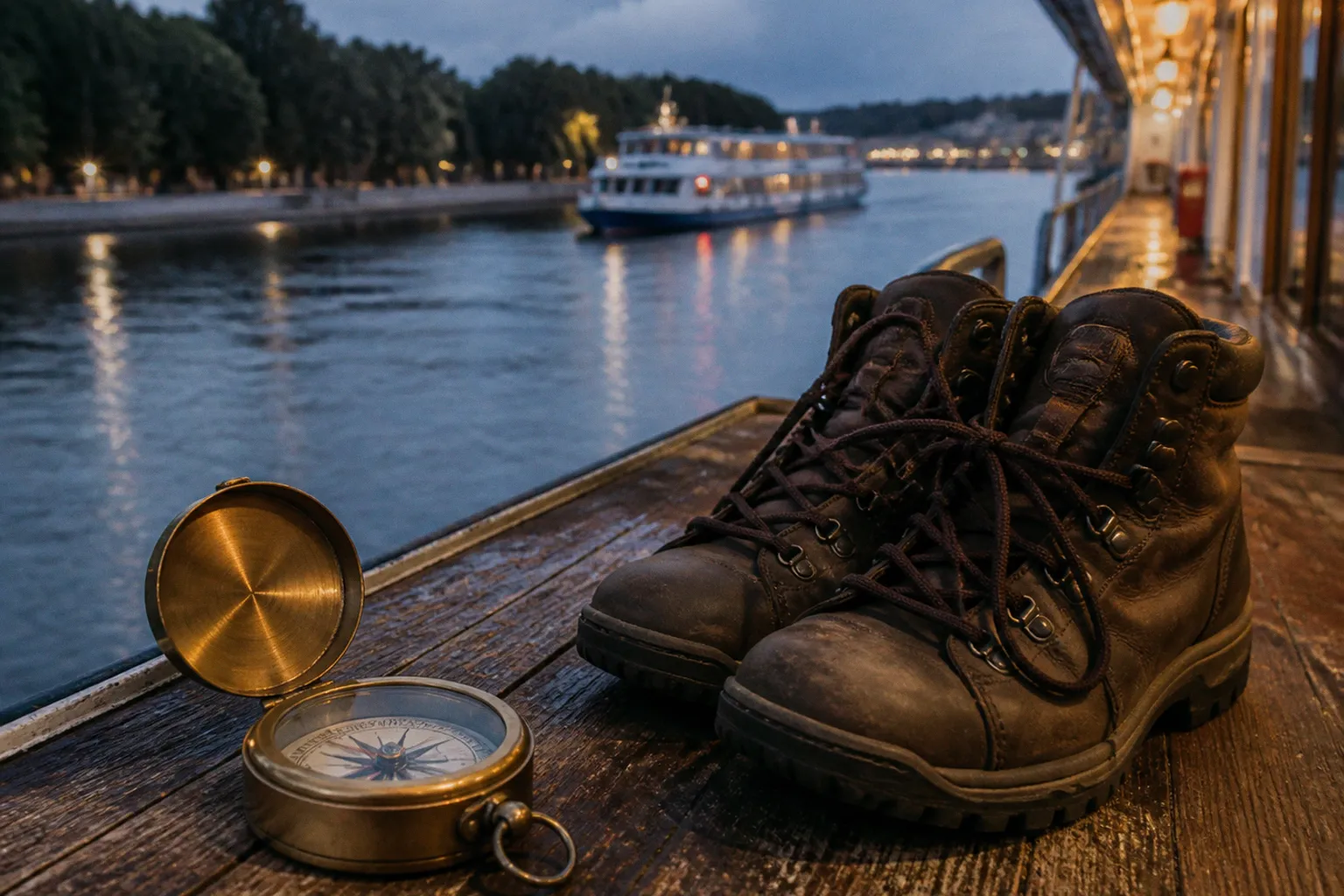
On a map, the cities appear to form a simple north–south line; on the ground, the choice between a river cruise and an overland tour determines whether we spend our time moving through inland waterways and provincial towns, or concentrating our days in the country’s two largest cultural centres.
Compare car rental deals in United Kingdom
See available offersPartner link — DiscoverCars comparisonA Russia river cruise versus overland tour comparison is therefore less about transport than about rhythm. A cruise usually takes 8 to 12 days and carries us through the Volga, Neva, Svir, Lake Ladoga and Lake Onega, with scheduled stops at places such as Uglich, Yaroslavl, Goritsy, Kizhi Island and Mandrogi. An overland itinerary can connect Moscow and St. Petersburg by high-speed Sapsan train in roughly 3.5 to 4.5 hours, leaving more room for museums, private excursions, flexible hotel choices and additional time in the cities.
Here is the catch: neither format is automatically more comprehensive. They simply reveal different Russias, and the most successful package is the one whose pace matches the geography you actually want to experience.
The rhythm of the water: what a river cruise really gives us
A Moscow–St. Petersburg river cruise is not a scenic transfer between two hotel stays. It is a moving itinerary through a complicated water system of rivers, canals and lakes, where the journey itself becomes the organising principle of the trip.
Most classic routes run for 8 to 12 days. We unpack once, settle into the cabin, and allow the ship’s daily schedule to carry us from the urban scale of Moscow towards smaller historic settlements and northern landscapes. The route generally includes sections of the Volga and Neva, the Svir connecting the great lakes, and crossings of Lake Ladoga and Lake Onega. These are not minor stretches of water added for atmosphere: they shape the timing, the shore excursions and the overall sense of distance.
The practical advantage is unusually strong for travellers who dislike repeated hotel changes. Accommodation, meals and excursions are generally bundled into the cruise structure, although international flights, visa fees and some additional services may be sold separately. We can begin the day with an organised visit, return to the ship for lunch, and continue north without negotiating another station transfer or checking into a new room that evening.
That continuity matters more than it may appear on paper. Russia is geographically expansive, and even a carefully planned city itinerary can accumulate transit fatigue through airport transfers, railway stations, luggage handling and early departures. On a cruise, the vessel absorbs much of that logistical friction. We still follow a timetable, but the movement is consolidated rather than fragmented.
Typical cultural programming onboard may include Russian language lessons, cooking classes, nesting-doll painting and vodka tastings. These activities are not a replacement for visiting a museum or historic site, but they fill the slower sections of the day and help make the ship feel like part of the itinerary rather than merely a floating hotel.
The trade-off is that the cruise schedule has limited elasticity. If we are captivated by a provincial town, the ship will not wait an extra afternoon. If a particular museum or church is less interesting than expected, the excursion programme will still move according to the planned departure. This is the cost of a route that has already solved the transport problem for us.
A river cruise reduces logistical friction by turning long-distance movement into part of the cultural itinerary; an overland tour gives us the freedom to decide where that movement should happen.
The places between the capitals
The strongest case for a cruise is the chain of destinations that are difficult to assemble efficiently in a short independent itinerary. Uglich and Yaroslavl connect the journey to the historic Golden Ring region, while Goritsy, Kizhi Island and Mandrogi introduce a different architectural and environmental register.
Kizhi is particularly important to the route because its UNESCO-listed wooden churches offer a form of heritage that does not resemble the grand imperial interiors of Moscow or St. Petersburg. The experience is shaped by the island setting, timber construction and northern light, as much as by the individual buildings. We should not approach it as simply another item to be checked off after the Kremlin and the Hermitage; it belongs to a different cultural landscape.
Mandrogi, meanwhile, is usually presented through reconstructed wooden architecture, craft demonstrations and rural imagery. It can be enjoyable, but expectations should remain measured. The value lies in how the stop breaks the urban sequence and gives us a sense of the cultural themes used to interpret Russia’s northern regions. It is not the same as visiting an untouched village community.
Goritsy and the surrounding area bring religious and provincial history into the route, while Yaroslavl offers a more substantial urban stop, with churches, historic streets and a stronger relationship between city life and the Volga. The excursions are usually brief compared with a dedicated land tour, but the route’s breadth compensates for the shorter duration at each location.
Speed and flexibility: travelling overland by Sapsan and sleeper train
Overland tours work from the opposite principle. Instead of allowing the route to determine the itinerary, we use the railway to compress the distance and protect time in the cities.
The Sapsan high-speed train covers the Moscow–St. Petersburg journey in approximately 3.5 to 4.5 hours, reaching speeds of up to 250 kilometres per hour. Economy fares generally start from around 2,500 roubles, while Business Class tickets start from approximately 5,700 roubles, although actual prices depend on departure time, availability and booking conditions.
That short journey changes the proportions of a trip. We can spend four or five nights in Moscow, travel north during the day, and continue with another four or five nights in St. Petersburg without sacrificing several days to transport. For travellers whose priority is guided tours in St. Petersburg and Moscow, this is often the most efficient structure.
The high-speed train is also less disruptive to the body clock than an overnight journey. We arrive during the day, retain a normal evening and avoid the compressed sleep and station timing that can make an overnight transfer feel longer than the timetable suggests. For some travellers, that matters more than the romance of travelling through the night.
Sleeper trains, including services such as the Grand Express or Krasnaya Strela, take approximately 7 to 10 hours. They can be a useful middle option: we travel while sleeping and preserve daylight for sightseeing, but we accept the practical compromises of a night journey. Cabin category, boarding time, luggage arrangement and the quality of sleep all affect how much usable time we actually gain.
We should be realistic about the phrase “overnight travel”. A train that departs late in the evening and arrives early in the morning may save a hotel night, but it does not necessarily create a full extra day. Travellers who sleep lightly can arrive with considerable transit fatigue, particularly if the itinerary then moves directly into a long museum visit or a full-day excursion.
Why land tours allow more personal pacing
The great strength of overland travel is not simply speed. It is the ability to alter the architecture of the journey.
A land package can be built around:
- Longer stays in Moscow for the Kremlin complex, the Tretyakov Gallery, contemporary districts and day trips beyond the central ring.
- More extensive time in St. Petersburg, where the Hermitage, Peterhof, Tsarskoye Selo and the city’s canals can quickly fill several days.
- Private guides who can adjust the level of historical detail, walking distance and museum time to the group.
- Additional nights in smaller towns or regional destinations that are not included in a standard capital-to-capital route.
- Hotel choices ranging from practical central accommodation to higher-end properties, with more control over room location and services.
- Rest days placed deliberately after long flights, early arrivals or intensive sightseeing.
This is where escorted tours Russia options differ most sharply. A fully escorted land programme may still follow a fixed schedule, but the road and rail network gives the operator more ways to adjust the sequence. A private itinerary gives us even greater control, although it also requires more decisions and usually more careful coordination.
The downside is that flexibility creates responsibility. Every extra destination adds a transfer, and every transfer has a geographic cost. A two-night detour may look modest in a proposal, yet involve a long station connection, a separate vehicle journey and a shortened sightseeing window. We have to judge the route not by the number of place names, but by the amount of usable time left after arrival and departure.
Cultural immersion: provincial route or concentrated city experience?
The choice between a cruise and an overland tour is also a choice between two cultural scales.
The cruise presents Russia as a connected landscape. The historical narrative moves from the capital through the Volga towns and towards the northern lakes, with architecture, religious heritage, wooden construction and regional traditions appearing in sequence. We see how the country changes as elevation, climate and water systems change, even though the route is not a wilderness expedition and should not be marketed as one.
The overland journey presents Russia through concentrated urban encounters. Moscow and St. Petersburg contain such a high density of museums, churches, palaces, theatres and historic districts that a carefully paced land itinerary can offer far greater depth in each city. We can return to a district at a different time of day, reserve a second museum morning, or spend an unstructured afternoon observing how the city functions beyond the principal landmarks.
For a first visit built around political history, imperial culture, art and architecture, the land format often provides stronger depth. A cruise is more persuasive for travellers who want their capitals framed by the historic towns and northern environments between them.
The following comparison is a useful starting point, but it should not be read as a ranking. It describes where each format places its emphasis.
| Parameter | River cruise | Overland tour |
|---|---|---|
| Typical Moscow–St. Petersburg duration | Approximately 8–12 days | Often adaptable from a short city break to a longer regional itinerary |
| Main transport experience | Ship through rivers, canals and lakes | Sapsan, sleeper train, private vehicle and sometimes regional flights |
| Accommodation | Unpack once and remain onboard | Hotels selected by city, category and location |
| Geographic focus | Volga towns, northern waterways, lakes and heritage sites | Moscow and St. Petersburg, with optional regional extensions |
| Daily rhythm | Structured excursions and fixed sailing times | More control over museum visits, rest days and free time |
| Cultural programming | Shore excursions plus onboard classes and demonstrations | Guided visits, private excursions and city-based cultural activities |
| Best suited to | Travellers who value continuity and a broad route | Travellers who prefer depth, customisation and urban flexibility |
| Main limitation | Limited time at each stop and little schedule elasticity | More transfers, hotel changes and coordination |
| Cost structure | Often lodging, meals and excursions bundled; roughly $1,139 to over $12,000 depending on ship and cabin | Varies according to hotels, guides, transport, excursions and itinerary design |
| Pacing risk | Too many scheduled stops for travellers who need open time | Too many added destinations for travellers who underestimate distances |
The question of walking, weather and access
A cruise may seem physically easier because we avoid repeated packing, but shore days can still involve considerable walking, uneven surfaces, steps and timed returns to the vessel. Some historic sites are reached through cobbled streets or outdoor paths, and northern weather can change the comfort of an excursion quickly.
An overland itinerary gives us more opportunities to adjust the physical load. We can arrange a shorter private tour, divide a museum visit across two days or use a vehicle for sections that would otherwise create unnecessary fatigue. On the other hand, railway stations and hotel changes introduce their own demands, especially when luggage must be moved during a tight connection.
Microclimate is part of the calculation. The large lakes and northern river sections can feel cooler and more exposed than the city forecast suggests, while Moscow and St. Petersburg may create a different combination of humidity, pavement heat, wind and rain. We should plan clothing for actual movement between ship, coach, station and site rather than for a single daily temperature.
Budgeting a Russia travel package without false comparisons
Price comparisons between cruises and land tours are often misleading because the two formats bundle different services.
River cruises commonly include accommodation, meals and organised excursions, with published prices ranging from approximately $1,139 to more than $12,000 depending on the ship’s classification, cabin category and level of service. Three-star, four-star and five-star vessels occupy very different segments of the market, and the cabin location can affect both comfort and cost.
A lower-priced cruise may offer an efficient way to combine accommodation and transport, but it does not automatically represent better value than a land package. A high-end ship can cost significantly more than a standard escorted tour using centrally located hotels and economy rail. Conversely, a land itinerary that includes private guides, premium hotels, multiple vehicles and specially arranged excursions can move rapidly into the same price range as an upscale cruise.
For overland travel, the Sapsan fare is only one part of the calculation. We also have to account for:
- Number of hotel nights and the location of each property.
- Airport and railway station transfers.
- Guide fees, whether shared or private.
- Museum tickets and pre-booked entry where applicable.
- Meals outside the hotel package.
- Regional extensions and domestic transport.
- Visa support or visa-related services, which may be separate from the tour price.
- Cancellation and amendment conditions.
The most useful question is not “Which option is cheaper?” but “Which costs are already absorbed into the structure of the package?” A cruise makes daily spending more predictable because meals and excursions are commonly incorporated. A land tour gives us more freedom to choose where to spend, but that flexibility can make the final total less obvious at the beginning.
Booking and cancellation policies also deserve close attention. Major operators introduced new policies in 2022, and conditions can vary considerably between suppliers and travel dates. For current 2025–2026 travel packages, we should confirm what happens if transport schedules change, an excursion is unavailable or a visa is delayed. Those details are operational, not decorative, and they affect the real value of the itinerary.
Which format suits a Land of Czars tour?
A traditional Land of Czars tour usually suggests a history-led journey through Moscow and St. Petersburg, with major imperial and religious sites forming the backbone. In that context, an overland route often gives us the cleaner structure. We can allocate several nights to each capital, use the Sapsan to move between them, and add a private guide for the places where a standard group explanation would feel too brief.
A cruise becomes more compelling when the phrase refers not only to rulers and monuments, but to the geographic layers that supported those centres of power. The Volga towns, northern monasteries, timber architecture and lake crossings make the itinerary broader and more spatially intelligible. We spend less time inside the capitals, but we gain a sense of how the urban story relates to the regions around it.
For first-time visitors with limited leave, a Moscow weekend package combined with a short St. Petersburg stay may be more realistic than trying to reproduce a full 12-day cruise on land. The reverse is also true: a traveller with ten or twelve days who wants a coherent, low-friction route may find that the cruise prevents the itinerary from becoming a series of hurried hotel changes.
We should also consider the composition of the group. Families and multigenerational travellers often appreciate unpacking once, onboard meals and the predictable shape of a cruise day. Independent-minded couples or experienced travellers may prefer the possibility of adjusting dinner plans, extending a museum visit or replacing a group excursion with a specialised guide.
Neither style guarantees a more authentic experience. A cruise can become overly scheduled if we treat every shore excursion as compulsory. A land tour can become superficial if we add too many cities and spend the journey watching the clock. The depth comes from the pacing decisions built into the package.
Designing the route around time, not wishful geography
When we assemble a custom travel itinerary in Russia, we begin with the number of genuinely usable days. Arrival day is rarely a full sightseeing day after an international flight, and departure day is shaped by luggage, airport transfers and check-out. A long rail transfer also has a cost beyond the ticket duration: getting to the station, boarding, settling in, transferring onward and recovering from the movement.
A practical planning sequence is:
1. Set the anchor cities first. Decide how much time Moscow and St. Petersburg deserve before adding regional stops. If both cities are reduced to two rushed nights, the itinerary may look varied but feel unfinished.
2. Choose the transport rhythm. Use the Sapsan when daylight and efficiency matter; consider a sleeper train when preserving a hotel night is more valuable than arriving fully rested; choose the cruise when the water route and intermediate destinations are central to the experience.
3. Add only destinations that change the journey. Yaroslavl, Uglich, Goritsy, Kizhi Island and Mandrogi are meaningful additions to a cruise route because they introduce a different regional scale. On land, every extra stop should justify its transfer time.
4. Place demanding days apart. A major museum, a palace excursion and a long railway transfer should not automatically be stacked together. Pacing is especially important in winter, when limited daylight and cold exposure can shorten the comfortable sightseeing window.
5. Leave controlled openness. Even a curated itinerary benefits from an afternoon without a scheduled excursion. This is when we can revisit a district, eat without watching the departure time, or simply absorb the city at a less official pace.
6. Confirm operational details before paying in full. Transport schedules, cabin categories, hotel locations, excursion inclusions, visa support and cancellation rules should be clear in writing, particularly for travel during active booking seasons.
The spatial mistake we see most often is the assumption that a destination is “nearby” because it appears on the same regional map. Russia’s capital cities may be linked efficiently by rail, but the towns on a river route belong to a different transport logic. A cruise itinerary can connect them smoothly because the ship is already designed around that sequence. Rebuilding the same pattern by road and rail may consume much more time than expected.
The best itinerary is not the one with the longest list of destinations; it is the one that leaves enough time for each place to become more than a photograph taken between transfers.
Seasonal timing and the final choice
Seasonality changes the character of both formats, though not in identical ways.
The warmer sailing season is the natural period for river cruises, when the route’s outdoor excursions, lake crossings and northern landscapes can be experienced with longer daylight and more practical shore access. We should still prepare for wind, rain and cooler conditions on open water, particularly around Lake Ladoga and Lake Onega. The ship may provide warmth and shelter, but a shore day remains governed by the local microclimate.
Late spring and summer can also be effective for overland tours, especially when long city walks, palace grounds and extended evening light are priorities. The difficulty is that popular dates can raise demand and reduce flexibility, so hotel and rail arrangements should not be left until the last moment.
Autumn brings a different balance: potentially more subdued city pacing and strong colour in some regions, but shorter daylight and a greater chance of rain. Winter can work well for travellers focused on museums, architecture and urban culture, provided the itinerary respects cold exposure, limited daylight and the extra time required for coats, transport and weather-related delays.
Our seasonal recommendation is straightforward. Choose a river cruise in the period when the water route is central to the journey and you are comfortable with a fixed daily structure. Choose an overland tour when city depth, private guiding and the ability to modify the day matter more than the continuity of the route. If the trip falls outside the most comfortable sailing window, the railway option may provide more reliable control over pacing, especially when the main goal is guided sightseeing in Moscow and St. Petersburg.
For most travellers, the decision can be reduced to one final distinction: do we want Russia to unfold as a connected landscape, with the ship carrying us through its waterways and historic settlements, or as a pair of major cultural capitals linked by fast, efficient rail? Once that is clear, the right Russia travel package is usually much easier to design.