New Schengen Entry Rules: What Indian Travelers Need to Know About EES
The EU Entry/Exit System went fully operational on 10 April 2026 across 29 Schengen countries.
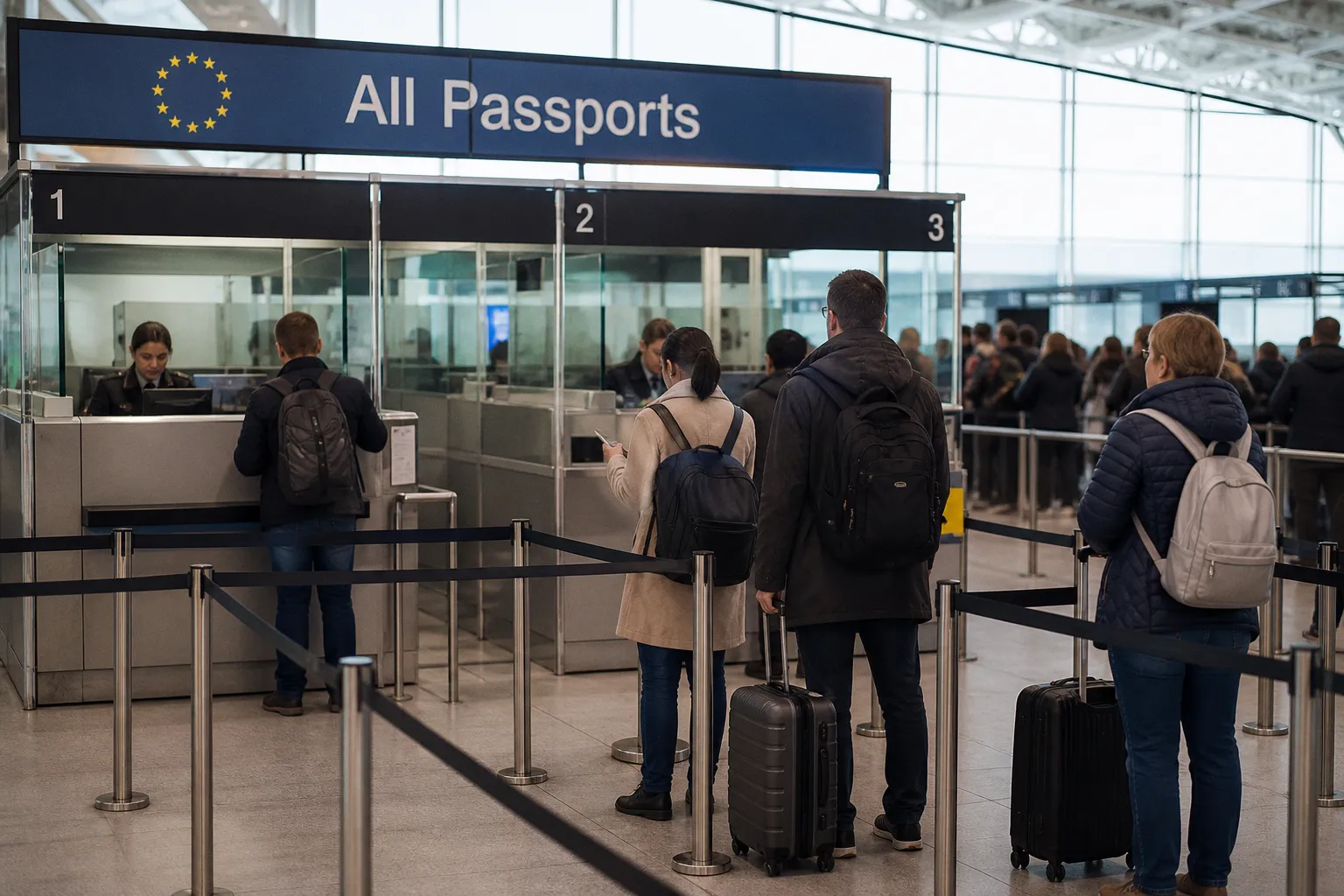
For Indian nationals — a core demographic for both European and Russian inbound routes — border crossings now generate biometric digital records instead of passport stamps. If your itinerary touches Schengen territory, whether as a destination or a transit corridor, the compliance surface just expanded.
What the EES Actually Does
Every non-EU national on a short stay now registers facial images and fingerprints at the external Schengen border. Entry and exit are logged digitally. Passport stamps are no longer the sole proof of movement.
Key compliance points:
- Visa-holding Indian nationals who already submitted fingerprints for a Schengen visa are not re-fingerprinted. Every crossing is still logged.
- Children under 12 are exempt from fingerprint collection.
- Residence permit or long-stay visa holders may fall outside the system.
- The 90/180-day rule is unchanged. Enforcement is now automated — overstays surface faster and with less discretion at the border.
Do not rely on passport stamps to track your permitted stay. The digital record is now the authoritative ledger.
Buffer Time Is Mandatory
The EES is not designed to speed up immigration. Airports and border authorities are still in adjustment phase. During peak periods — summer holidays, connecting flights through major European hubs — processing times will extend.
Build a minimum 90-minute buffer at Schengen external borders, particularly on your first entry after the system launch. For connecting itineraries through Frankfurt, Amsterdam, Paris, or Rome, factor this into layover calculations. A tight connection that worked under the stamp regime may no longer hold.
ETIAS: Not Applicable to Indian Visa Holders
Indian passport holders who require a Schengen visa do not need ETIAS. ETIAS is a separate travel authorisation intended for nationals of visa-exempt countries. It is not yet operational; the EU has stated a launch date will be announced ahead of implementation.
Do not conflate EES with ETIAS. They are distinct systems with different eligibility criteria.
What This Means for Russia-Focused Itineraries
For travellers comparing Schengen entry against Russia's e-visa or standard visa route, the procedural gap has widened. The EES introduces continent-wide biometric surveillance and automated overstay detection across 29 countries — a compliance load that applies even if you are merely transiting through a European hub en route to Moscow or St. Petersburg.
If your primary destination is Russia and a Schengen transit is part of the routing, weigh whether a direct flight or a non-Schengen connection reduces both processing time and biometric data exposure. For travellers holding a Russian e-visa, the entry process remains document-verified at the point of arrival — a narrower compliance surface with fewer variables to manage.
Fail-Safe Checklist
1. Verify your Schengen visa fingerprints are on file. If collected previously, no re-registration is needed — but confirm before travel.
2. Add 90 minutes minimum to any Schengen external border transit.
3. Do not track your stay via passport stamps. Use your own records against the 90/180-day rule.
4. Ignore ETIAS guidance if you hold a Schengen visa — it does not apply to you.
5. For Russia-bound itineraries with European transit, evaluate direct routing or non-Schengen hubs to reduce border processing overhead.