Estonia Extends Indefinite Border Restrictions for Travelers Entering Russia
According to Inbox.lv, Estonia’s Cabinet of Ministers has made the temporary restrictions at the Narva, Koidula and Luhamaa border checkpoints indefinite.
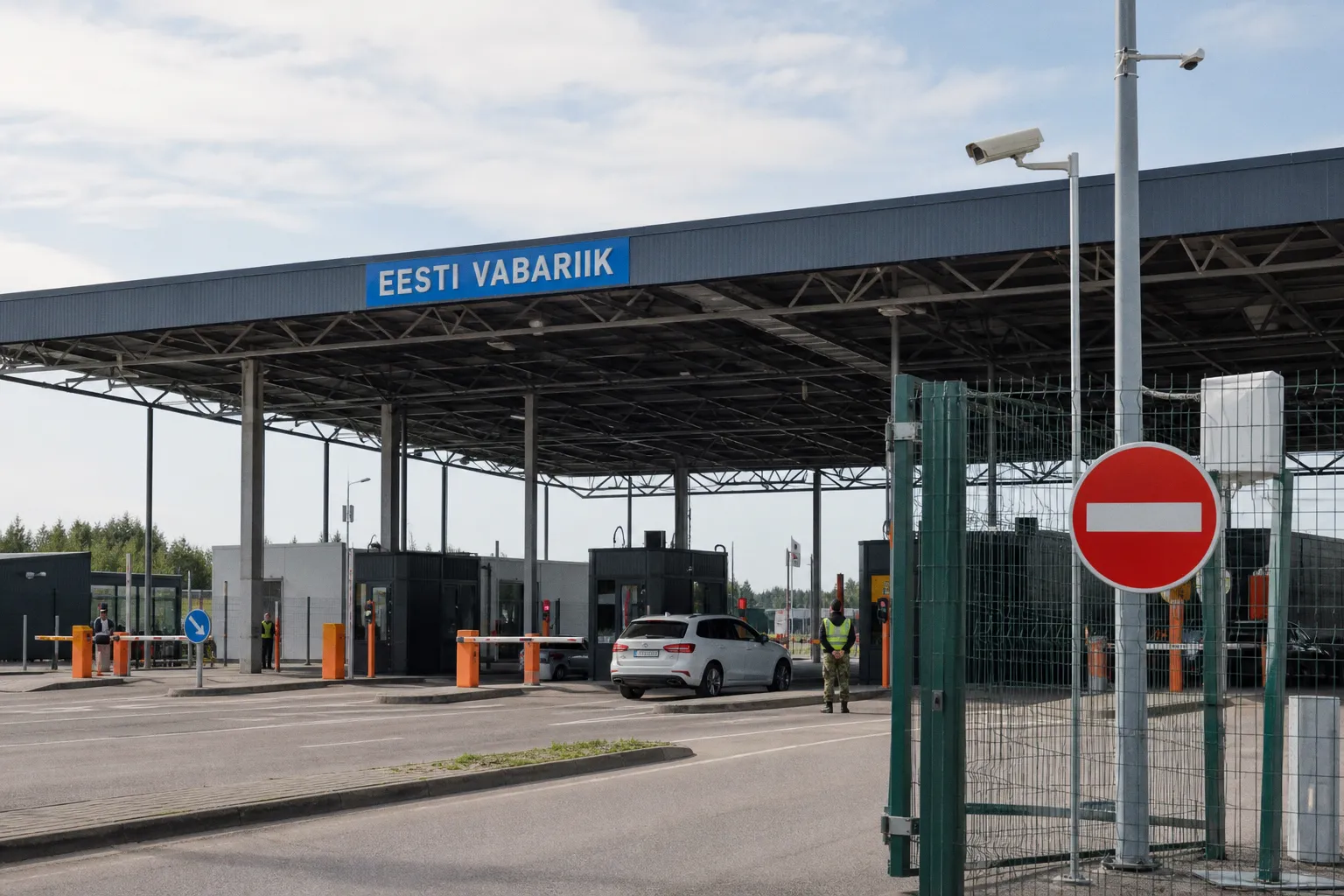
The decision, proposed by the Ministry of Internal Affairs, keeps the existing regime in force rather than closing the border with Russia. For inbound travel, this is an operational change: checkpoint availability and border-processing conditions matter more than any general assumption of open access.
Checkpoint regime
- The temporary regime was introduced in spring and was scheduled to run until the end of August. It will now continue without a stated end date.
- The decision covers the car checkpoints at Narva, Koidula and Luhamaa. Railway border checkpoints will operate on the same schedule.
- Estonia is not currently considering a complete closure. Interior Minister Igor Taro said closure would require a serious necessity confirmed by a relevant threat assessment. He said no such assessment exists at present.
- The published report does not specify the actual opening hours. No exact cutoff should be inserted into an itinerary without a current checkpoint notice.
The direction is clear: the border remains usable, but under a continuing restriction. That distinction is procedural. A traveler can plan a crossing only if the selected road or rail checkpoint is operating at the planned time.
Why the controls remain
Taro linked the measure to the overall security situation and the need for more effective border control. He said closing the checkpoints in the evening and nighttime allowed the Police and Border Guard Department and the Tax and Customs Department to distribute personnel more effectively.
The staffing effect is specific. Customs could increase the number of inspectors during the daytime, allowing more thorough control. The change is therefore not a relaxation of border control. It is a redistribution of inspection capacity into the period when the border is open.
The decision concerns checkpoint operation and personnel deployment. The source does not announce a new visa rule, a new document type, or a new basis for entry. That distinction matters for package planning: do not rebuild the visa file because of a checkpoint notice, but do rebuild the border leg.
Traffic data and the route plan
In the first half of 2026, about 444,000 people crossed the border through the car checkpoints at Narva, Koidula and Luhamaa. That was 13% lower than in the same period of the previous year. Car crossings fell by about 20%, from nearly 43,500 to about 35,000. The number of trains passing through the railway checkpoints also decreased.
These figures indicate lower traffic, not an individual service guarantee. Lower traffic does not remove the possibility of inspection time. Taro’s stated reason for daytime staffing was more thorough customs control. A route plan should therefore include processing buffer, not only road or rail capacity.
For a road entry, confirm:
- which of the three car checkpoints is planned;
- whether the current temporary hours permit the intended arrival;
- how the onward connection will absorb a customs delay.
For a rail crossing, treat the railway schedule as part of the same restriction regime. Confirm the operating window before booking the connecting service. The source provides no fixed hours, so an itinerary that depends on a particular evening or nighttime slot is not yet operationally complete.
Fail-safe procedure: hold the onward connection movable until the crossing is confirmed; keep a confirmed road or rail slot only after checking the current notice; and add buffer time for customs control. If the schedule cannot be verified, postpone the border leg. Do not build a package around unrestricted evening or nighttime access while the restrictions remain in force.