Vienna Concerts & Opera prices: budget vs. premium
Vienna Concerts & Opera prices cover an unusually wide geographic and financial range: at the Vienna State Opera, a performance can mean a standing place costing as little as €3–€15, while a well-positioned seat in the stalls or a box may rise above €300.
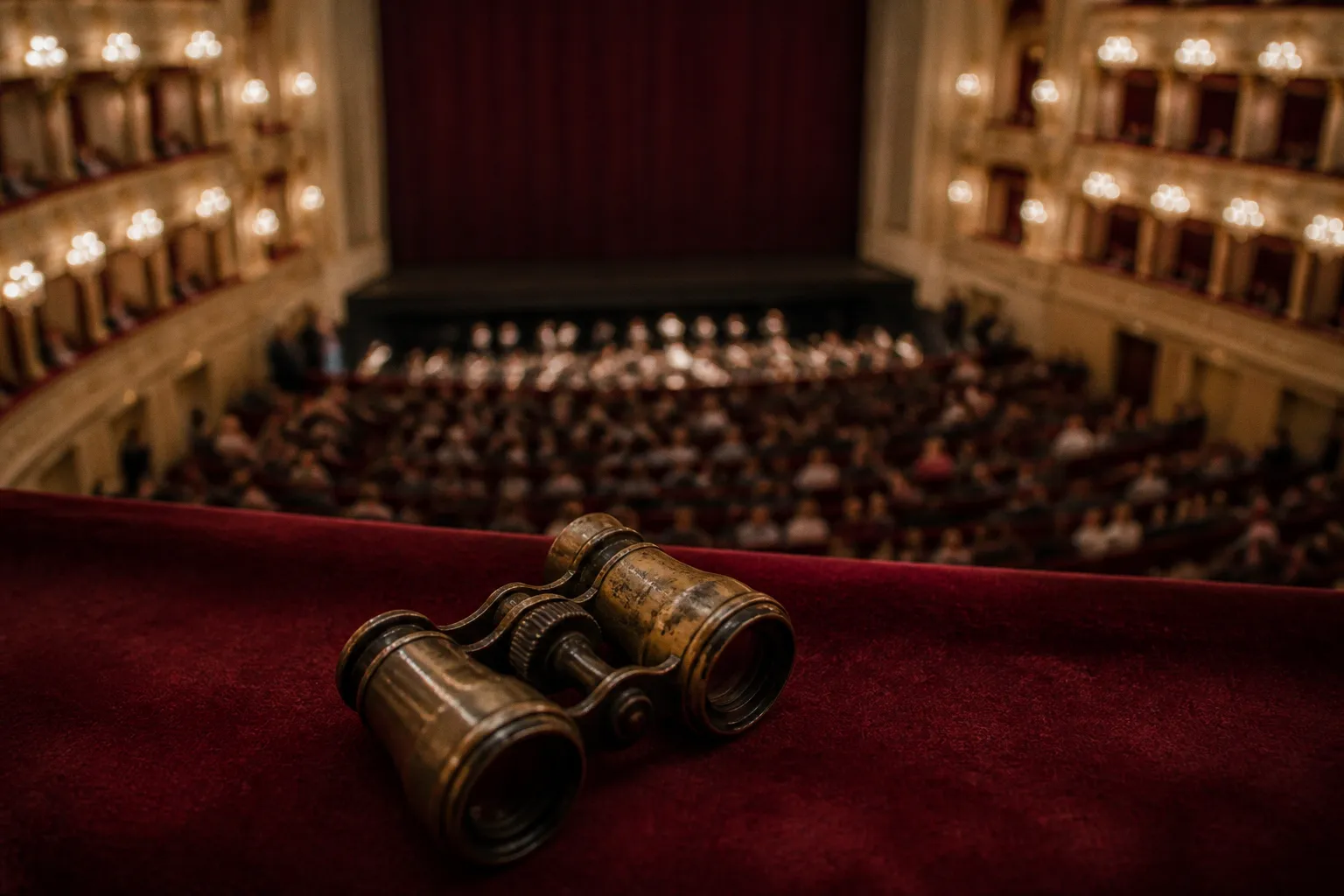
The distance between those experiences is not simply a matter of comfort. It changes how early we arrive, how much of the stage we can see, how much transit fatigue we carry into the performance, and whether the evening is built around the music or around the ceremony of the venue.
Tickets and prices
Vienna Concerts & Opera
I
Save
Box office and online booking
- Adult €4
€4
Official websiteII
other
Concert ticket · Vivaldi's Four Seasons
This ticket includes admission to a performance of Vivaldi's Four Seasons, available tomorrow.
€38
Check availabilityIII
other
Concert ticket · Mozart performance
This ticket includes admission to a Mozart concert, with availability tomorrow.
€69
Check availabilityThe practical mistake is to treat Vienna’s concert and opera houses as a single market with one standard ticket price. They are not. The State Opera, Musikverein, and Volksoper work with different release calendars, different seating logic, and different forms of value. Once we understand those distinctions, it becomes possible to plan a serious musical evening without assuming that the best experience requires the most expensive ticket.
The spectrum of Vienna Concerts & Opera prices
For visitors, the central question is usually not simply how much a ticket costs, but what kind of evening that amount buys. A low-cost standing ticket may place us inside one of the world’s major opera houses, but it also demands a different pace and a more deliberate arrival strategy. A premium seat buys physical ease, a stronger view, and often a more settled relationship with the performance, but the highest price is not automatically the most intelligent choice for every production.
The Vienna State Opera has one of the broadest price ranges. Regular seated tickets begin at around €15–€20 and can exceed €300 for prime stalls positions and boxes. That gives the venue a rare flexibility: the same building can accommodate a visitor testing the city’s opera tradition on a strict budget and another marking a special occasion with a highly placed seat.
The basic comparison looks like this:
| Ticket experience | Typical price indication | What it offers | What it asks from the visitor |
|---|---|---|---|
| State Opera standing room | €3–€15 | Entry to a major opera performance at the lowest price level | Early planning, physical stamina, and acceptance of a standing-place format |
| State Opera regular seating | About €15–€300+ | A wide range of seated views and comfort levels | Careful attention to the seating plan and production length |
| State Opera premium stalls or box | €300+ for the most sought-after positions | Strong sightlines, comfort, and a more ceremonial evening | A substantial budget, with value depending on the production |
| Musikverein U30, smaller halls | €10 | Affordable access for eligible visitors under 30 | Booking within the designated release window |
| Musikverein U30, Golden Hall | €20 | Discounted seating in the most recognisable concert setting | Eligibility and timely online booking |
Here is the catch: the least expensive ticket and the most expensive ticket are not two versions of the same product. A standing place is not merely a premium seat with less upholstery. It changes the physical rhythm of the evening. We need to factor in the length of the opera, the amount of time spent moving through the building, and whether the rest of our day has already included long walks across Vienna’s central districts.
In Vienna, the price of the ticket is often a price for pacing: how long we wait, how comfortably we sit, and how much energy remains for the music.
For a first visit, the sensible choice depends on the role the performance plays in the itinerary. If the opera is one element in a dense day of museums, cafés, and historic interiors, the cheapest possible option may create unnecessary strain. If the performance itself is the central event and the budget is limited, standing room can be an excellent form of access, provided we treat it as a planned experience rather than an improvised bargain.
Vienna State Opera ticket cost: what the cheaper tiers really mean
The Vienna State Opera offers 567 standing spaces at each performance, which is an extraordinary amount of capacity for visitors who want access without paying for a conventional seat. Standing room tickets are sold on the day of the performance, and an additional contingent is released at the box office approximately 80 minutes before the curtain. Prices begin at €3 and extend to €15 depending on the category.
That last-minute structure is where many otherwise well-organised itineraries become fragile. We should not build an important connecting journey, a restaurant reservation across town, and a standing-room opera into the same narrow evening. The issue is not only the ticket queue. It is the cumulative effect of elevation changes, walking distance, meal timing, and the uncertainty of how quickly the box-office process will move on that particular day.
A workable approach is to keep the hours immediately before the performance geographically simple. Stay close to the Innere Stadt rather than planning a late crossing from a distant district. Allow time to collect or purchase the ticket, find the correct entrance, and settle into the building before the performance begins. The State Opera is not a venue where we benefit from arriving at the last possible minute, especially when the ticket depends on a same-day release.
The standing-room format can work particularly well in three circumstances:
1. The performance is a priority, but the budget is limited. We gain entry to the repertoire and the building without committing to a premium evening outlay.
2. We are comfortable managing our physical energy. A shorter programme may be easier to handle than a long opera after a full day on foot.
3. Our itinerary has enough flexibility. Same-day availability is useful, but it is not the same as a guaranteed advance reservation.
Cheap Vienna opera tickets are therefore less about finding a secret loophole than about accepting a different relationship with time. We trade certainty and comfort for affordability. For some travellers, that is a worthwhile exchange; for others, a modest seated ticket will produce a much better evening.
Is standing room suitable for a first opera visit?
There is no universal answer, because the most important variable is not opera experience but physical tolerance. Visitors who are used to long performances, who have planned a lighter day, and who want to enter the State Opera at the lowest price can find standing room a memorable introduction. Visitors managing fatigue, mobility concerns, or a tightly timed onward journey should look at seated options first, even if that means choosing a less central view.
We should also distinguish between seeing an opera and understanding every visual detail of a production. A standing position can provide access to the sound, atmosphere, architecture, and collective energy of the house, but the visual experience depends on the position available. The State Opera’s seat-back subtitle system, by contrast, provides German and English at every seat, with up to eight languages on selected nights. That amenity matters when we are following a work in a language we do not speak fluently.
The subtitle system does not eliminate the need to choose a sensible position. It does, however, make the performance more approachable for international visitors, particularly when the evening is being planned around the work itself rather than around a familiar title.
Seated tickets and premium boxes: when does the extra cost make sense?
The leap from a low-priced seated ticket to a premium stalls position can be substantial, with the highest regular prices moving beyond €300. That difference is easiest to justify when the event has a specific personal significance: a celebrated production, a rare date in the itinerary, or an evening that we are deliberately treating as the centrepiece of a Vienna stay.
It is harder to justify when the choice is made only because the phrase premium sounds like a guarantee of artistic quality. The orchestra, singers, conductor, and production do not become better simply because our seat is expensive. What changes is the physical relationship to the stage and the degree of comfort around the performance.
A premium ticket may offer:
- a more direct view of staging and facial expression;
- a greater sense of spatial balance between orchestra and voices, depending on the position;
- a more comfortable experience during a long opera;
- less anxiety about last-minute availability;
- a stronger ceremonial dimension for a special evening.
The last point is not trivial. Travel is partly logistics and partly sequence. If we spend the afternoon in one part of the city, return to the hotel to change, dine without rushing, and then arrive with a reserved seat, the premium is buying a smoother progression through time. It is not only buying upholstery.
At the same time, we should not assume that the most expensive stalls or box tickets are the only respectable way to experience the State Opera. The broad range from approximately €15–€20 upward means that a visitor willing to compare categories can often find a seated compromise between austerity and extravagance. The exact price depends on the performance and the seat, so we should read the seating plan as carefully as the advertised production.
A useful decision is to rank the evening before looking at the price:
1. If the performance is the main purpose of the day, prioritise a seat that supports concentration and comfort.
2. If the opera is one item in a packed sightseeing itinerary, avoid a plan that depends on a long queue after several hours of walking.
3. If the production is flexible, compare a modest seated ticket with standing room rather than jumping directly to premium categories.
4. If the date is non-negotiable, secure the ticket earlier and treat price as part of the cost of itinerary certainty.
The best seat is therefore not always the closest seat. In a historic hall, sightlines, acoustics, subtitle readability, and the length of the performance matter together. We should choose for the whole body and the whole evening, not just for a position on a map of the auditorium.
Vienna Musikverein ticket prices and the value of timing
The Musikverein follows a different logic from an opera house because the performance is shaped primarily by orchestral sound, acoustic perspective, and the architecture of the concert hall rather than by staged action. For younger visitors, the U30 programme offers a particularly clear route into the venue: eligible visitors under 30 can purchase tickets for €20 in the Golden Hall or €10 in the smaller halls, with online sales beginning on the 20th of the previous month.
That release date deserves to be written into the travel plan. It is not enough to know that discounted tickets exist. We need to be ready when the relevant window opens, particularly if our Vienna dates are fixed and the performance is likely to attract local demand. The discount is meaningful because it changes the scale of the decision: a concert in the Golden Hall becomes a manageable part of a broader journey rather than a once-only splurge.
General advance sales for members of the Gesellschaft der Musikfreunde begin two months before the performance, while general pre-sales open one week later. That staggered structure means the booking landscape changes over time. Members have earlier access, and the general public follows after that initial window. Visitors who are not members should not interpret the later opening as a sign that all desirable seats will remain available indefinitely.
The Musikverein’s smaller halls also deserve attention. The €10 U30 price makes them especially relevant for visitors whose primary objective is to hear music in the institution rather than to secure a particular view of the Golden Hall. The decision is not simply Golden Hall versus no concert. It is a choice between different acoustic and architectural settings, with the programme and the hall working together.
For a younger visitor, the practical comparison is straightforward:
| Musikverein option | U30 price | Best suited to | Planning point |
|---|---|---|---|
| Golden Hall | €20 | A first visit centred on the hall’s scale and visual identity | Tickets open from the 20th of the previous month |
| Smaller halls | €10 | Visitors prioritising affordable live music and a more intimate setting | Check the performance and hall before booking |
The discount is not a reason to book blindly. We should still consider the day’s route, the start time, and the distance from accommodation. Vienna is compact in the central districts, but a late concert after a day spent crossing the city can still produce transit fatigue. The most elegant itinerary is often the one with fewer unnecessary relocations between the hotel, dinner, and performance.
Volksoper and the calendar logic of advance booking
Volksoper Wien has its own monthly release pattern: tickets for the following month go on sale on the first day of each month. For example, performances in October become available at the beginning of September. This is an easy rule to remember, but it has practical consequences for anyone building a multi-city route with fixed travel dates.
When we are arranging an itinerary several months ahead, the Volksoper calendar may not yet be open for the exact performance dates we want. Rather than treating that as a problem, we can mark the first day of the relevant month as a booking task and keep two or three possible evenings free. This is particularly useful when the Vienna portion of a journey is connected to rail travel, regional excursions, or a carefully paced arrival from another country.
The Volksoper should also be treated independently from the State Opera. Its programme, atmosphere, and audience rhythm are not simply a less expensive version of another house. A visitor who chooses it because the date fits the itinerary may discover that the venue suits the overall journey better than a more famous address with a difficult ticketing window.
One practical warning matters here: Volksoper performance tickets do not include public transport travel on Vienna’s network. We should budget and arrange transport separately rather than assuming that the concert ticket functions as a combined admission and transit pass. This is a small detail, but small details are where otherwise polished travel days become unnecessarily complicated.
For a route that includes a Volksoper performance, we recommend:
- checking the first day of the month when the following month’s tickets are released;
- keeping the evening’s meal and transport within a realistic radius of the venue;
- confirming the public transport arrangement separately;
- avoiding a same-evening transfer that leaves no margin for delays;
- choosing the performance date only after considering the next morning’s departure or excursion.
A well-booked performance is not just a seat in a hall; it is a fixed point around which the rest of the day can breathe.
Opening hours, box-office timing, and the practical shape of the evening
Visitors often search for opening hours as if concert venues operated like museums, with a simple daily schedule for entry and ticket collection. Music houses are more conditional. Access depends on the performance calendar, ticket release rules, and the specific task we need to complete: collecting a pre-booked ticket, buying a same-day standing place, or entering for the performance itself.
The clearest timing fact in the available ticket structure concerns Vienna State Opera standing room. A contingent is released at the box office approximately 80 minutes before the curtain. This is not a recommendation to arrive exactly 80 minutes before the performance. It is a warning that the day-of process has its own clock, and we should build a margin around it.
For visitors working with a pre-booked seated ticket, the pressure is different. We still need time to reach the venue, orient ourselves, pass through the correct entrance, and settle before the performance begins, but the central uncertainty of ticket acquisition has already been removed. That difference is one reason a moderately priced seated ticket can be worth more than its nominal price suggests.
We can make the evening smoother by separating the day into three geographical movements:
1. The daytime district. Plan museums, markets, and walks according to the microclimate and the amount of standing already involved. Cold rain, heat, or crowded streets can affect energy more than the map suggests.
2. The pre-performance zone. Return toward the venue or accommodation early enough to change, eat, and reset without crossing the city under pressure.
3. The venue transfer. Treat the final journey as a short, protected movement rather than the last leg of a sightseeing marathon.
This is especially important for opera, where the performance can occupy most of the evening and where a poorly timed meal can create its own discomfort. We should avoid scheduling a substantial dinner immediately before a long performance if the restaurant is far from the venue. A lighter meal, a short walk, and a reliable arrival are usually more valuable than squeezing in one more distant reservation.
Subtitles, language, and the international visitor’s advantage
Vienna’s opera houses are highly accessible to international audiences, but accessibility does not mean that language becomes irrelevant. At the Vienna State Opera, every seat has a subtitle system offering German and English, with up to eight languages available on selected nights. This changes the calculation for visitors who are deciding between a familiar work and an unfamiliar one.
A subtitle system is most useful when we use it selectively. Reading every line can narrow our attention to the small screen and reduce awareness of the stage, particularly during moments when the music and physical action carry the meaning. It can be better to follow the dramatic structure closely at the beginning, glance at the text when needed, and let the performance expand beyond translation once the relationships are clear.
This amenity also reinforces the importance of choosing a seat for both sightline and text visibility. A ticket category that appears inexpensive on a two-dimensional seating plan may be less comfortable if it creates an awkward viewing angle for the stage and the subtitle display. Conversely, a seat that is not among the most expensive can still deliver a balanced evening if the position allows us to move naturally between the performance and the translation.
For visitors who do not speak German, we suggest preparing in advance without turning the performance into homework. Read a short synopsis, understand the principal characters, and note the approximate length and interval structure if available in the performance information. That preparation reduces the cognitive load inside the theatre and makes the subtitles a support rather than a lifeline.
Choosing between budget and premium: a route-based decision
The most useful comparison is not €3 versus €300. It is the comparison between different travel days.
A low-budget opera plan might look like this: stay in the central area, keep the afternoon light, arrive with time for the day-of standing-room process, and avoid booking an expensive dinner that cannot be moved. The evening is built around flexibility. The ticket price is low, but the itinerary must give the ticketing process room.
A mid-range plan uses a seated State Opera ticket. We gain more certainty and physical comfort without necessarily entering the premium price tiers. This is often the most balanced choice for visitors who want the opera to be important but not financially dominant.
A premium plan places the performance at the centre of the entire day. We choose a highly positioned seat or box, allow time for an unhurried meal, and reduce the number of other fixed commitments. The price is high, but so is the degree of control over the evening.
The three approaches can be summarised like this:
| Travel style | Ticket approach | Main advantage | Main risk |
|---|---|---|---|
| Flexible budget | State Opera standing room at €3–€15 | Exceptional access at minimal ticket cost | Same-day uncertainty and reduced physical comfort |
| Balanced cultural evening | Lower or mid-priced seated ticket | A reliable performance with manageable cost | A less central view may require more careful seat selection |
| Special-occasion itinerary | Premium stalls or box seat, potentially above €300 | Comfort, certainty, and ceremonial atmosphere | The price may outweigh the difference if the performance is not a personal priority |
| Young visitor’s concert plan | Musikverein U30 at €10 or €20 | High cultural value at a clearly reduced price | The booking window must be observed |
This route-based approach prevents a common error: choosing the ticket first and trying to force the rest of Vienna around it. We should instead decide how much energy, time, and certainty the evening requires, then select the ticket tier that supports that plan.
Seasonal timing and the best moment to book
The right season for Vienna’s concerts and opera depends less on a single universal answer than on the type of journey we are designing. In cooler months, an indoor performance can provide a reliable evening anchor after a day of museums and shorter outdoor walks, but darkness and weather may make cross-city transfers feel longer. In warmer periods, the city allows a more expansive daytime rhythm, although heat can increase fatigue before a long opera.
For a winter visit, we would leave more time between outdoor sightseeing and the performance, particularly if the day involves walking over wet pavements or standing in queues. A warm pause near the venue is not wasted time; it is part of maintaining concentration for the evening.
For spring and autumn, the variable is the microclimate. A bright afternoon can turn cool after sunset, and a route that feels short on the map can become tiring when we are carrying coats, moving between districts, or waiting outdoors. These seasons are excellent for combining culture with walking, but the performance day should still have a clear point at which the pace slows.
Summer requires the opposite adjustment. Heat, crowded transport, and long daylight hours encourage overplanning. We may be tempted to fit too much into the afternoon because the city remains active late, yet an opera or concert still asks for attention and still has a fixed start time. A shorter daytime route, a pause in the hotel, and a meal close to the venue can make the evening feel far more spacious.
In booking terms, the key dates are precise:
- Vienna State Opera’s monthly schedule enters general sale approximately two months before the performance.
- Musikverein U30 tickets open on the 20th of the previous month.
- Volksoper tickets for the following month go on sale on the first day of each month.
- State Opera standing-room access is primarily a day-of strategy, with an additional release around 80 minutes before the curtain.
We should place those dates against the season we are travelling in. For a fixed-date journey, the Musikverein and Volksoper release calendars reward preparation. For a flexible journey, State Opera standing room offers a lower-cost route, but only if we are willing to let the performance determine the shape of the day.
Vienna’s music scene is generous in a practical sense: there are ways into major halls at €3, €10, €15, or €20, as well as premium options above €300. The real skill lies in matching the ticket to the route, the season, and the amount of energy we want to bring into the room. Budget access is not automatically inferior, and premium seating is not automatically excessive. Each is a different agreement with time.
For most visitors, our recommendation is to choose one performance as the fixed cultural centre of the Vienna stay, then build the surrounding day with generous spatial margins. Use standing room when flexibility and price matter more than certainty; choose a seated State Opera ticket when comfort and reliability need to balance; and reserve premium stalls or box seating for an evening whose significance genuinely justifies the cost. At the Musikverein, the U30 programme can make early planning especially rewarding, while the Volksoper’s monthly release schedule is best handled as a calendar appointment rather than an afterthought.
The city’s concert and opera houses are not difficult because the options are inaccessible. They are difficult because the options operate on different clocks. Once we plan for those clocks—and for the distance, elevation, microclimate, and transit fatigue between the day’s other stops—Vienna Concerts & Opera prices become less a barrier than a map of possible journeys.
Practical info
Currency: EUR
Driving: on the right
Emergency number: 112