DomQuartier Salzburg Tickets: Pre-Visit Checklist
Every tour operator running a Salzburg product knows the pain point: the DomQuartier sits at the top of nearly every cultural shortlist in the city, yet its access rules can shift during the season…DomQuartier Salzburg · from €28 · Check availability
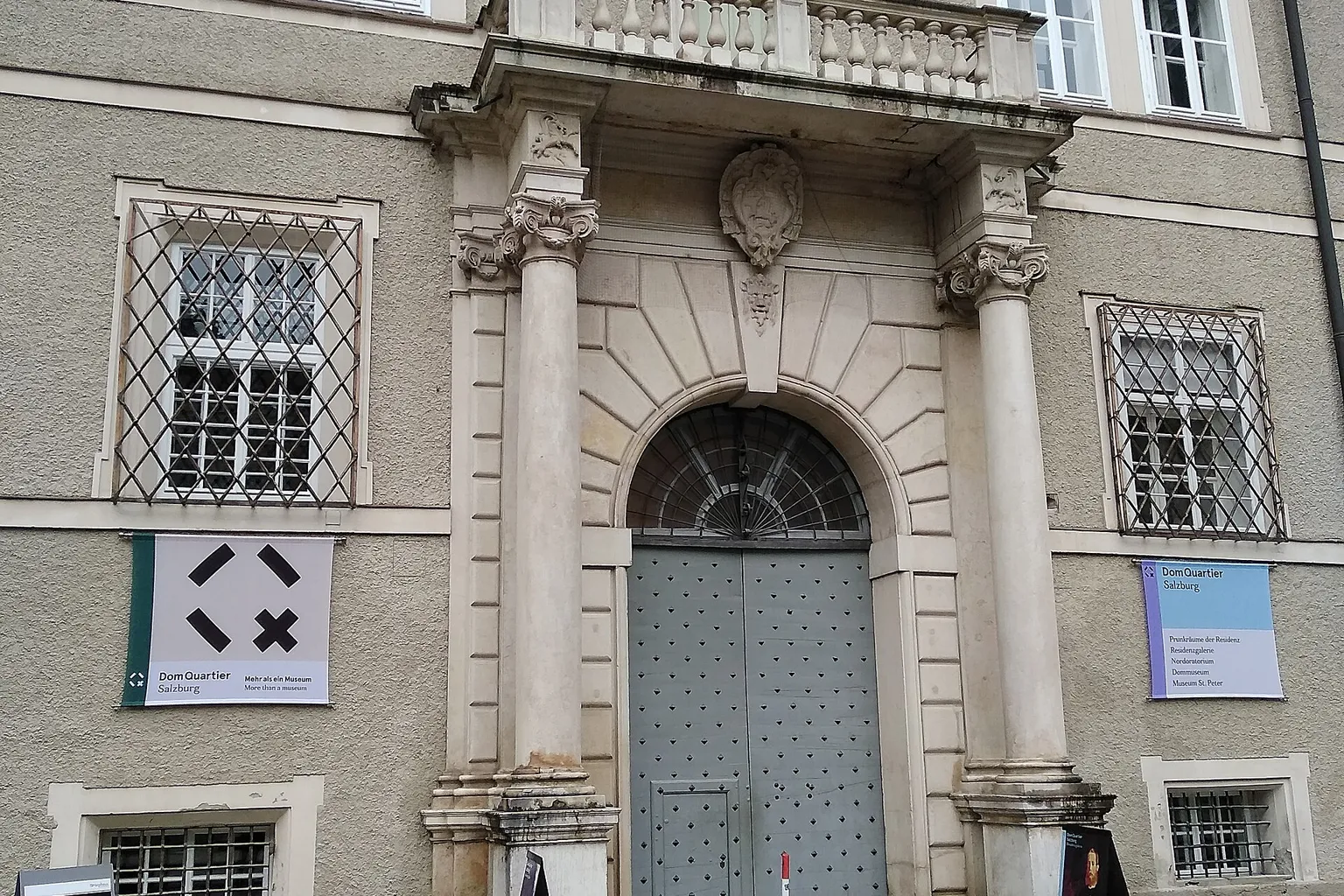
Every tour operator running a Salzburg product knows the pain point: the DomQuartier sits at the top of nearly every cultural shortlist in the city, yet its access rules can shift during the season, the Residenzgalerie is closed for renovation until at least autumn 2027, and the difference between a €15.00 and €12.00 ticket depends on whether you checked the calendar before booking. Misprice that distinction in a packaged itinerary and you absorb the loss; overprice it and the attraction becomes a conversion problem.
Tickets and prices
DomQuartier Salzburg
I
other
Chamber music concert · 45 minutes
Attend a 45-minute chamber music concert featuring music by Mozart performed by two to four musicians in state rooms.
€28
Check availabilityII
Box office and online booking
- Adult einmaliger Gratiseintritt
- Child €32
- Reduced €5
einmaliger Gratiseintritt
Official websiteThe practical answer is not to bury the museum inside a generic Salzburg sightseeing line. Treat the ticket as a live operational component: identify the current access tier, check the opening day and last admission, account for the renovation, and decide whether the Salzburg Card changes the calculation. That is how you protect the margin without making the customer do the detective work.
Pricing Architecture: The Two-Tier Reality
The DomQuartier currently has two active price points, not one. Conflating them is the most common budgeting mistake operators make when assembling Salzburg packages.
| Category | Full Access | Partial Access |
|---|---|---|
| Adult | €15.00 | €12.00 |
| Youth (7–25) | €5.00 | €4.00 |
| Children (0–6) | Free | Free |
| Family ticket | €32.00 | €26.00 |
The full rate applies when the entire 1.3 km museum circuit is open, including the Residenz state rooms, Cathedral Museum, Long Gallery and Residenzgalerie. The partial rate applies when gallery-level sections are unavailable. At present, the relevant interruption is the Residenzgalerie renovation.
From a procurement standpoint, these are not two versions of the same ticket with a minor promotional adjustment. They are two products that happen to carry the same museum name. Build your cost sheet around that distinction and your P&L will not drift when the renovation status reaches your customer-service inbox.
Treat partial access as a temporary SKU, not a discount. Your pricing grid should mirror the museum’s, not invent a third tier.
The difference is small enough to disappear in a large package and large enough to create a dispute when the customer notices it. If your itinerary description names the DomQuartier without specifying the access level, your internal team is left to explain the discrepancy after the booking has already been paid for. Put the tier next to the ticket price at the quoting stage, not in a footnote added after the customer asks.
The audio guide is a separate €2.00 add-on. It covers roughly 1.5 hours of content in ten adult languages and three children’s languages. That fee should sit outside the entry price in any bundled itinerary, particularly when your package includes optional services. The public guided-tour option carries a €4.00 surcharge. That additional amount belongs to the museum and should not be quietly folded into your own markup line.
A clean product description can therefore show three separate decisions:
- the entry ticket: full or partial access;
- the interpretation format: audio guide or public guided tour;
- the payment method or entitlement: ordinary admission or Salzburg Card admission.
That separation makes the package easier to audit and easier to explain. It also prevents a customer from assuming that a free admission benefit includes every optional service inside the building.
The Salzburg Card: Where the Margin Actually Lives
For independent travellers building their own Salzburg itinerary, the Salzburg Card is the biggest variable in the conversion conversation. Cardholders receive one-time free admission to the DomQuartier. That removes the ordinary entry fee from the customer’s calculation and turns the museum from a cost line into a savings argument.
The question is not simply whether the visitor owns a card. The question is whether the visitor will use it on a day that already contains enough paid attractions to justify it. A 24-hour Salzburg Card usually begins to make sense when a traveller commits to two or three major attractions in the same day. The DomQuartier should be included in that calculation rather than treated as an unrelated extra.
In product copy, included with the Salzburg Card communicates a benefit. Listing the adult ticket price without mentioning the card communicates friction. Both statements may be technically correct, but they lead the customer toward different decisions.
One Salzburg Card redemption is available per visit, per cardholder. Show the value in the itinerary instead of leaving the customer to discover it at the ticket desk.
For operators, there is a second issue: the card changes the visible economics but does not necessarily remove every operational step. The visitor still has to arrive on an eligible opening day, present the card for validation and follow the museum’s entry process. If the package includes a timed transfer or a guide meeting, the free admission does not make the museum immune to scheduling constraints.
Family groups require a separate calculation. A family ticket at €32.00 for full access or €26.00 for partial access covers two adults and children within the stated age range. It cannot simply be combined with the Salzburg Card benefit as though the two were cumulative discounts. Run both options before quoting the group rate.
For a family with two children aged 7 to 25, the family ticket is cheaper than four separate full-access admissions: two adults at €15.00 each plus two youth tickets at €5.00 each would total €40.00, compared with €32.00 for the family ticket. At partial access, the same comparison is €36.00 against €26.00.
The result changes with younger children. Two adults and one child under 7 would pay €30.00 through individual full-access tickets because the child enters free. The €32.00 family ticket would not be the better choice in that case. A single adult and one youth should also be priced individually; a family ticket is not automatically the most economical format just because the booking contains a parent and a child.
The useful habit is to compare the available entitlements before applying a generic family or group rule:
| Party composition | Individual full-access total | Family ticket | Better starting point |
|---|---|---|---|
| Two adults + two youths aged 7–25 | €40.00 | €32.00 | Family ticket |
| Two adults + one youth aged 7–25 | €35.00 | €32.00 | Family ticket |
| Two adults + one child under 7 | €30.00 | €32.00 | Individual tickets |
| One adult + one youth | €20.00 | Not relevant | Individual tickets |
The same logic applies to partial access, although the totals change. Do not hard-code the family ticket into every family itinerary. Ask who is travelling, which access tier is available, and whether the Salzburg Card is already part of the day’s plan.
Operational Hours: Where Schedules Bite
The DomQuartier is closed every Tuesday. That is a simple rule, but it is exactly the sort of rule that disappears inside a multi-day itinerary assembled from otherwise correct attraction data. The museum also closes on December 24, which matters for Christmas-market programmes and for visitors arriving during the holiday period.
Standard operating hours run from 10:00 a.m. to 5:00 p.m., with last admission at 4:00 p.m. In July and August, the museum stays open from 10:00 a.m. to 6:00 p.m., with last admission at 5:00 p.m.
| Period | Opening hours | Last admission |
|---|---|---|
| Standard season | 10:00–17:00 | 16:00 |
| July and August | 10:00–18:00 | 17:00 |
| Tuesdays | Closed | — |
| December 24 | Closed | — |
The last-admission cutoff is the operational detail that causes the most trouble. A museum that closes at 5:00 p.m. does not accept a visitor at 4:59 p.m. with the promise of a complete visit. The final entry time is earlier, and the circuit itself takes time.
A 4:00 p.m. cutoff makes the DomQuartier a comfortable morning or early-afternoon component. It is a poor fit for an afternoon tour that begins with a long lunch, a transfer from outside the city centre or another attraction whose own schedule is difficult to predict. In July and August, the later admission window gives you more room, but it does not eliminate the need to check the day.
When building a Salzburg day plan, work backwards from the last admission rather than forwards from the hotel departure. Allow time for the transfer, ticket validation, the audio-guide pickup if selected, and the circuit itself. The museum should be placed where the schedule has some tolerance. If it is the final item before a train, airport transfer or fixed dinner reservation, even a small delay elsewhere in the itinerary can become a customer-service issue.
Seasonality also affects the way the ticket should be described. A summer visitor may have more flexibility to enter later in the day, while a traveller in the standard season needs to treat the 4:00 p.m. cutoff as a hard boundary. Do not advertise the attraction as available throughout the afternoon without stating the final admission time.
On-Site Logistics: The Ticket Office and Entry Flow
The main box office is on the ground floor at Residenzplatz 1, in the passageway connecting the main portal with the inner courtyard of the Alte Residenz. That is not merely a postal address. It tells your client where the transaction actually takes place and helps distinguish the ticket office from the entrance route through the historic complex.
Tickets are available online and at the physical counter. Online booking removes the need to stand in the ordinary ticket queue, but it does not turn the visit into a private timed entry unless the booking terms specifically say so. Visitors still have to arrive at the museum and pass through the normal validation process.
The on-site counter remains useful for walk-up visitors, but queues can grow during peak summer hours. If your product is positioned as a low-friction cultural visit, online booking is the cleaner choice. Send the digital confirmation to the customer by email, make the access tier visible, and state where the ticket will be checked.
Digital tickets are accepted at the gate, so printed copies should not be required. That is worth stating plainly in the confirmation. Clear ticket-format instructions can reduce avoidable support questions, particularly when a traveller is already moving between attractions and is unsure whether a phone screen is sufficient.
Digital tickets are accepted. Do not tell clients to print unless a particular booking condition requires it.
The most useful confirmation message contains practical information rather than promotional language:
- the attraction name and address;
- the access level purchased;
- the visit date and opening-day restriction;
- the last admission time;
- the fact that the digital ticket can be shown on a phone;
- a note about the Residenzgalerie renovation, when partial access applies;
- whether an audio guide or guided tour has been purchased separately.
This is also where you should avoid implying that an online ticket guarantees a particular time slot. If the booking is an admission ticket rather than a timed reservation, describe it as such. Customers are usually tolerant of an ordinary walk-through process when it has been explained in advance. They are less tolerant when the product page suggests priority or fixed entry and the museum operates differently.
Audio-guide pickup takes place on site after ticket validation. The add-on costs €2.00 and offers multilingual content, including material for children. For group visits, it is a natural optional extra because it gives structure without forcing every traveller into the same pace. It should still be presented as a choice. Some visitors want the freedom to move quickly through the state rooms; others want a longer, more interpretive route.
The public guided option, with its €4.00 surcharge, is a different product rather than a more expensive version of the audio guide. It adds a live schedule and a fixed narrative flow. That suits visitors who want context delivered to them, but it may be less convenient for travellers fitting the DomQuartier around a larger city itinerary.
Touring the 1.3 km Circuit During the Renovation
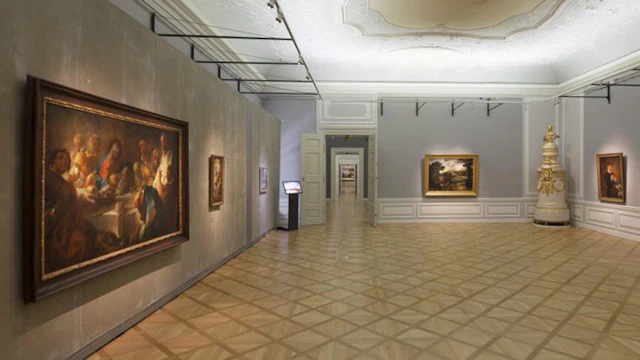
The DomQuartier circuit spans three levels and roughly 1.3 km, with a recommended visit duration of 1.5 to 2 hours. Under normal conditions, the route connects the Residenz state rooms, Cathedral Museum, Long Gallery and Residenzgalerie. With the Residenzgalerie closed for construction until autumn 2027, the route is shorter in scope even though the remaining rooms still form a substantial visit.
That distinction needs to appear before arrival. A customer who buys what they understand to be full access and only discovers the missing gallery at the entrance will evaluate the experience against an expectation the operator created. The partial ticket is not a hidden downgrade; it is the appropriate admission product while the affected section is unavailable. The booking language should reflect that.
Use two simple rules in the itinerary:
- Name the closed section when the renovation affects the visit. Partial access is more precise than a vague reference to temporary changes.
- State the current access level in the confirmation. A short notice that the Residenzgalerie is closed for renovation and that partial access applies is enough to prevent the customer from assuming that every part of the usual circuit will be open.
Do not promise the full circuit until you have checked the current renovation status. Your itinerary inherits the museum’s calendar, not the other way around.
The closure also changes how you talk about duration. A 1.5-to-2-hour recommendation remains a useful planning frame, but individual pace will vary depending on whether the visitor takes the audio guide, joins a public tour, reads the displays in detail or moves through the rooms quickly. Avoid promising that every customer will need exactly the same amount of time.
For a morning cultural itinerary, the reduced route can be paired with another central Salzburg attraction without making the day feel compressed. For a group with a live guide, leave enough time for the group to stay together through the accessible sections. For independent travellers, explain that the audio guide can lengthen the visit and should be factored into the next fixed appointment.
The closure is therefore not only a pricing issue. It changes the product description, the expected duration and the way a guide or transfer should be scheduled. Operators that update only the price and leave the old route description online are still selling the wrong version of the visit.
Family and Group Pricing: The Math Most Operators Skip
Children aged 0 to 6 enter free. Youth aged 7 to 25 pay €5.00 for full access or €4.00 for partial access. The family ticket is €32.00 for full access and €26.00 for partial access. Those numbers are easy to remember and surprisingly easy to apply badly.
The first mistake is treating every family as a family-ticket booking. The second is comparing the family ticket only with the adult price and forgetting that younger children are already free. The third is quoting a single group amount before confirming whether the gallery is open.
For full access, the main comparisons are straightforward:
1. Two adults and two youths aged 7 to 25 cost €40.00 through individual tickets. The €32.00 family ticket is cheaper.
2. Two adults and one youth aged 7 to 25 cost €35.00 individually. The €32.00 family ticket still wins.
3. Two adults and one child under 7 cost €30.00 individually because the child enters free. The €32.00 family ticket is not the better option.
4. One adult and one youth cost €20.00 individually. A family ticket is not relevant to this party.
For partial access, compare the same party structures against the reduced prices rather than carrying the full-access decision across automatically. The access tier must be identified first; only then can the family calculation be finalised.
This is a small piece of arithmetic, but it affects trust. If the customer later discovers that the operator charged a family rate when individual tickets would have been cheaper, the issue is not rescued by the fact that the difference was only a few euros. The customer sees a preventable overcharge. Conversely, if a family qualifies for the lower-cost option and the operator fails to surface it, the package looks less considered than it should.
Build the comparison into the booking flow, but keep it human. Ask for the number of adults, the children’s ages and the expected access level. If the Salzburg Card is involved, compare the card entitlement separately instead of presenting the family ticket as the default solution.
Before You Quote the Itinerary
A Salzburg itinerary that includes the DomQuartier needs a few operational facts locked down before it is published or confirmed. These are not abstract compliance points; each one affects what the customer can actually do on the day.
First, confirm whether the visit will use full or partial access. The Residenzgalerie renovation makes partial access the relevant assumption for the foreseeable period, but the status should still be checked closer to the travel date. Museum schedules and renovation notices can change, and a static package page should not be treated as a substitute for a current operational check.
Next, verify the day. Tuesdays are closed, and December 24 is also a closure date. If the attraction falls on one of those days, move it rather than relying on a customer to notice the conflict after arrival.
Then check the season and last admission. July and August extend the opening period to 6:00 p.m. with last admission at 5:00 p.m.; the standard schedule ends at 5:00 p.m. with last admission at 4:00 p.m. The distinction should be reflected in transfer planning and in any promise about an afternoon visit.
The quote itself should separate the components:
- adult admission: €15.00 for full access or €12.00 for partial access;
- youth admission: €5.00 for full access or €4.00 for partial access;
- children under 7: free;
- family ticket: €32.00 for full access or €26.00 for partial access;
- audio guide: €2.00;
- public guided-tour surcharge: €4.00;
- Salzburg Card admission: one-time free entry for eligible cardholders.
Finally, confirm the ticket format and the arrival instructions. Digital tickets are accepted, and the box office is at Residenzplatz 1 on the ground floor passageway toward the inner courtyard. If the customer has booked online, say what the digital confirmation does and does not provide. Do not imply a guaranteed time slot where none exists, and do not send travellers searching for a separate entrance that is not part of the ticket instructions.
Final Position: Negotiate the Variable, Not the Headline
The DomQuartier is not an attraction to discount blindly in order to win a Salzburg booking. It is an attraction to price accurately so the package survives the renovation period and the customer receives exactly what the itinerary promises.
Three variables do most of the work: the difference between full and partial access, the family-ticket calculation and the Salzburg Card overlap. The audio guide, public guided-tour surcharge and renovation notice matter too, but they should be handled as separate components rather than allowed to blur the headline admission price.
Your best negotiation with the DomQuartier is internal: pick the right SKU before you pick the customer.
Once those variables are settled, the renovation becomes a manageable operational condition rather than a margin leak. The museum can still work well in a Salzburg cultural itinerary, but only when the package acknowledges the route that is actually open, the ticket that is actually valid and the schedule the visitor can realistically follow. That is the version of the product that holds up after the booking is made — and when the customer arrives at the door.
Practical info
Currency: EUR
Driving: on the right
Emergency number: 112
FAQ
How much do DomQuartier Salzburg tickets cost?
Is the Residenzgalerie open at DomQuartier Salzburg?
What days is DomQuartier Salzburg closed?
What are the opening hours and last admission at DomQuartier Salzburg?
Does the Salzburg Card include DomQuartier Salzburg?
Can I show a digital DomQuartier ticket on my phone?
Photo: Maskaravivek / CC BY-SA 3.0 — Wikimedia Commons