North Korea Tourism: Reality Check on the Emerging Travel Corridor for Russians
North Korea has been promoted as a tourism destination for Russian travelers since reopening, but actual uptake is low—approximately 5,000 Russian visitors in 2025, with a forecast of 6,000 for 2026…
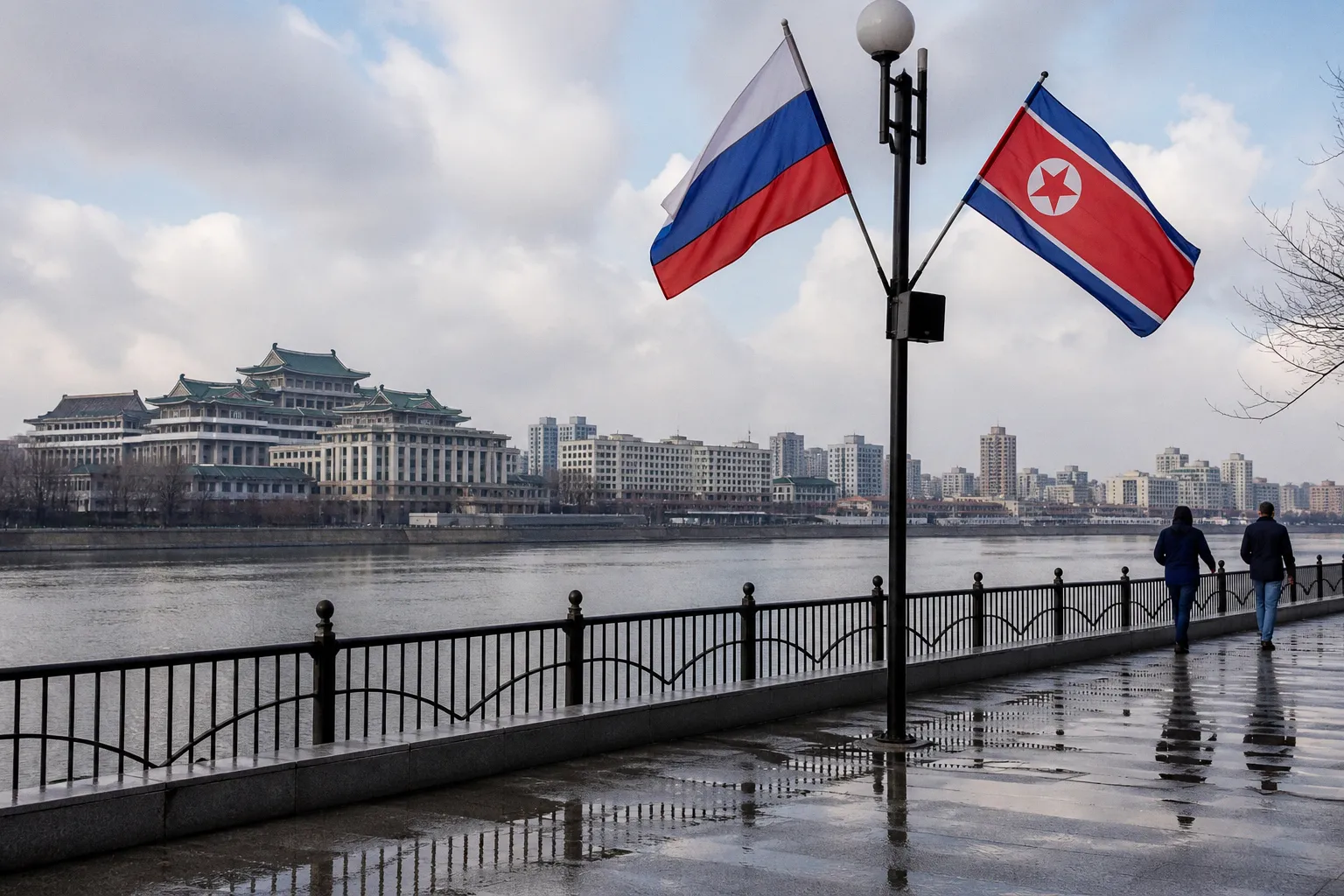
North Korea has been promoted as a tourism destination for Russian travelers since reopening, but actual uptake is low—approximately 5,000 Russian visitors in 2025, with a forecast of 6,000 for 2026, according to Sergei Krivonosov, deputy head of the State Duma's Tourism Committee. The gap between state-level marketing and confirmed bookings indicates where the constrained Russian outbound market is actually moving under tightened Schengen rules.
The Corridor: Vladivostok to Pyongyang
Current operational routing starts in Vladivostok.
- Outbound carrier: Air Koryo, fleet entirely Soviet- and Russian-made, including Il-62 aircraft built in 1979.
- Documents: Russian passport plus DPRK visa issued prior to boarding; handled by tour operator.
- On arrival: Russian-speaking guide assigned; lunch often served inside the airport terminal.
- Mandatory buffer: tourists accompanied by a guide on all excursions, per operator protocols.
Per Artur Muradyan, vice president of the Association of Tour Operators of Russia, the corridor remains a niche product. Transit capacity is fixed, not scalable. Per current operational data, independent booking without operator mediation is not confirmed as available.
The Product: What's On Sale
Three structured itineraries dominate the Russian-facing catalog.
- Entry-level Pyongyang city tour: approximately 100,000 rubles ($1,244).
- "Popular" eight-day itinerary: approximately $1,900. Routes: Pyongyang sightseeing plus train transfer to Kalma beach resort for one-week stay.
- Discount tier: 5,000 rubles ($62) off for Russian veterans of the conflict in Ukraine.
Wonsan-Kalma resort opened in June 2025. Kim Jong Un attended the opening with his daughter Kim Ju Ae, calling the site a "world-class tourist and cultural center." Russian Ambassador Alexander Matsegora and Primorye Governor Oleg Kozhemyako were present at the ceremony. Russian Foreign Minister Sergei Lavrov, during a subsequent visit, signaled that Russian arrivals would rise.
The resort occupies part of the Kalma Peninsula near Wonsan. A decade prior, the site housed a military airfield; satellite imagery confirms the footprint has shifted to hotel and leisure infrastructure.
The Context: Why This Corridor Exists
The route fills a structural gap created by European restrictions.
- Schengen policy: tightened throughout 2025; most Russian citizens barred from multiple-entry visas as of November 2025.
- Bilateral framework: Putin visited Pyongyang in June 2024, signed a mutual defense treaty with Kim Jong Un that includes tourism expansion clauses.
- Demand floor: approximately 5,000 Russian arrivals in 2025, per State Duma data.
Tourism growth is tied directly to the deepening Moscow-Pyongyang relationship following the February 2022 escalation in Ukraine. For Russian travelers locked out of European Schengen circuits, North Korea functions as a compliant, state-aligned alternative. The shift mirrors broader reporting on Russian outbound demand pivoting away from Europe toward Asia, the Caucasus, and other destinations where visa friction is lower.
Fail-Safe: What to Monitor
- Booking conversion: whether the 6,000 forecast for 2026 materializes or stays flat.
- Route expansion: any new ski packages or resort corridors beyond Wonsan-Kalma.
- Carrier status: Air Koryo fleet renewal, given the average airframe age.
- Regulatory shifts: new DPRK visa categories or Russian-side procedural updates.
Treat state-level promotion as marketing signal, not transit capacity. For Russian travelers evaluating outbound options, this product remains a high-friction, low-volume corridor rather than a viable mass-market alternative.