New Japanese Visa Requirements for Russian Travelers: What You Need to Know
According to UNN, citing information from the Japanese Embassy, Japan has tightened visa-document requirements for Russian citizens after a sharp rise in arrivals from Russia.
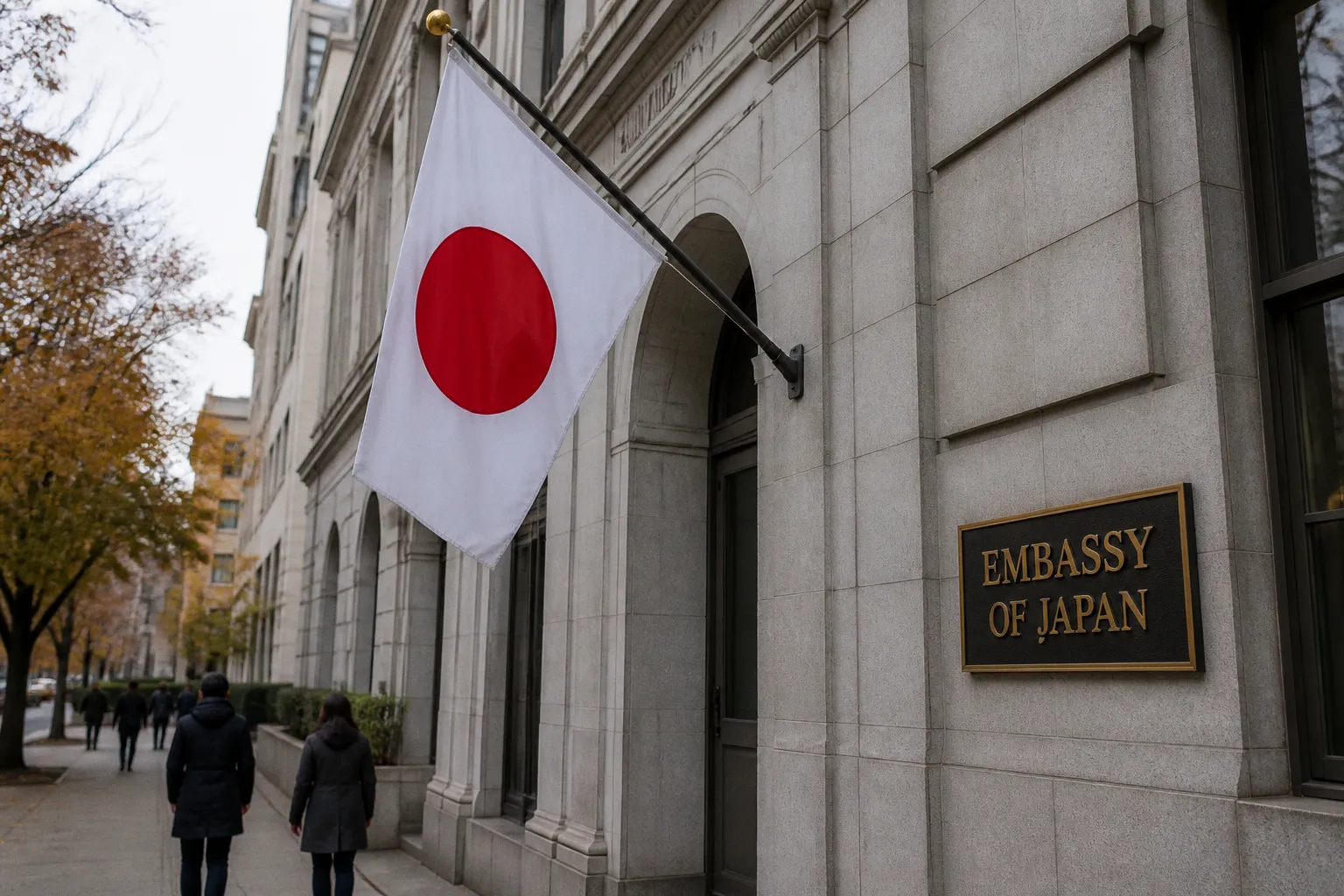
Applicants must now prepare original employment and bank documents with official stamps and signatures. For Russian travelers, the operational impact is clear: incomplete paperwork can create additional processing time and affect fixed travel dates.
The document set is now a compliance task
Employed applicants are expected to provide:
- An original employment certificate.
- The employee’s signature and an official stamp from the employer.
- A separate 2-NDFL certificate if the salary is not stated in the employment document.
- An original certificate from a Russian bank confirming the account balance.
- The bank document must carry an official stamp and a bank employee’s signature.
The requirements also expand to minors, students, pensioners and financial sponsors. Families may need to submit a complete financial and personal document package for each member, including proof of relationship.
This changes the preparation sequence. A visa file should no longer be treated as a single application assembled immediately before submission. Each document requires a separate check for originality, required signatures, stamps and consistency of personal data.
Processing time is now a route-planning risk
The Japanese visa center in Moscow began checking documents more closely in the spring, according to the Association of Tour Operators of Russia. ATOR reported longer processing times after the additional scrutiny was introduced. The available reports do not provide a fixed new processing deadline.
For travelers booking Japan as part of a larger itinerary, this creates three mandatory controls:
- Do not align non-refundable transport or accommodation with the earliest possible visa outcome.
- Build buffer time between document submission and the first fixed travel segment.
- Check the requirements for every family member separately, including sponsors and dependants.
The change follows a substantial increase in Russian tourist traffic to Japan. JNTO figures cited in the reports show 3,700 Russian visitors in 2021, 10,400 in 2022, 42,000 in 2023, 99,300 in 2024 and 194,900 in 2025. UA.NEWS also reports 104,400 Russian visitors in the first half of 2026, with June reaching 12,800—described as a record for that month.
The figures explain the administrative pressure, but they do not replace the application rules. A growing market does not mean faster individual processing.
What to verify before submission
Use the following control order:
1. Confirm the current checklist with the Japanese visa center or embassy information available for your application.
2. Request original employment and bank certificates, not scanned copies.
3. Verify that salary information is present. If it is absent, prepare the additional 2-NDFL document.
4. Check that every required stamp is official and that each document has the responsible employee’s signature.
5. For minors, students, pensioners and sponsored applicants, prepare the expanded financial and personal documentation.
6. For family applications, keep proof of relationship ready for each applicant.
7. Submit with buffer time. ATOR’s report of longer processing means the previous planning margin may no longer be sufficient.
The fail-safe plan is procedural: delay binding travel commitments until the file passes a document audit, and keep an alternative itinerary or rescheduling option available. The central risk is not the destination itself. It is a visa package that fails one formal requirement and enters a longer review cycle.