News
Informal Exit Screening for Men at Russian Airports: Travel Risks and Planning
According to UNITED24 Media, citing the ATESH partisan movement, Russian border services have implemented informal exit screening targeting men of mobilization age at airports in Moscow, St.
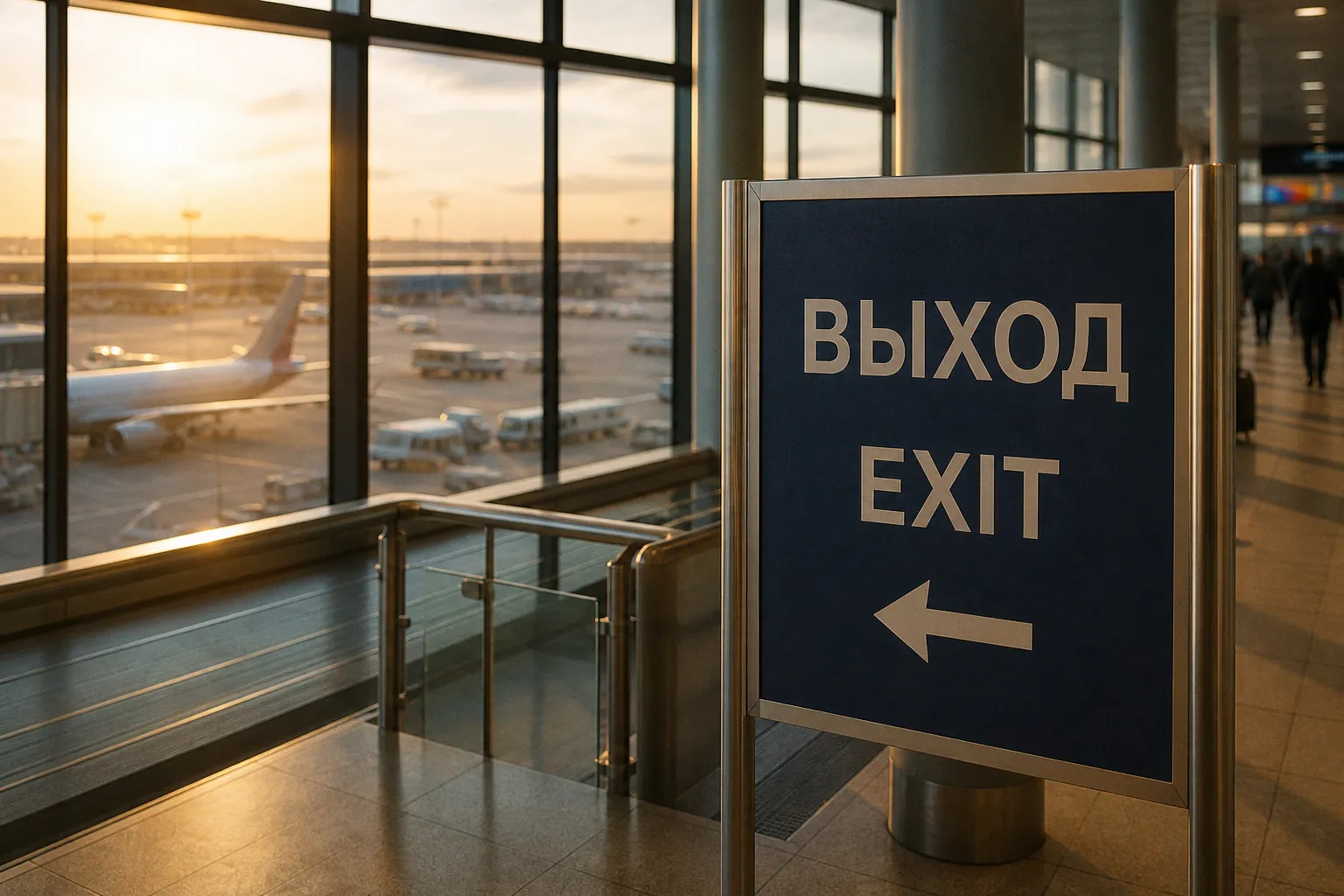
Petersburg, and Yekaterinburg. Travelers reportedly face prolonged secondary checks that can result in missed flights, even when documents are in order and no official travel ban applies. For inbound tourism planning, this introduces a measurable compliance variable that affects itineraries built around Russian gateways.
The reported practice
- ATESH agents among border service and airport staff flagged the system on August 18.
- Affected hubs: Moscow, St. Petersburg, Yekaterinburg.
- Trigger: male travelers within mobilization age range.
- Procedure: extended questioning beyond standard booth processing.
- Stated objective per ATESH: stop only a share of eligible travelers, not all, to limit public attention.
- Russian authorities maintain publicly that no mobilization is under way.
What travelers should know
- No formal exit ban is in force. The restriction is administrative, not codified.
- Document compliance does not guarantee smooth departure. Clean paperwork is necessary, not sufficient.
- Buffer time requirement increases. Standard airport arrival margins are no longer adequate for at-risk demographics.
- Transit corridor selection matters. Land border crossings fall outside this specific airport screening mechanism, per the report.
- Re-entry is a separate risk track. Reader accounts compiled by Meduza document extended questioning, device inspection, and retention on entry, independent of the exit issue.
Fail-safe backup plan
- Verify current status 72 hours before departure. Check the Federal Air Transport Agency portal and aggregator advisories.
- Build a mandatory 5-hour airport buffer for at-risk travelers. Reduce to standard 2-hour buffer only after documented confirmation of no active screening.
- Carry paper copies of internal passport, registration, and any exemption documentation. Digital-only copies slow secondary screening.
- Pre-stage a backup itinerary with a 24-hour flex window. Same-day connections are now non-compliant for the affected demographic.
- Avoid overpacking devices. A clean secondary phone, already mentioned in independent traveler reports, reduces inspection exposure.
- If the traveler profile matches mobilization-age male, reroute through a non-flagged hub. Yekaterinburg, Moscow, and St. Petersburg carry elevated screening risk per the current report.
Bottom line for itinerary design: treat Russian airport departure as a variable-process compliance event, not a fixed checkpoint. Build margin, carry paper, and stage a fallback before booking non-refundable onward connections.