Escorted Tours to Russia: Hidden Fees and Booking Traps
The price on the brochure is often not the price you pay. Many escorted tours to Russia operate on a base-plus model: the advertised figure covers transport, accommodation, and a fixed itinerary…
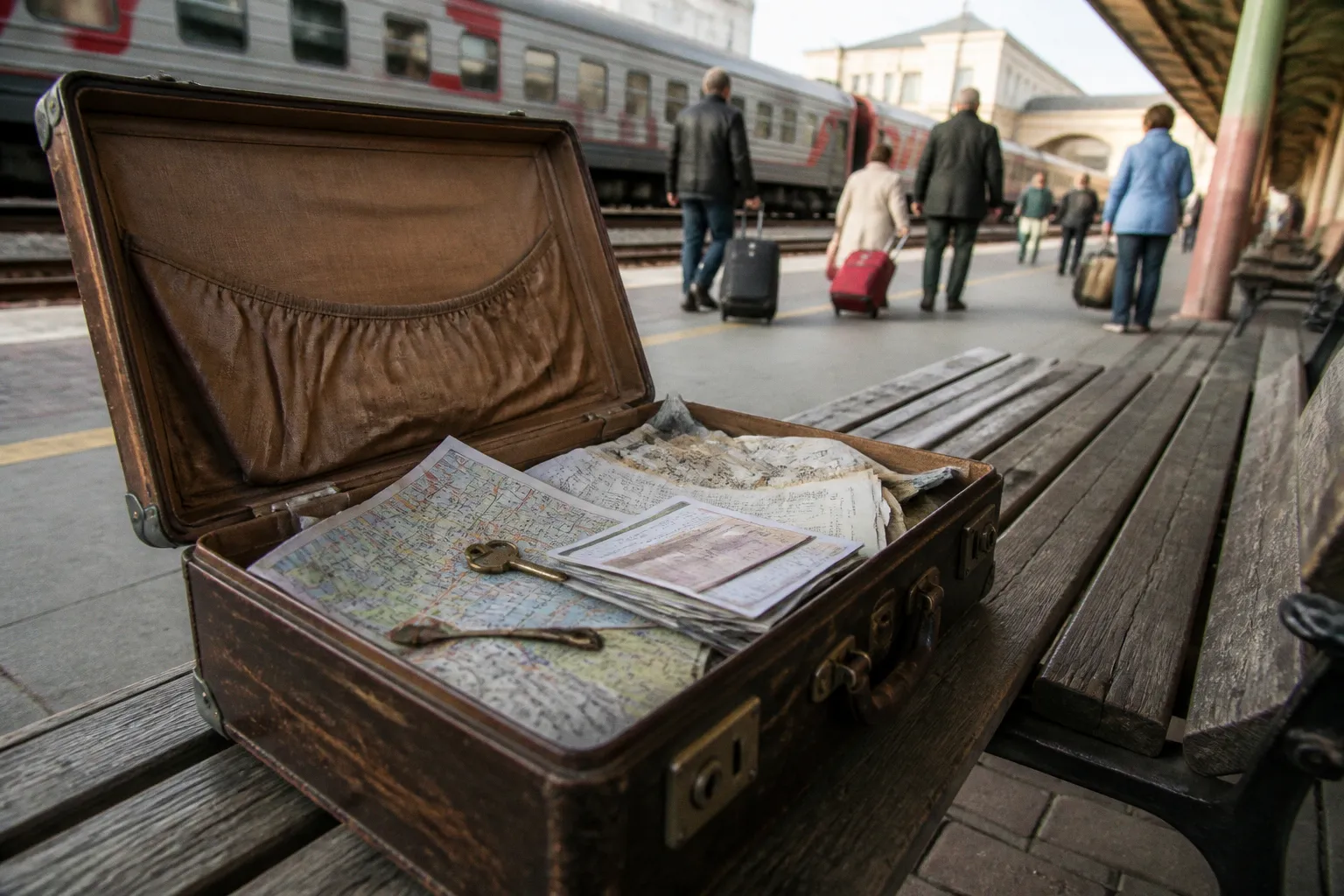
The price on the brochure is often not the price you pay. Many escorted tours to Russia operate on a base-plus model: the advertised figure covers transport, accommodation, and a fixed itinerary, while visa processing, registration, payment logistics, and selected excursions are handled separately. Some operators include one or more of these items; others do not. The problem is rarely a deliberately fraudulent price. It is the gap between what the headline figure appears to promise and what the booking terms actually include.
Budget only for the sticker price and the shortfall can appear before the plane lands. A tour may be perfectly legitimate and still leave you paying for services that were never part of the advertised package.
The Reality of Visa Costs: E-Visas vs. Consular Processing
Visa expenses are among the first items travelers need to separate from the tour price. Whether the cost is paid to the operator, a visa agency, or a consular service, it depends on the route available to your nationality and the rules in force when you travel.
For many travelers, there are two broad pathways: an electronic visa, where eligible, or a standard consular tourist visa. They do not have identical requirements, timelines, or cost structures.
E-Visa
An e-visa is generally the simpler route for eligible nationalities. It is applied for electronically and normally does not require the traditional visa support letter or invitation used for a standard consular application. That distinction matters: an operator may still offer to assist with the application, but assistance is a service choice rather than proof that an invitation letter is legally required for the e-visa route.
The draft cost commonly quoted by tour providers is approximately $55 USD, although travelers should verify the current fee on the official application channel before relying on that figure. The e-visa framework has included a limited validity window and a permitted stay of up to 30 days, but the exact conditions can change. Eligibility is restricted to nationalities on Russia’s current approved list, and entry points may also be subject to specific rules.
Allow time for more than the minimum advertised processing period. A nominal processing time of several calendar days does not account for a rejected photograph, a data mismatch, a request to correct the application, or a technical delay. Submitting the application around ten days before departure is a more defensible planning approach than leaving it until the last moment.
Consular Single-Entry Tourist Visa
A standard consular visa follows a different logic. The application normally requires supporting documents, including a visa support document or invitation arranged through an eligible Russian hotel, tour operator, or visa service. The fee depends on the applicant’s nationality, the consular jurisdiction, and the processing speed. Tour materials may quote figures such as €120 for standard processing and up to €195 for urgent processing, but these should be treated as indicative rather than universal prices.
The permitted stay and validity are linked to the visa issued and the itinerary or supporting documentation. Processing can take several business days, followed by mailing time where applications are submitted by post. Some consulates require an appointment or use an external visa center, creating another layer of service charges.
The comparison is useful, but it is not a promise that every traveler will receive the same terms:
| Parameter | E-Visa | Consular Visa |
|---|---|---|
| Typical application route | Online, for eligible nationalities | Consulate or authorized visa center |
| Indicative fee often quoted by operators | About $55 USD | About €120–€195, depending on service |
| Support letter or invitation | Generally not required for the e-visa itself | Normally required as part of the supporting documents |
| Processing | Often measured in calendar days | Usually measured in business days, plus mailing or appointment time |
| Stay and validity | Governed by the current e-visa rules | Governed by the visa issued and supporting documents |
| Nationality restrictions | Yes, with an approved list | Eligibility and procedure depend on nationality and consular jurisdiction |
Do not assume that the advertised tour price includes either route. Some operators bundle visa assistance or the consular support document into a package; others charge the visa fee separately; some expect the traveler to apply independently. The relevant question is not whether the brochure mentions a visa. It is whether the booking terms identify who pays the government fee, who prepares the documents, and what happens if an application is delayed or refused.
Visa costs are not automatically included or excluded. Treat inclusion as something the operator must state clearly, not as a feature to infer from the headline price.
Before paying a deposit, ask for the arrangement in writing:
- Is the e-visa fee included, or is the traveler applying independently?
- If a consular visa is needed, who provides the support document?
- Is visa-agency assistance included in the package?
- Are courier, appointment, or urgent-processing charges additional?
- What happens to the tour booking if the visa is not issued in time?
A vague answer is not necessarily evidence of a scam, but it is a warning that the advertised price is not yet a usable travel budget.
Visa Support Letters and Hotel Registration
The phrase “visa support” is often used loosely in tour marketing. For a standard consular tourist visa, the operator may arrange an invitation or visa support document that confirms the accommodation and travel arrangements. This is not the same thing as the visa itself, and it is not the same requirement as an e-visa application.
Some hotels and large tour operators issue the document without a separate charge when accommodation is booked through them. Independent visa agencies and smaller providers may charge a service fee, often quoted in the range of $15 to $50 per person. The amount may be modest compared with the tour, but it can become confusing when the operator describes the service as included in one email and separately billable in another.
Use precise language when asking for clarification. Ask whether the consular visa support document is included in the quoted package and whether the fee applies per traveler or per booking. If you are eligible for an e-visa, ask whether the operator is charging for optional assistance rather than passing on a mandatory document cost.
Hotel registration
Hotel registration is a separate issue. Foreign visitors staying in Russia generally need their place of stay registered, and conventional hotels usually handle the administrative process at check-in. The traveler may not see any paperwork beyond the registration record or a request for passport details. The fact that the hotel handles it does not always mean the cost is included in the room rate.
The charge varies by property and booking arrangement. Standard hotels may quote a small amount, sometimes around $1 per passport, while mini-hotels, guesthouses, or smaller accommodation providers may quote considerably more—occasionally $20–$40 per passport. These figures should be confirmed with the specific property rather than treated as a national tariff.
The important accounting detail is that the charge is usually calculated per passport, per property. For a couple staying in two hotels, that means two travelers multiplied by two properties: four passport-level registration charges, not two. If one property includes registration in its room rate and the other charges separately, the final amount will vary, but the unit of calculation remains the same.
That is where a low nightly rate can become less attractive. A guesthouse may be cheaper than a full-service hotel, yet add separate administrative charges at check-in. Ask whether registration is included, whether it is charged for each guest, and whether changing hotels creates a new charge. Ask before booking, not when you are standing at reception with luggage.
Registration is a small line item at a standard hotel and a potentially visible surcharge at a smaller property. Count passports and properties, not just rooms.
The same question applies to itineraries with overnight trains or private apartments. The provider responsible for registering the traveler may not be the same company that sold the tour. If the package moves between hotels, confirm who handles the registration at each stop and whether the cost is already built into the accommodation price.
The Solo Traveler’s Dilemma: Understanding Single Supplements
Solo travelers on escorted group tours often pay more than the per-person figure displayed in the brochure. The reason is straightforward: the headline rate is frequently calculated on the basis of two people sharing a room. When one traveler occupies that room alone, the operator has to recover the cost of the unused bed.
The single supplement is not automatically a hidden fee. Reputable operators disclose it in the booking conditions or show it during the reservation process. The trap appears when the traveler reads a twin-share price as an individual price and only sees the surcharge at checkout.
Depending on the operator, destination, hotel category, and departure date, the supplement can be around 30% to 60% above the twin-share rate. That is a meaningful difference on a long itinerary, particularly when the tour already includes hotels in expensive central locations.
The wording used in the booking form matters. “From” pricing may refer to a shared room, while “single occupancy” may be calculated across the entire itinerary. A traveler might have a private room at one hotel but pay a supplement based on a more expensive property elsewhere. Some programs also use different supplements for different departure dates.
There are several ways to reduce the cost:
1. Request a roommate match. Some operators pair solo travelers of the same gender and waive the single supplement. This depends on the group’s composition and is not guaranteed. Ask what happens if no suitable roommate is found: the traveler may have to pay the full supplement or cancel under the operator’s terms.
2. Ask about a genuine single room. A smaller single room may cost less than a twin room occupied by one person. Availability is limited, and the room may be in an older property or have a different layout. Confirm that the alternative is available at every stop, not just in the main city.
3. Compare the supplement with a shorter private extension. On some tours, the expensive part is a single night at a premium hotel rather than the entire itinerary. A private extension or a different room category may produce a better result than accepting the default supplement, but only if the operator permits changes.
4. Consider shoulder-season departures. When an operator has unsold rooms, it may discount the supplement or offer a limited waiver. This is a commercial decision, not a standard entitlement. Peak summer departures generally leave less room for negotiation.
The financial comparison should be made against the complete solo price, not the attractive shared-room figure. That means adding the supplement before comparing two tour operators. Otherwise, a tour that appears cheaper may become more expensive after the room arrangement is selected.
Financial Logistics: Why Your Credit Card Won’t Work in Russia
Payment logistics are not a minor technical detail. Foreign-issued Visa and Mastercard cards have generally not been usable in Russian ATMs and point-of-sale terminals since the disruption of international card services. A card can be valid, funded, and enabled for international travel and still fail at the terminal. Contactless capability does not solve the underlying network problem.
This is why a card-only travel plan is risky. The failure may occur at the airport, at the hotel, or when paying for an excursion that was not prepaid. A second card from the same network is not a meaningful backup.
What may work
- Cash in USD or EUR. Travelers commonly bring clean, undamaged notes and exchange them through official bank or exchange counters. The availability of particular currencies and denominations varies, and local rules can affect what exchange offices accept. Do not assume that an airport kiosk offers the same conditions as a city exchange office. The exact difference is not a reliable fixed percentage, so compare the displayed rate and commission rather than planning around a supposed universal markup.
- Foreign UnionPay cards. UnionPay may work at selected Russian ATMs and merchants, but coverage is not universal. Issuer policy, ATM compatibility, merchant acceptance, and account restrictions all matter. Confirm that the card is enabled for the destination and identify the withdrawal limits before departure. A UnionPay card is a useful additional option, not a substitute for a cash plan.
- Russian Mir cards. The domestic Mir system is not a practical option for most foreign visitors who do not already have access to a Russian-issued account. It should not be treated as a fallback that can be arranged casually after arrival.
| Payment Method | Practical status |
|---|---|
| Foreign Visa or Mastercard | Generally unusable in Russian ATMs and terminals |
| Foreign UnionPay | May work at selected ATMs and merchants |
| USD or EUR cash | Can be exchanged through official channels |
| Russian Mir card | Not a practical option for most foreign visitors |
The safest budget is not a prediction of exactly what you will spend. It is a plan for access to money when the preferred payment method fails.
1. Estimate daily spending for meals, local transport, tips, and small purchases not covered by the tour.
2. Add a reserve for exchange-rate movement, commissions, and unplanned expenses. A 15–20% contingency can be sensible, but it is a budgeting buffer, not a guaranteed exchange loss.
3. Separate your cash between secure locations rather than carrying the full amount in one wallet.
4. Keep enough accessible currency for transport from the airport, the first meal, and immediate hotel expenses.
5. Confirm which excursions, hotel deposits, or incidentals must be paid in cash before the group departs.
Exchange only what you need at the airport if the rate or commission is unattractive, then compare official city exchange options. Never assume that a guide, driver, or informal intermediary offers a better deal simply because the transaction is convenient.
Budgeting for Optional Excursions and Tipping Expectations
The word “optional” in an escorted-tour brochure needs to be read in context. An optional excursion may genuinely be optional, yet still be the activity that gives a city its depth. The base itinerary may include headline sights such as Red Square, a major museum, or a river cruise, while additional payments cover suburban palaces, evening performances, longer museum visits, or specialist walking tours.
The issue is not that every add-on is unreasonable. The issue is that the tour can feel incomplete if the traveler assumed the most interesting activities were included.
Prices for add-on excursions vary with duration, group size, transport, admission charges, and whether a private or specialist guide is involved. A range of roughly $30 to $150 per person is commonly seen in tour materials, but a private day trip or performance package can sit outside that range. Ask for the complete list of paid options before departure and identify which ones are likely to matter to you.
Look for four details:
- whether museum admission or performance tickets are included;
- whether transport from the group hotel is included;
- whether the excursion has a minimum number of participants;
- whether cancellation is possible if the operator changes the schedule.
A package with a low advertised price may rely on selling several add-ons during the trip. That is not necessarily a scam, but it makes the base price a poor comparison with an operator that includes more of the program upfront.
Tipping
Tipping practices are not governed by one uniform percentage across Russian escorted tours. Expectations vary by operator, guide, group culture, and the level of service. Some companies publish suggested amounts; others leave the decision entirely to the traveler.
The ranges often mentioned in tour guidance are:
- tour leader or main guide: about $5–$10 per person per day;
- local guide on an individual excursion: about $3–$5 per person per excursion;
- driver: about $2–$3 per person per day.
These are planning figures, not mandatory charges. They also need to be interpreted in the context of the tour’s length and staffing. A single guide accompanying the group for several days is a different situation from a local guide who leads one museum visit.
Because card payments may not be available, tips should be included in the cash budget. Ask the operator whether tips are collected centrally, placed in envelopes, or given directly. If the tour leader presents a suggested amount, that does not automatically make it a contractual fee. The traveler should know whether it is an expectation, a recommendation, or an amount already included in the package.
An “optional” excursion is not a hidden fee, but it can become a hidden assumption: the brochure may show the landmark while charging separately for the experience around it.
Building the Full Budget Before Booking
A useful budget separates compulsory costs from optional spending. The amount will depend on nationality, accommodation, room occupancy, itinerary, and the operator’s inclusion policy, so a single universal total is misleading.
For one traveler, the additional categories may look like this:
| Cost category | What to establish before booking |
|---|---|
| Visa | Whether an e-visa is available, or whether consular processing is required |
| Visa support | Whether a consular support document is included and whether assistance carries a fee |
| Registration | Whether the property charges per passport and per stay or includes the cost |
| Single supplement | Whether the headline rate is based on twin sharing |
| Daily cash | Meals, transport, tips, and incidental purchases not covered by the tour |
| Excursions | Which activities are included and the price of each paid option |
| Payment contingency | Cash reserve for failed cards, commissions, and unplanned expenses |
For a ten-day itinerary, daily cash alone can become the largest variable. A planning range of $80–$120 per day may be reasonable for meals, local transport, tips, and modest incidentals, but it depends heavily on what the tour includes. If breakfasts, group transfers, and several dinners are prepaid, the traveler’s actual daily requirement may be lower. If meals are mostly independent and the itinerary includes multiple paid activities, it may be higher.
Excursions can add approximately $100–$300 per person when a traveler chooses several moderate-cost options. Visa and support-document costs may add anything from a relatively small amount to several hundred dollars, depending on the route and service level. Registration should be calculated by passport and property: two travelers moving through two separately charging hotels could face four passport-level charges. A single traveler staying in one hotel would have a different exposure.
The single supplement belongs in the same calculation. It should not be treated as a later upgrade. If the tour price is based on twin sharing, compare the full solo price with competing operators only after the room arrangement is known.
Before committing funds, request an itemized quotation that identifies:
1. the tour price and exactly what the base package includes;
2. visa responsibility, government fees, and agency-service fees;
3. any consular visa support document and its price;
4. hotel registration charges at each property;
5. the single supplement or roommate policy;
6. the price and cancellation terms for optional excursions;
7. the recommended tipping arrangement;
8. the payment methods available for deposits, balances, and in-country extras.
If the operator cannot provide these figures, the issue is not necessarily that the tour is fraudulent. It is that you cannot compare its price with another package on equal terms. A transparent operator should be able to explain what is included, what is paid locally, and what may change with the traveler’s nationality or room choice.
The most reliable way to assess escorted tours to Russia is to treat the brochure as the starting price, not the final invoice. Confirm the visa route, count registration charges correctly, price the room arrangement, and prepare for a cash-based trip. Once those variables are visible, the comparison becomes much simpler: you can decide whether the package is genuinely good value rather than discovering its real cost at the payment page, the hotel desk, or the first optional excursion.