Prince Philip Science Museum Tickets: When to Book?
A 90-minute visit that bleeds into a three-hour queue is not a budget line; it is a budget leak.
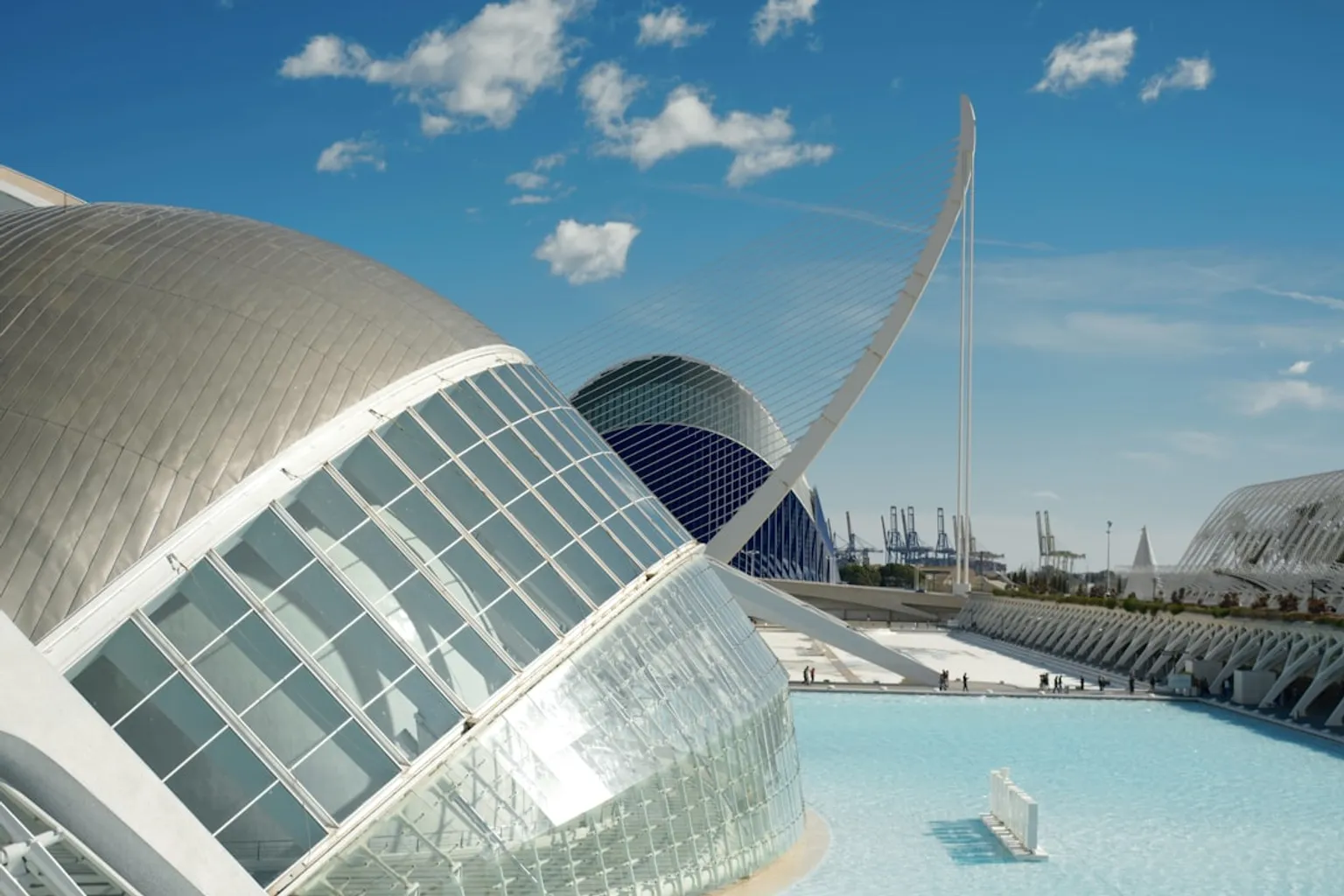
Every minute your group spends waiting at the ticket counter, shuffling through a crowded lobby, or backing out of an exhibit hall is a minute you cannot bill to a vendor or recover through package pricing. The Prince Philip Science Museum tickets question is therefore not simply what admission costs. It is how to move a group from coach drop-off to the exhibits with as little friction as possible, and how early that route needs to be secured before the calendar works against you.
Tickets and prices
Prince Philip Science Museum
I
Save
Box office and online booking
- Adult €6.90
€6.90
Official websiteII
entry ticket
Entry ticket — Available this Saturday
This ticket grants entry to explore space and science exhibits and learn scientific facts, with availability this Saturday.
€10
Check availabilityIII
combo ticket
Combo ticket — Includes aquarium entry
This combo ticket includes admission to both the aquarium and the museum, with availability this Saturday.
€39
Check availabilityFor a B2B planner orchestrating inbound groups, this is a risk-mitigation exercise. You are buying a usable time window, not a paper ticket. The difference between a transaction that closes cleanly at 11:00 a.m. and one that turns into a queue outside the ticket office is decided weeks before arrival, inside the booking system.
The short version is practical: standalone admission is usually easier to operate, while combined passes create more value when the itinerary genuinely includes the Hemisfèric or the Oceanogràfic. Advance booking is recommended for busy periods, particularly when a package includes a timed Hemisfèric screening or when the visit falls on a high-season weekend. It is not, however, a universal requirement for every combined pass.
Understanding Your Ticket Options: Standalone vs. Combined Passes
Two purchase architectures govern the venue, and they produce two different operational outcomes.
Standalone Museu de les Ciències tickets lock the buyer into a single building. The transaction is simple, the per-head line item is clean, and there is no exposure to the rest of the City of Arts and Sciences complex if the group has no appetite for it. For a one-and-done school trip, a family-focused itinerary, or a tight turnaround on a multi-city Iberian route, this is usually the frictionless option.
Standalone admission also gives the planner fewer moving parts. There is no need to coordinate a second building, a separate screening time, or a multi-day validity window. That simplicity matters when the museum is one component in a wider Valencia programme that already includes transfers, meals, city touring, and a fixed departure time.
Combined passes bundle the Science Museum with the Hemisfèric and/or the Oceanogràfic. Validity runs across one, two, or three consecutive days, converting a static admission into a flexible operating window. That flexibility can be valuable for groups staying in Valencia for several nights, especially when the itinerary cannot absorb all three venues in one visit.
The economic case for the bundle hinges on three variables:
- whether the group will physically use the second venue;
- whether the itinerary allows the attractions to be spread across the available validity period;
- whether the supplier offers an operational advantage when the pass is booked as part of a complete package rather than assembled ticket by ticket.
| Decision driver | Standalone ticket | Combined pass |
|---|---|---|
| Best for | Tight schedules and single-building interest | Multi-day stays, mixed-age groups, and themed itineraries |
| Booking friction | Lowest | Moderate; a timed Hemisfèric film adds another layer |
| Capacity exposure | Mainly the museum’s general admission flow | Greater planning exposure because additional venues and time slots are involved |
| Advance booking | Recommended during busy periods | Recommended for peak-season packages and timed Hemisfèric sessions |
| Vendor flexibility | Limited to one attraction | Higher when multi-day validity can absorb schedule changes |
| ROI profile | Clean and predictable | Higher only when the additional venue is actually used |
A combined pass is only an upgrade if the second building shows up on the manifest. An unused bundle is a margin leak wearing a discount label.
The key distinction is between flexibility and capacity. A combined pass may give the group more days in which to use the attractions, but that does not mean every component can be treated as open-ended. The Hemisfèric operates around specific film and planetarium showtimes. Those sessions create a hard point in the itinerary: once the group misses the relevant time, the rest of the day may no longer fit.
The Oceanogràfic is different. It is an important part of the complex and can materially extend the length of a visit, but the principal sell-out warning in the supplied booking pattern should not be generalised to every Oceanogràfic admission. For planning purposes, the sharper risk is a peak-season combination that includes a popular Hemisfèric session, not the assumption that the aquarium routinely sells out in the same way.
The standard adult ticket starts from the published baseline rate, with reduced categories available for children, seniors, and visitors with functional diversity. The exact figure is fluid, so a procurement system should pull live pricing rather than pin assumptions to a previous season. Children under four enter free across the museum and the other attractions in the complex, which becomes a relevant line item when the group includes young families or a large preschool cohort.
The underlying tax structure also differs across the complex. The Science Museum sits at the reduced cultural VAT rate, while the Hemisfèric and the Oceanogràfic carry the standard rate. That is one reason a bundle is not simply a linear add-on to the museum ticket. The supplier’s quoted total needs to be assessed as a package, not reverse-engineered from an assumption that each extra venue has identical pricing treatment.
When a combined pass earns its place
For an operator, the pass makes the strongest case in three situations.
First, the group has enough time to use more than one attraction without turning the day into a forced march. A family group may appreciate the ability to divide the museum and aquarium across consecutive days. A school or educational group may prefer the Science Museum and a scheduled Hemisfèric programme on the same day, provided the transfer and entry windows are realistic.
Second, the itinerary has a natural reason to return to the City of Arts and Sciences area. If the complex is already part of the hotel-to-city transfer pattern, a two-day pass can absorb a weather change, a late arrival, or a programme adjustment more gracefully than separate fixed admissions.
Third, the supplier can confirm the components clearly. A combined pass that lists the buildings but leaves the Hemisfèric time unresolved is not operationally complete. The planner still carries the risk of finding an attractive package on paper but discovering that the screening required by the itinerary is unavailable.
Navigating Seasonal Hours and Ticket Office Deadlines
The City of Arts and Sciences runs a two-tier operating calendar. Treating it as a single block is how itineraries quietly lose an hour.
Low season, from early January through June 30 and again from September 17 through late December, generally holds to standard 10:00 a.m. to 7:00 p.m. hours. High season, from July 1 through September 16, extends the operating day to 10:00 a.m. to 9:00 p.m. That longer summer window can make an evening visit possible, but it should not be mistaken for unlimited flexibility. The group still needs time to reach the complex, collect or validate admission where necessary, and move through security and internal access points.
Special dates sit on top of the base calendar and are easy to miss when a planner copies standard hours into a programme template.
| Period | Operating hours | Operational implication |
|---|---|---|
| January 1 | 4:00 p.m. to 8:00 p.m. | Limited afternoon window; transit and meal timing need to be rebuilt around it |
| December 24 | 10:00 a.m. to 2:00 p.m. | Half-day operation; coach turnaround should finish by early afternoon |
| December 25 | Closed | No visit can be built around the venue |
The second deadline that quietly damages itineraries is the ticket office cutoff. Ticket desks close one hour before the museum itself closes. The distinction is not academic. A planner who brings a group to the counter at 6:30 p.m. on a winter evening may still be inside the published building hours while already being too late to buy or process admission.
For that reason, arrival time should be measured against the ticket-office deadline, not the building’s final closing time. A group arriving close to the cutoff has no useful buffer for traffic, a delayed coach, a missing voucher, or a guest who needs assistance at the desk.
Capacity is a function of the door, not the lobby. If your coach arrives shortly before the ticket office closes, the itinerary has already lost its useful margin.
This is also where third-party booking channels need scrutiny. A voucher may confirm a product category while leaving the practical redemption process unclear. Before the group departs, the operator should know whether the voucher is scanned directly at the entrance, exchanged at a ticket desk, or linked to a specific timed session. The more components a package contains, the less room there is for vague wording.
Booking around the calendar
A sensible booking rhythm follows the structure of the itinerary rather than an arbitrary number of days.
For a low-season standalone museum visit on a weekday, advance purchase may be mainly about convenience and group administration. It reduces the chance of splitting the party at the entrance and makes the cost easier to reconcile against the final manifest.
For high-season visits, advance booking is recommended earlier, particularly when the group needs a combined pass or a specific Hemisfèric screening. The purpose is not to treat every date as a guaranteed sell-out. It is to protect the exact combination of attractions and times that the programme depends on.
Peak-season combo packages deserve the same attention. When several venues are being sold together, availability can narrow at the package level even if general museum admission remains obtainable. That is a packaging issue, not proof that the Science Museum itself has become inaccessible.
Strategic Timing: Beating the Crowds and School Groups
The most useful timing decision is not simply early versus late. It is the relationship between school-group traffic, leisure visitors, the fixed Hemisfèric schedule, and the group’s own tolerance for movement.
Science Museum general admission is comparatively elastic. Visitors can move through the building without being assigned to one universal showtime. That does not mean the experience is immune to congestion. The lobby and the first exhibit areas feel the pressure of school groups from mid-morning through early afternoon on weekdays during term time, and interactive galleries slow down when several groups converge on the same modules.
The Hemisfèric creates a different kind of constraint. Its films and planetarium programmes run at specific times, so the planner is not only choosing when to visit the complex but also working backwards from a show. During high season, particular sessions can be the most capacity-sensitive part of the booking. The recommendation is to secure those sessions in advance rather than assume that a general combo pass guarantees the desired time.
The Oceanogràfic can be a substantial draw and should be allowed its own dwell time, but it should not be presented as the same established sell-out risk as specific Hemisfèric showtimes and peak-season combination packages. The operational issue is often less about a universal aquarium sell-out than about whether the group has enough time and energy to include it properly.
For a corporate planner or group operator, the question is when the venue delivers maximum engagement per minute of dwell time.
- Weekday mornings in low season are usually the highest-return slots. Foot traffic is more manageable, school-group pressure has not fully built, and the hands-on galleries are less likely to be bottlenecked.
- Weekday afternoons in low season remain workable, but the experience may be more congested as the second wave of school groups enters from around 2:00 p.m. onward.
- Low-season weekends can work for leisure travellers, although they are less comfortable for groups with a tight departure window or a hard connection to another activity.
- High-season weekends from July through mid-September carry the greatest general pressure of the year. If the itinerary can flex, moving the museum to a weekday morning is the cleaner decision. If the date cannot move, pre-booking is recommended, especially when the package includes a timed Hemisfèric session or a peak-season combination.
- Timed Hemisfèric entries should be locked in roughly one to two weeks ahead during high season when the showtime matters to the rest of the programme. The exact lead time depends on the date and the package, but waiting until arrival creates unnecessary exposure.
The strategic error is assuming that a school-group calendar and a leisure-group calendar can share the same visit window cleanly. They cannot always do so. The venue is one, the throughput is shared, and the margin between a smooth visit and a congested one may be roughly ninety minutes of clock time.
That margin matters more for groups than for independent visitors. An individual can abandon one gallery, eat later, or wait for the next screening. A group has a headcount, a guide, a transfer plan, and often a prepaid meal or onward excursion. A delay that feels minor inside the building can become a missed coach departure outside it.
Matching the museum to the rest of the day
The Science Museum works well as a morning anchor because it offers a clear start point and enough internal variety to keep mixed-age groups moving. A Hemisfèric session can then be placed before or after it, but the order should be determined by the confirmed screening time rather than by a generic promise that the buildings are adjacent.
If the Oceanogràfic is included, the planner should resist the temptation to describe the whole complex as a single seamless attraction. Walking between buildings is manageable, but the group’s actual pace is governed by the slowest transfer, the youngest participants, photo stops, restroom breaks, and the interest level at the exhibits. A combined pass gives permission to use several attractions; it does not compress the physical distance or the time required to experience them.
Concessions, Group Rates, and Free Admission Policies
Group pricing at the Museu de les Ciències is a threshold product, not a tiered discount that gradually improves with every additional traveller. The discounts activate when headcount crosses a defined line and the booking is submitted within the required lead time.
The relevant thresholds are:
- General groups qualify for a discounted per-head rate at a minimum of 20 people. Booking must be confirmed at least 24 hours in advance.
- Student groups qualify at a minimum of 15 people, with a longer booking lead time of 48 hours. This is the leverage point for educational operators and language schools: smaller cohorts unlock the rate, but the additional lead-time requirement is real.
- Children under four enter free across the museum and the other attractions in the complex. For family-heavy groups, the waiver should appear in the quotation rather than being treated as an afterthought.
- Reduced categories apply to children aged 4–12, seniors over 65, pensioners, and visitors with functional diversity. The exact figures are quoted at booking and may vary with the operator’s current rate card.
The B2B mathematics is straightforward. At the right headcount, the group rate, the under-four waivers, and the reduced categories can compress the per-head bill materially compared with standard retail admission. At the wrong headcount—eighteen people when the threshold is twenty—the operator pays retail and the discount architecture is forfeited.
Group-discount thresholds are not a marketing detail. They are a procurement line. Build the manifest to cross the line, or do not pretend you are buying at group rates.
The manifest should be treated as a working document, not a final formality. A student group may cross the 15-person threshold while a general group does not reach 20. Children in the same party may fall into different categories, and functional-diversity concessions may require supporting documentation or a particular booking process. The group leader needs to know this before the voucher is issued, not at the entrance counter.
There is also a difference between a group rate and a package rate. A supplier may quote a combined product with its own conditions, while the venue’s direct group thresholds apply to standalone admission or particular categories. The booking confirmation should identify which discount is being applied and to which components. Otherwise, a lower total can appear attractive while concealing that one attraction has been priced at retail.
The lead-time rules are operationally manageable when they are built into the production schedule. A 24-hour window for general groups leaves room for late confirmation. The 48-hour window for student groups is tighter and needs to be protected against last-minute changes to the school manifest. If the booking is submitted later, the operator should assume that the standard rate may apply rather than treating the deadline as a negotiating position.
What to record before issuing the voucher
A professional confirmation should make four things visible:
1. The total number of paying adults, children, students, seniors, and eligible concession holders.
2. Whether the booking is being processed as a general group, a student group, or a retail transaction.
3. Which venues are included in the package and how long the combined pass remains valid.
4. Whether a Hemisfèric screening is included with a confirmed time or remains to be selected separately.
This information protects both sides. It gives the supplier an accurate basis for issuing the product and gives the operator a way to explain the price to the client without reconstructing the booking logic later.
Optimizing Your Visit: Time Management for Interactive Exhibits
Dwell time at the Prince Philip Science Museum is not fixed. It is a function of how the group interacts with the hands-on galleries, how much explanation the guide provides, and how many participants stop to use the exhibits rather than moving through them as visual displays.
A standard adult visit generally lands between 1.5 and 3 hours. A family with children aged 6–12 tends toward the upper end because the interactive elements are the point of the visit, not incidental decoration. A tightly chaperoned school group with a worksheet brief may land closer to the lower end, particularly if the objective is to cover selected galleries rather than explore the building comprehensively.
For a planner, the relevant metric is not how long visitors should stay in theory. It is how long they will stay given the demographic mix and the engagement model.
- A 1.5-hour visit works for groups with a structured brief: school cohorts on a curriculum-aligned walkthrough, corporate incentive groups slotting the museum into a half-day programme, or travellers combining the museum with a confirmed Hemisfèric session.
- A 2-hour visit is the most balanced default for mixed-age leisure groups and family travellers. It leaves enough time for meaningful interaction without assuming that every exhibit will command a long stop.
- A 3-hour visit is a reasonable upper planning limit for families with younger children who will engage with many interactive modules, and for repeat visitors who want to spend time in galleries they previously passed through.
The danger is not underestimating the building’s size. It is overestimating the group’s movement speed. A guide may plan a neat sequence of galleries, but interactive exhibits create uneven dwell times. One popular installation can absorb the minutes allocated to several quieter sections. Children may need more time to reset between activities, while corporate groups often move faster through explanatory material but slow down at photo opportunities and designated meeting points.
Build the route around the group, not the floor plan
A school group benefits from a clear meeting point and a limited number of priority galleries. Without that structure, the group spreads across the building and loses time regrouping. The same applies to family groups: an itinerary that leaves every participant free to follow personal interests may sound relaxed, but it becomes difficult to count heads and recover a departure schedule.
For a combined visit, the Hemisfèric time should be treated as the fixed anchor. Work backwards from the required arrival buffer, then assign the museum a realistic block rather than allowing it to expand until the screening becomes uncomfortable. If the museum comes first, leave enough time for the group to exit, orient itself, and reach the next venue without turning the transition into a race.
If the Oceanogràfic is added, the itinerary should account for the fact that aquarium visits can absorb attention differently from the Science Museum. Visitors may move continuously through large exhibit areas, but they can also stop for longer at particular habitats. The attraction is not simply another hour to be inserted into an already full day.
The architectural setting is part of the operational equation. The Museu de les Ciències sits inside the Calatrava-designed City of Arts and Sciences complex, with the Hemisfèric and the Oceanogràfic as natural extensions. For inbound operators building a half-day or full-day around the cultural district, the museum can function as the anchor and the other two buildings as adjacent inventory. That proximity helps, but it does not remove the need for timed sequencing.
Transport and access
Transport planning should be completed alongside the ticket order.
- Metro access runs via Metrovalencia Line 10 to the Ciutat Arts i Ciències–Justícia station, which is the practical arrival point for groups travelling without a coach.
- Coach access requires the standard City of Arts and Sciences coach zone. This is a separate planning item, with its own capacity pressure during high season.
- Combined-ticket validity of one, two, or three consecutive days can allow the museum and a Hemisfèric session to be separated across two days rather than forced into one overloaded programme.
- Meeting-point instructions should be issued before arrival. A group that knows where to assemble after the museum is easier to move than one that relies on a guide finding everyone in the lobby.
The coach schedule deserves particular discipline. A late arrival may not prevent entry, but it can remove the buffer required to process a group, reach a screening, or complete the planned museum route. If the programme depends on a fixed Hemisfèric time, the transfer should be planned around that appointment, with the museum fitted into the remaining window.
The throughline is simple: a tightly planned half-day can deliver more measured engagement than a loose full-day. The museum rewards structured itineraries; it punishes improvised ones. A combined pass can absorb a schedule change, but it cannot rescue a day whose fixed components were never sequenced correctly.
Procurement: What the Supplier Must Confirm
For operators booking through a third-party channel, the quality of the confirmation matters as much as the headline price. A supplier should be able to state exactly what the group is buying and which part of the product carries the time constraint.
Request written confirmation of the following:
- the selected ticket type, whether standalone or combined;
- the venues included in the pass;
- the number of consecutive days for which the pass is valid;
- the number and category of guests;
- the applicable group or concession rate;
- the museum entry conditions;
- the Hemisfèric screening time, if that venue is included;
- the redemption process for the voucher;
- any requirement to visit a ticket office before entering.
A voucher that confirms only general admission to the City of Arts and Sciences complex without identifying the Hemisfèric time is a liability when the itinerary depends on a particular film. The same applies to a package whose validity is described generally but whose activation point is unclear. The supplier who can issue a confirmed timed entry in the same transaction is providing an operational product; everyone else may simply be reselling the unresolved part of the risk.
This does not mean every booking has to be made weeks in advance. Low-season standalone admission on a flexible weekday is a different procurement problem from a high-season weekend package with a fixed screening. The booking lead should reflect the most restrictive component in the itinerary.
The Right Booking Window
The best answer to when to book Prince Philip Science Museum tickets depends on the product the group actually needs.
For a standalone museum visit in low season, booking ahead is primarily a way to simplify group handling and protect the planned arrival. It is recommended rather than automatically mandatory.
For a combined pass, advance booking is also recommended, especially when the group intends to use several venues across consecutive days. The more components the pass contains, the more valuable it becomes to confirm the package before the group arrives. This protects the itinerary from an unavailable component without overstating the likelihood that every attraction will sell out.
For a Hemisfèric session, the timing is more precise. A popular film or planetarium show has a fixed capacity and a fixed start time, so it should be selected and confirmed early—particularly during the July-to-mid-September high season. One to two weeks ahead is a sensible working window when the screening is central to the programme.
For peak-season combo packages, the recommendation is the same: book in advance rather than relying on walk-up availability. The risk is concentrated in the package configuration and the timed component. It is not accurate to describe pre-booking as mandatory for every combined pass, nor to suggest that the Oceanogràfic is invariably the main sell-out threat.
The operational hierarchy is therefore:
1. Secure any fixed Hemisfèric showtime.
2. Confirm the exact contents and validity of a combined pass.
3. Apply the correct group or concession category before the voucher is issued.
4. Build arrival around the ticket-office cutoff, not the building’s final closing time.
5. Leave enough dwell time for interactive exhibits and enough buffer for the onward transfer.
The strongest booking is not necessarily the earliest or the cheapest. It is the one that aligns the ticket type, the group profile, the season, and the fixed elements of the day. Standalone Museu de les Ciències admission remains the clean choice for a narrow itinerary. A combined pass earns its place when the second venue is genuinely part of the programme and its conditions are confirmed. During high season, advance booking is a sensible protection—most importantly for specific Hemisfèric showtimes and peak-season combination packages.
Practical info
Currency: EUR
Driving: on the right
Emergency number: 112